
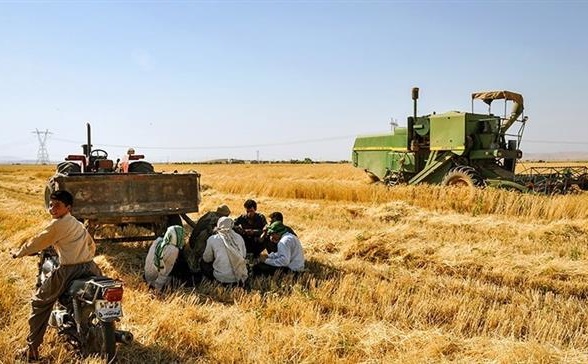
Kermanshah Province, in western Iran, harvested about 5.75 million tons of agricultural products in the Iranian year that ran from March 21, 2025, to March 20, 2026. Saeed Karimi, who heads the provincial agriculture department, said it was the biggest total the province has recorded.
Karimi gave the split in a statement carried by Trend. Field crops came to 4.85 million tons, livestock products to 601,000 tons and garden products to 301,000 tons. “This is considered a record figure for the province,” he said.
The land and the people
The province farmed roughly 903,000 hectares during the period. About 862,000 hectares of that was arable land and 41,000 hectares was garden land. Karimi counted 153,000 farmers active last year.
Livestock numbers 3.4 million head, and the province has 550 poultry farms. Pressurized irrigation systems now reach 133,000 hectares, and 55 agricultural centers provide services to farmers.
Think of the total as a ledger. Crops make up the overwhelming share of the tonnage, with livestock and orchards far behind.
Where Kermanshah ranks
Karimi listed the province’s national standing by crop. It is first in Iran for chickpeas and second for sunflowers. It is third for corn and sugar beets, fifth for wheat and figs, sixth for saffron and seventh for walnuts and olives.
“These figures show that Kermanshah Province has an important place in ensuring the country’s food security and agriculture,” he said.
Size and water
Kermanshah covers about 2.5 million hectares. Natural resource areas take up 74% of it: 527,000 hectares of forest and 1.19 million hectares of pasture.
Trend, in its own analysis, said farm output in Kermanshah, like much of Iran, carries real weight. It pointed to water shortages and droughts as serious problems for Iranian agriculture and food security in recent years, and said low-water crops are getting more attention as a way to make the most of farmland.




