
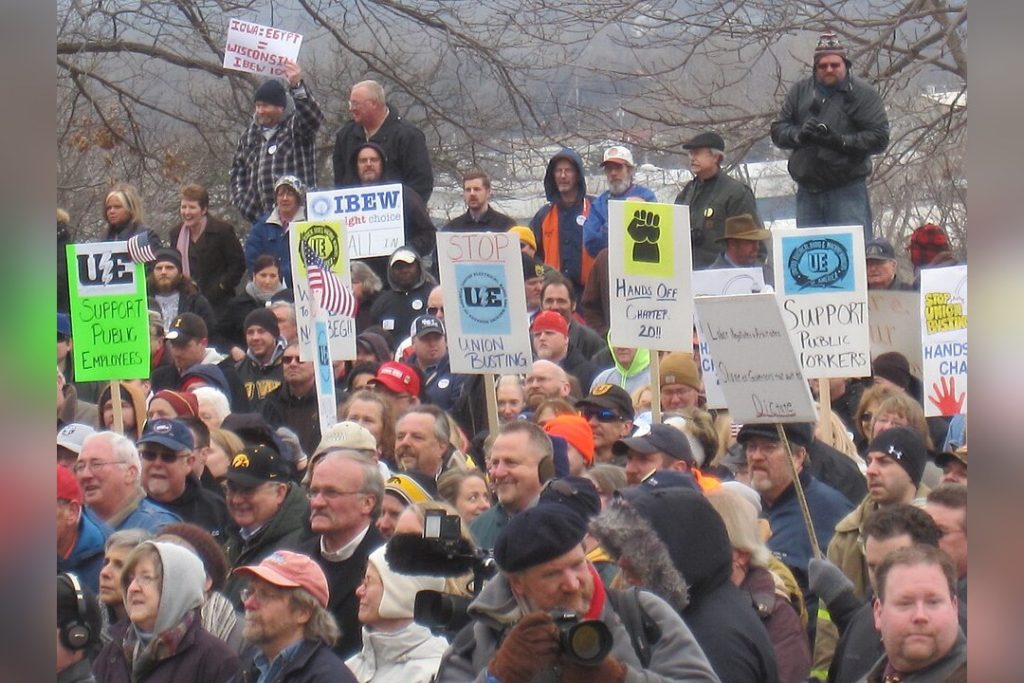
Costas Lapavitsas says much of the European left has quietly accepted the existing structure of production and asks only how its proceeds should be shared out. Lapavitsas, a professor of economics at the School of Oriental and African Studies at the University of London and a former Syriza Member of Parliament, made the case in an interview with C.J. Polychroniou published by Truthout.
His argument is that organized labor deserves to be treated as more than an electoral constituency. In his telling, the classical radical socialist tradition saw workers as the social force whose place at the point of production gives it potential to challenge how investment decisions are made.
Why the left weakened
Lapavitsas calls this a moment of historic weakness for the left, “perhaps the deepest since the left first began to emerge as a political force in the 18th century.” The common story blames leadership failures and ideological drift. He sees something in that, but locates the deeper problem in structure and ideas.
The organized working class that built the labor movement and the welfare state came out of industrial capitalism, with manufacturing at its heart, he said. Neoliberalism, starting in the 1980s, undermined it. New jobs appeared in retail, hospitality, logistics and care work, where bargaining power is weak and turnover is high. Union density collapsed and collective bargaining coverage shrank. When a steelworks, shipyard or engineering plant closes, he said, a community loses apprenticeship routes, union organization and technical skills along with the jobs.
The ideas moved too. According to Lapavitsas, the European left drifted from the political economy of capital-labor relations, investment and profit, and settled into rights-based and anti-austerity politics. Both carry moral force, he said, but “neither constitutes an anti-capitalist program.”
Britain and Greece
On Britain, he called Keir Starmer’s Labour a vivid illustration of the problem. It won in 2024 on exhaustion with the Conservatives, without a transformative program, and then squeezed out the left, including Jeremy Corbyn. Lapavitsas described the result as “managed decline dressed as pragmatism.”
He sees more promise in Andy Burnham, the Manchester mayor who has just been elected to Parliament and is likely to challenge for the Labour leadership. Burnham’s “Manchesterism” would return public services to public control. Lapavitsas called that a genuine advance but said it stabilizes costs without rebuilding the sources of wealth. He listed what a real break would require: democratic oversight of the Bank of England, capital controls, trade regulation and a large public investment program to rebuild manufacturing.
On Greece, he used the word capitulation for Syriza’s 2015 retreat, which he witnessed as a member of parliament. He blamed an intellectual weakness that left the party with no plan for default, no framework for leaving the euro and no strategy to rebuild the productive base. He said both Alexis Tsipras and Yanis Varoufakis share the blame. Syriza has since imploded and been reduced to a minor party, and Tsipras is attempting a comeback with a new party built around him.
Truthout’s introduction ties the interview to the June 23 New York primaries, where it says the Democratic Socialists of America scored stunning results.
Sources
- Labor Can’t Be Treated as a Mere Voting Bloc — It Has Power to Reshape Society
- Labor Can’t Be Treated as a Mere Voting Bloc — It Has Power to Reshape Society




