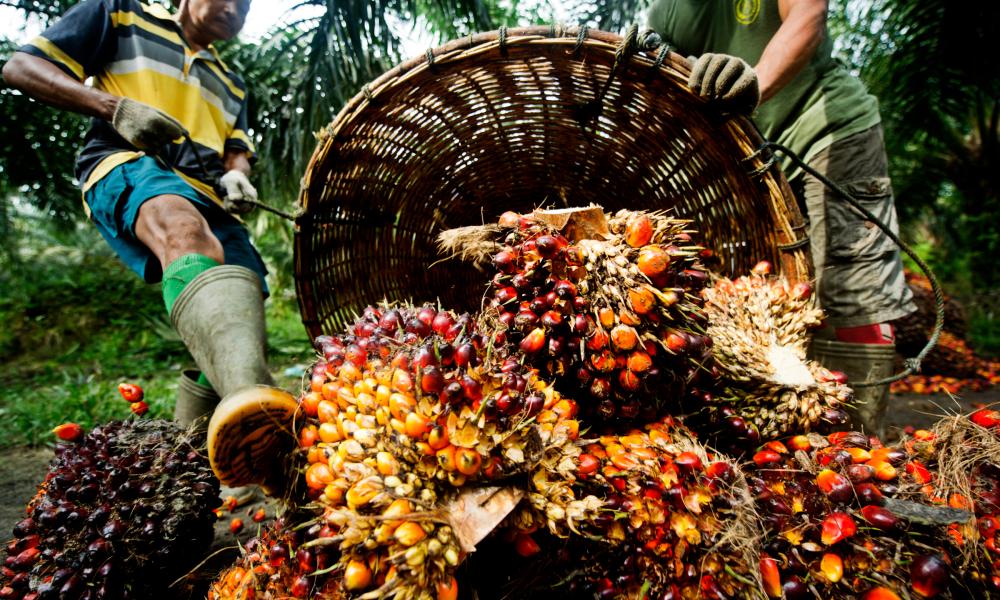
For the thousands of smallholder farmers and plantation workers across Malaysia whose livelihoods depend on the palm oil industry, February brought a familiar mix of challenge and resilience. The latest data from the Malaysian Palm Oil Board (MPOB) shows that the country’s overall palm oil stockpiles fell by 6.56% to 2.11 million tonnes in February 2023, down from 2.26 million tonnes in January.
For families in rural communities where palm oil is the primary source of income, this drop in inventories signals a tightening of supply that directly affects their earnings and daily operations. The MPOB report, released today, reveals that crude palm oil (CPO) stocks fell by 7.69% to 1.16 million tonnes in February, compared to 1.25 million tonnes in January.
This decline is linked to a significant drop in production. February’s CPO production decreased by 9.35% to 1.25 million tonnes from 1.38 million tonnes in January. For plantation workers who depend on steady harvests, this production slowdown often means reduced work hours and lower wages, placing additional strain on family budgets already stretched by rising living costs.
Processed palm oil stockpiles also fell, dropping 5.15% to 959,451 tonnes from 1.01 million tonnes. Meanwhile, palm kernel production saw a 7.10% decline to 316,196 tonnes in February from 340,369 tonnes in January.
These figures paint a picture of a sector facing seasonal headwinds, with the typical post-monsoon recovery yet to fully materialize for many growers.
Export trends show mixed signals for communities
While production fell, exports of certain palm oil products moved in different directions, creating a complex picture for those who rely on trade. Palm oil exports decreased by 1.99% in February to 1.11 million tonnes, down from 1.13 million tonnes in January. For port workers and logistics staff in key hubs like Port Klang and Penang, this slight dip means fewer shipments to handle, though the overall volume remains substantial.
On a brighter note for downstream processors and their employees, exports of oleo-chemicals—used in everything from cosmetics to industrial lubricants—increased by 8.13% to 228,088 tonnes from 210,936 tonnes. Biodiesel exports also rose by 3.23%, climbing to 14,239 tonnes from 14,239 tonnes (the figure remained unchanged from the previous month’s level in the source).
Palm kernel cake exports grew by 4.04% to 210,612 tonnes from 202,431 tonnes in the month under review. However, palm kernel oil exports decreased by 3.57%, falling to 59,888 tonnes in February from 62,102 tonnes in January. These shifts highlight how different segments of the industry—and the communities they support—face varying fortunes month to month.
Looking ahead: what to watch next
As March unfolds, industry observers and local communities alike will be watching several key factors. The MPOB’s next monthly report will reveal whether February’s production decline is a seasonal trough or the start of a longer trend. Export demand from major buyers—particularly India, China, and the European Union—will be critical for determining whether stockpiles continue to fall or begin to rebuild. For the farmers and workers who form the backbone of Malaysia’s palm oil sector, the coming weeks will show whether the market stabilizes enough to support their livelihoods through the remainder of the first quarter.