
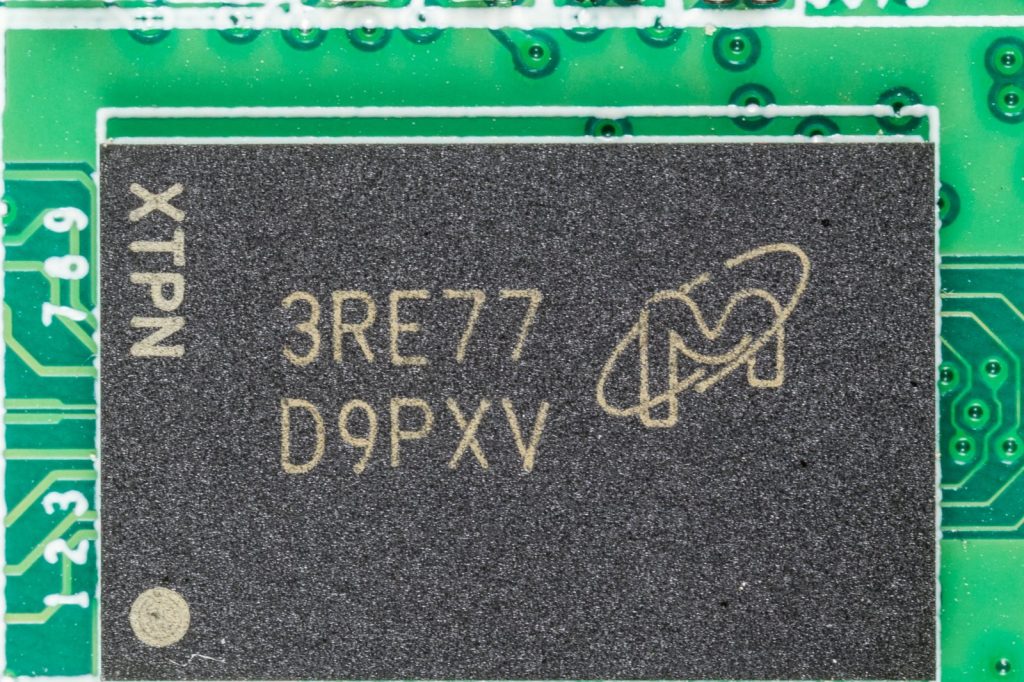
Micron Technology’s fiscal third-quarter numbers landed after the bell Wednesday. By Thursday morning, the memory-chip sector had a new narrative. Sandisk and Western Digital shares surged.
So did Micron’s own stock in after-hours trading. The Philadelphia Semiconductor Index, a broad sector benchmark, rose.
The rally was not subtle. What changed? Micron reported earnings that beat analyst expectations on both revenue and profit.
Sources familiar with the matter called it a catalyst. The company cited strong sales of its HBM3E chips — high-bandwidth memory used in AI data centers — as a key driver.
The market had been waiting for exactly this kind of confirmation. For weeks, the artificial-intelligence boom has driven enormous demand for that specific type of memory. Investors wanted proof the trend was still accelerating.
Micron gave it to them. Now the question shifts to what happens next. The rally in Sandisk and Western Digital, both storage-focused firms, signals that traders see the strength as broader than just one company.
Sandisk, recently spun off from Western Digital, saw some of the sharpest gains. Western Digital itself also climbed.
The movement extended to other chipmakers and equipment suppliers. That suggests a read-across effect: if Micron’s numbers are good, the logic goes, others in the supply chain should benefit too. Analysts had warned in recent weeks that stock prices in the memory segment had run ahead of fundamentals.
The valuations, they argued, were stretched. Micron’s report appears to have answered that concern — at least for now.
But the rally does not erase the underlying tension. The sector had been priced for perfection. Elevated valuations rest on a thesis that demand for memory and storage components remains robust.
Micron’s numbers confirmed that thesis. One quarter does not make a trend, but it buys time. The fallout touches more than just traders.
Companies that buy memory chips — server makers, cloud providers, PC manufacturers — now face a market where pricing power has shifted back to suppliers. If Micron can beat estimates and raise guidance, other memory makers likely can too.
That means component costs may stay high or rise further. For investors, the immediate takeaway is clear: the AI-driven demand for high-bandwidth memory is not a mirage. Micron’s HBM3E sales are real, and they are growing.
The question now is how long that growth lasts and whether it can sustain the stock prices that have already run up. The Philadelphia Semiconductor Index rose on the session.
That index includes names beyond memory. The rally’s breadth suggests the market is betting the strength spreads. But breadth can also mean the market is chasing momentum.
One strong earnings report does not guarantee another. What to watch next: the next round of earnings from Sandisk and Western Digital. Their results will either reinforce the optimism or puncture it.
Also worth watching: whether other memory makers report similar strength in high-bandwidth memory sales. If they do, the rally has legs.
If they do not, Wednesday night’s surge may look like a peak. For now, the memory-chip sector has its evidence. The AI boom is still accelerating.
The valuations have been justified — at least for one quarter.




