
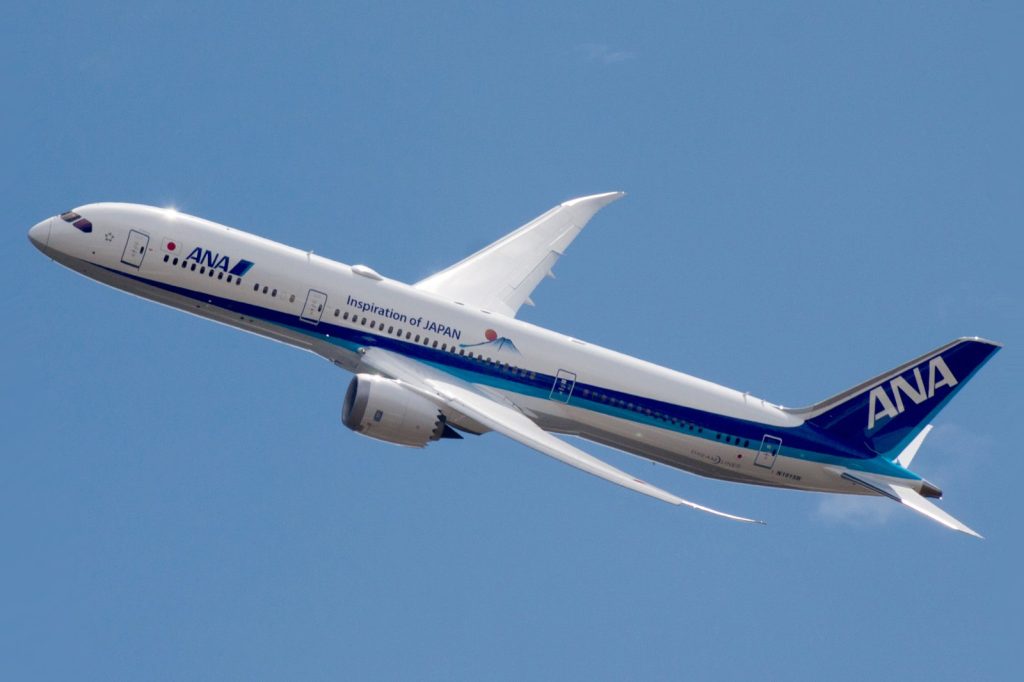
When Boeing handed the first 787-10 Dreamliner to Singapore Airlines in March 2018, the ceremony at its South Carolina plant marked more than a delivery. It completed a three-aircraft family whose engineering choices (carbon-fiber structure, electronically signaled controls, an unusually electric systems architecture) have shaped long-haul flying ever since. The practical result was economic: a mid-sized widebody could fly intercontinental routes profitably without funneling every passenger through a mega-hub.
The handover carried some genuine history. Singapore Airlines group chief executive Goh Choon Phong took the key on the tarmac before more than a thousand workers and guests and called the jet a “beautiful aircraft”, an “unparalleled product for regional operations.” His airline was the first in Southeast Asia to order the 747, back in 1972, and it is now the first operator of every model in the Dreamliner line. The 787-10 is the stretch of the family: 223 feet long, 18 feet more than the 787-9, seating around 330 passengers, at a list price of $326 million.
The -10 is assembled only in North Charleston, because its sections are too large to move to the Seattle-area lines; the non-union plant employs about 7,000 people. Singapore had grown its -10 order to 49 jets and planned to fly it to Osaka first, then Perth from May of that year.
The engineering story starts with material. Where the older 777 was half aluminium and 12 percent composite, the 787 flips the recipe: 50 percent composite, 20 percent aluminium, fuselage and wings included. The fuselage is laid up as one-piece barrels joined end to end rather than as riveted panels, which spares somewhere between 40,000 and 50,000 fasteners and allows a higher cabin pressure. The claimed fuel saving against the jets it replaces runs from about 20 percent by one accounting to as much as 25 percent versus the 767 and early 777s.
Weight is only the first half. The wing is long and slender, with raked tips rather than vertical winglets, and it bends on purpose: in flight the tips can rise as much as 25 feet, a designed trait that absorbs loads and holds lift cleanly. The payoff compounds with distance, because a few points of drag, saved across a cruise above 40,000 feet, adds up to thousands of kilograms of fuel over an airframe’s life.
Propulsion carries much of the rest. Roughly a third of the efficiency gain comes from the engines, a choice of the General Electric GEnx or the Rolls-Royce Trent 1000, and both abandon the old bleed-air arrangement, tapping compressed air off the engine to run air conditioning and start-up, in favor of electrical power, so less engine output is diverted and the aircraft becomes, in the industry phrase, more electric. Flight controls follow the same logic: pilot inputs travel by wire to computers that adjust the surfaces continuously, replacing mechanical linkages.
The family splits the work sensibly. The 787-8, which entered service in 2011, carries about 240 passengers roughly 7,300 nautical miles, right for long, thin routes; the 787-9, the best seller, hauls 290 to 300 a little farther at about 7,565 nautical miles; and the 787-10, the largest, gives up reach, 6,430 nautical miles (11,910 kilometers) by the delivery figures, in exchange for better per-seat economics on dense corridors.
Passengers feel the composite fuselage without knowing it. The stronger barrel holds a cabin altitude near 6,000 feet rather than the 8,000-foot industry norm, and because composites do not corrode the way aluminium does, the air can carry more moisture; both ease the wear of a ten-hour flight. The windows are the largest fitted to a commercial jetliner and dim electronically instead of swinging a shade.
For all its engineering, the sales picture has been mixed. Orders for the -10 and its rival, the Airbus A330neo, slowed after brisk starts, with 171 firm -10 orders, about 13 percent of the 787 program’s total, against 214 A330neos sold at that point. The -9 remains the volume model, competing with the composite A350, and Boeing was on the verge of taking a contested American Airlines order from the A330neo when the first -10 flew away. The encouraging part for passengers is quieter than the balance sheets: whatever the rivalry, the composite, fly-by-wire, more-electric formula the Dreamliner proved is now simply how long-haul aircraft get built.
Sources
- Boeing Delivers First Fuel-Stingy 787-10 Dreamliner: Price ~ $1 Million per Seat – Oil & Gas 360
- Boeing 787 Dreamliner Efficiency Explained: The Engineering Behind Its Exceptional Fuel Economy and Route Flexibility – Bolt Flight




