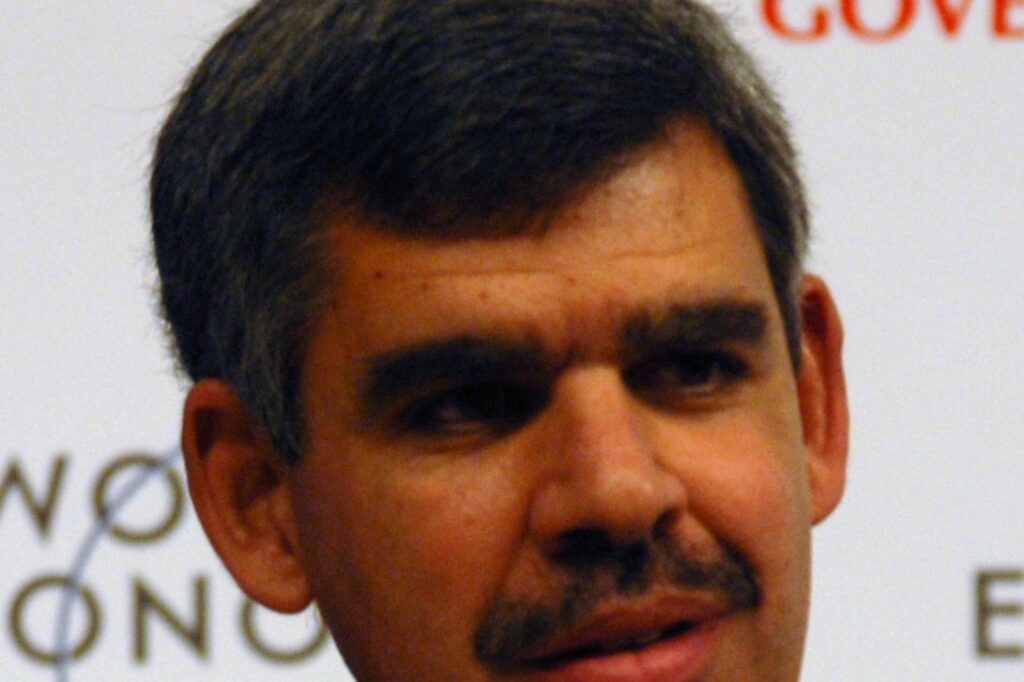
Mohamed El-Erian says a single AI accident could set off a stock market crash, and what sharpened his worry was a dinner with young AI researchers who gave him two opposite visions of the future.
The dinner
First the researchers told El-Erian, a senior global fellow at the Lauder Institute and part-time professor at Wharton, that his daughters were incredibly lucky. AI, they said, would give them opportunities earlier generations could not imagine. Then they admitted they were not sure they wanted children themselves. The contradiction left him more worried than before. Even the people building AI, he observed, cannot reconcile its promise of abundance with the chance of catastrophe, and nobody has worked out how to get everyone cooperating before the risks become irreversible.
The mechanics of the crash
The sequence he describes is simple. Analysts are already modeling a major AI failure that forces governments to halt development. AI stocks plunge and investment freezes. The shock then spreads into the wider economy. The catch is that the trigger is not a market event at all. It is a technical failure, and the damage comes from the political reaction to it.
Why the public is not reassured
That fear lands in a country already souring on the technology. A recent Foreign Affairs essay on AI and cooperation notes that a significant majority of Americans oppose data centers in their communities, across party lines and age groups. Residents worry about resource use, constant noise and higher utility bills while developers collect public subsidies. The essay argues that many citizens see the financial gains of AI going to a few people they increasingly distrust, which is why candidates in competitive races of either party now avoid being linked with it. Some prominent AI figures have not helped, it adds, with warnings of a white-collar job apocalypse and even human extinction.
The essay’s answer is a stake for everyone involved. It describes AI as a “cooperative game” in which the biggest gains appear only when many groups coordinate: labs, governments, communities, employers and labor. Promises of breakthroughs will not overcome hostility, it says. Groups need a concrete share of the upside, or they can block the technology by pushing for stifling rules, halting data center permits or declining to adopt it.
It points to early examples. Amazon, Google and Microsoft have signed the Ratepayer Protection Pledge, a voluntary promise to cover the full cost of new power generation and grid upgrades where they build data centers so household bills do not rise. Google is working with partners of the electrical workers’ union IBEW to train 100,000 electrical workers and 30,000 apprentices.
Sources
Photo: World Economic Forum on Flickr (CC BY-SA 2.0)