
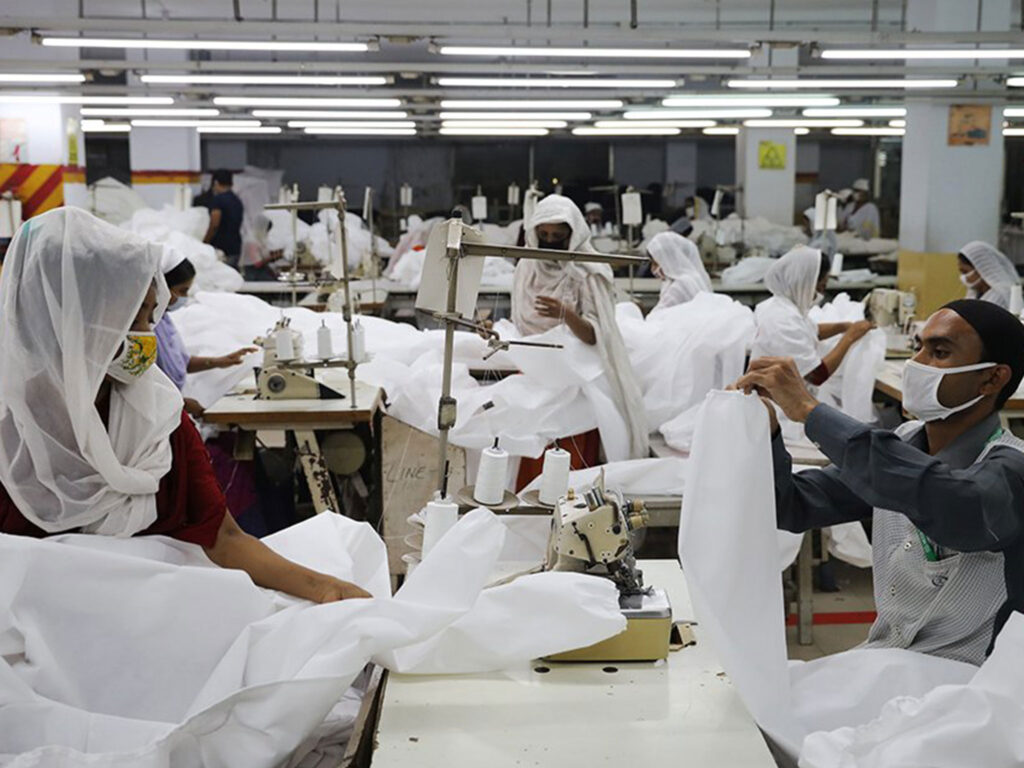
Bangladesh, April 2, 2020 — infopulsetoday.com — The coronavirus pandemic has triggered a severe economic collapse within Bangladesh’s garment sector, leaving millions of low-wage workers without income as factories shutter their doors. Published on April 2, 2020, this report highlights how global lockdowns forced major retailers to cancel orders, resulting in billions of dollars in lost revenue for the nation that is the world’s second-largest apparel producer.
The crisis stems from a combination of halted production lines and an inability to secure new contracts while international shipping remains paralyzed by health restrictions. Bangladesh relies heavily on its clothing industry, which accounts for approximately 80 percent of the country’s total exports.
Major global retail giants such as H&M, Marks and Spencer, and Target depend on this nation to manufacture a significant portion of their inventory. However, the sudden halt in international trade has dealt a devastating blow to these operations. Several brands and retailers have been forced to cancel pending orders due to strict coronavirus-driven lockdowns implemented worldwide.
The financial impact is staggering. Mohammad Hatem, vice president of the Bangladesh Knitwear Manufacturers and Exporters Association (BKMEA), stated that the industry has already lost more than $3 billion due to the ongoing crisis.
He noted that all orders scheduled until July had been either cancelled or suspended. This suspension creates a dangerous ripple effect throughout the supply chain. Hatem explained that these orders were specifically placed for summer collections, a process that typically takes three months to complete.
If buyers do not accept supplies during this window, they will likely reject them entirely once the season ends. According to data released by the Bangladesh Garment Manufacturers and Export Association (BGMEA), over 1,000 factories have reported cancellations involving roughly 864.17 million pieces of clothing. This volume represents an export loss equivalent to $2.81 billion for the financial year.
The uncertainty surrounding future demand has left manufacturers in a precarious position, unable to plan production schedules or secure financing for raw materials.
Industry Leaders Express Deep Concern Over Future Stability
The outlook for the sector remains bleak as buyers continue to refrain from placing new orders amidst the health emergency. Rubana Haq, president of the BGMEA, voiced the collective despair felt by factory owners and management teams across the country. With so many orders cancelled and placed on hold without any confirmed direction for recovery, she stated that the industry is currently at a complete loss.
The cancellation rates are not merely statistical anomalies but represent a fundamental shift in consumer behavior and supply chain logistics. The inability to predict when global markets will reopen has forced companies to adopt a wait-and-see approach that prioritizes risk avoidance over maintaining production capacity.
This hesitation threatens to cause permanent damage to the infrastructure of Bangladesh’s textile industry, which employs millions of people directly and indirectly. If factories remain closed for extended periods, skilled workers may lose their jobs permanently, leading to a long-term decline in productivity and quality standards when operations eventually resume.
Workers Return to Overcrowded Homes Without Support
The human cost of this economic downturn is most visible in the plight of the laid-off factory workers. These employees, who typically earn among the lowest wages globally, have been released from their companies without severance or alternative income sources. With no savings and no social safety net, they have been forced to return to their overcrowded homes in rural areas or densely populated slums in major cities like Dhaka and Chittagong.
These living conditions pose a significant risk of spreading the coronavirus virus further within communities that lack adequate sanitation and medical facilities. Workers who lost their jobs are now facing the dual threat of poverty and potential infection, with no resources available to help them battle the pandemic.
The closure of factories has eliminated the primary source of livelihood for these families, leaving them vulnerable to hunger and disease.
Government Response Falls Short of Economic Needs
In an effort to mitigate the damage, Prime Minister Sheikh Hasina recently unveiled a stimulus package valued at $588 million. This funding is intended to assist Bangladesh’s largest export sector and provide subsidies for employees’ wages during the lockdown period. However, economists and business leaders have criticized the magnitude of this intervention as insufficient to save the crucial industry or support all workers in such a dire situation.
The scale of the crisis far exceeds the capacity of the current government response. The $588 million package represents only a fraction of the billions lost by the industry and does not cover the full extent of wage subsidies needed to keep families afloat.
Critics argue that without a more robust international aid package or a restructuring of trade agreements, the nation faces a prolonged economic depression that could take years to recover from. The reliance on foreign markets for survival leaves Bangladesh exposed to geopolitical shocks beyond its control.




