
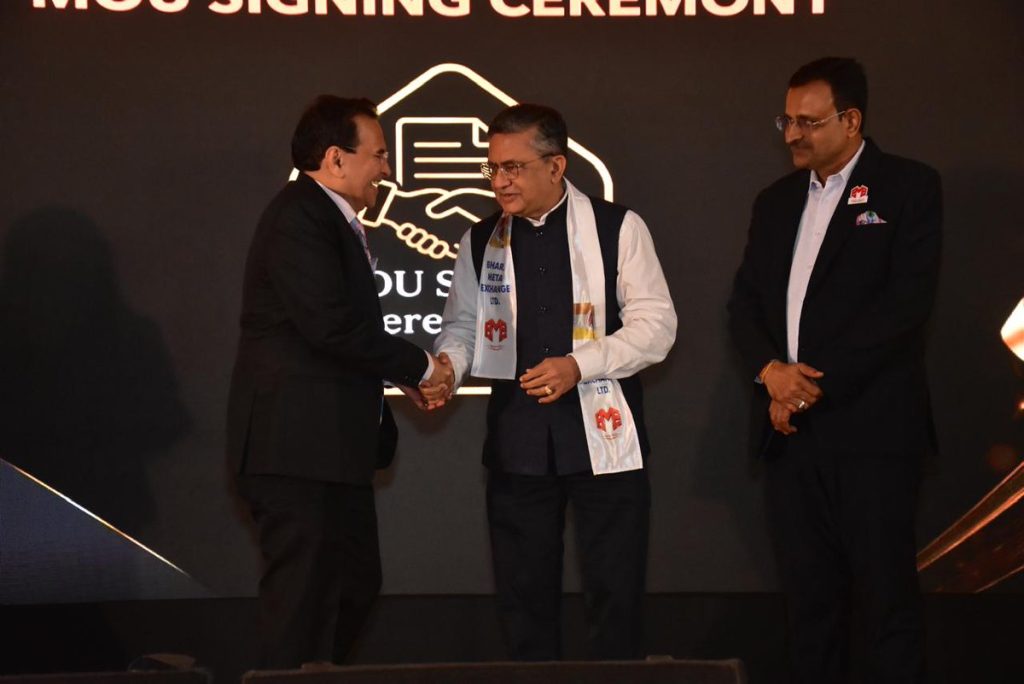
India’s industrial metals market just got a structural upgrade that could change how factories and power plants buy their raw materials. The National Stock Exchange and Bharat Metal Exchange Ltd. signed a memorandum of understanding Tuesday in Mumbai. The old Bombay Metal Exchange has a new name and now has a new partner.
The goal: build a proper derivatives market for non-ferrous metals — copper, aluminum, zinc, lead, the stuff that wires buildings, frames solar panels, and turns into engine blocks. Right now, India’s metal derivatives market is thin.
Thin markets mean bad prices. A factory buying copper cathode might pay a premium that has nothing to do with global supply and demand. A recycler selling scrap aluminum might get squeezed by a single big buyer.
That is the problem this MoU is meant to fix. Both sides bring different tools.
NSE runs one of the world’s biggest equity derivatives exchanges. It knows how to build trading platforms that handle millions of orders without crashing. BME knows metals.
It understands the difference between Grade A copper and standard cathode, between primary aluminum and alloy. Put those two together, and you get an exchange that can actually price metal properly. The demand is already there.
Construction, manufacturing, renewable energy — all of them need non-ferrous metals. Solar farms need copper wiring and aluminum frames.
Electric vehicles need copper motors and lithium-ion battery packs. India is building all of that, fast. A liquid derivatives market lets those industries hedge their raw material costs.
Without it, they are gambling on global metal prices every time they place an order. The stakes are concrete.
Better price discovery means smaller companies can compete with the big traders. Reduced transaction costs mean more of the value stays in the supply chain instead of leaking to middlemen. Improved risk management means a manufacturer can lock in metal prices months ahead, plan production, and actually know what their profit margin will be.
Foreign investors pay attention to this stuff. A deep, transparent metal derivatives market makes India look like a serious commodities destination, not a speculative sideshow. That draws capital.
That deepens the market further. That makes the whole system more competitive globally.
Short term, the focus is infrastructure. The exchange needs a clearing mechanism. It needs settlement procedures.
It needs contract specifications that match what the industry actually trades. None of that is glamorous.
All of it is necessary. What matters is that the MoU exists. It is a piece of paper, but it is a piece of paper that commits two major institutions to building something that does not yet exist at scale.
India’s non-ferrous metal derivatives market has been a promise for years. This is the first real step toward making it a fact.
{“@context”: “https://schema.org”, “@type”: “NewsArticle”, “headline”: “NSE and Bharat Metal Exchange partner to develop non-ferrous metal derivatives market”, “description”: “India’s industrial metals market just got a structural upgrade that could change how factories and power plants buy their raw materials. The National Stock Exchange…”, “datePublished”: “2026-06-22T10:15:00+00:00T09:30:00+00:00”, “author”: {“@type”: “Person”, “name”: “Aibek Nurlan”}, “publisher”: {“@type”: “Organization”, “name”: “InfoPulse Today”, “url”: “https://newsfeed.infopulsetoday.com/”}}




