
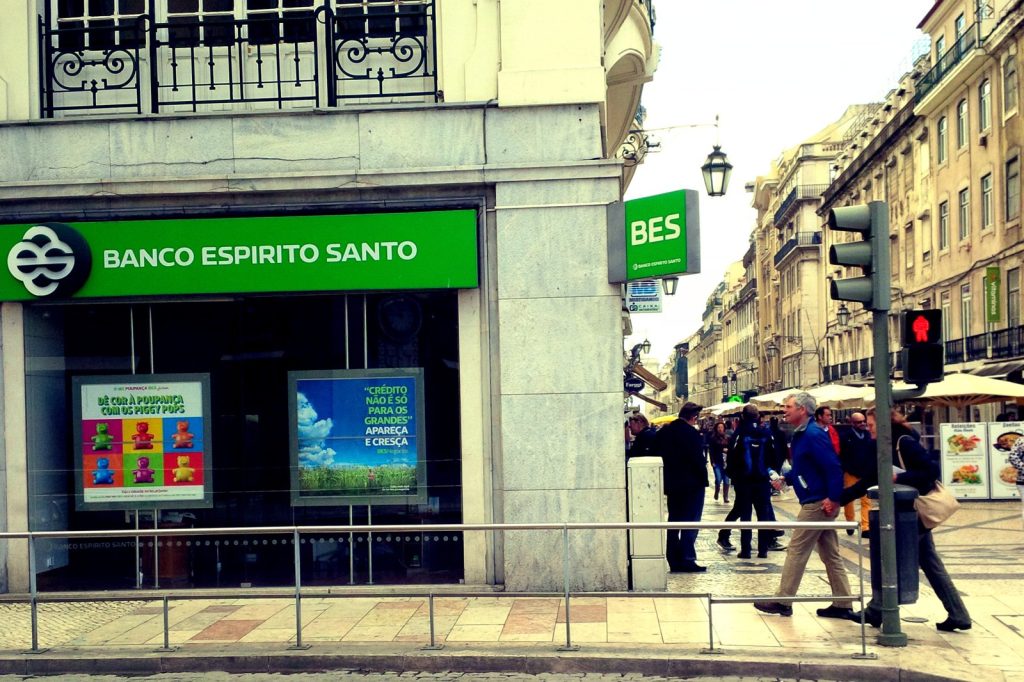
Banco Espirito Santo shares fell 40% before trading was halted. A day or so earlier, the bank had reported a loss of €3.6 billion, and Portugal’s central bank had ordered it to raise capital.
The Bank of Portugal’s demand followed a provision of 4.25 billion euros in the first half, mostly for souring loans to other members of the Espirito Santo Group. That cut the bank’s common equity Tier 1 ratio to 5 percent, below the 7 percent regulatory minimum. The central bank was also probing former managers and had suspended the executives in charge of audit, compliance and risk management.
The split
By late Sunday, Portuguese authorities had settled on a split. A new bank, Novo Banco, took over the healthy businesses and is to be sold later. The old bank kept its name and the toxic assets as a “bad bank,” bound for liquidation once the bad investments are dealt with. Authorities put up 4.9 billion euros ($6.6 billion) to keep the bank from collapsing.
On Monday, Novo Banco announced on its website that it was “stronger and safer.” The Associated Press noted that investors, rattled by the eurozone’s latest financial drama, would need more reassurance.
The money comes from a special fund set up during the eurozone crisis. Portugal therefore does not have to raise new taxes or seek more EU help. Governor Carlos Costa said the injection is a loan that will be repaid with interest, at no cost to taxpayers. Shareholders and junior bondholders, among them Portugal Telecom, which held the bank’s commercial paper, bear most of the losses.
What officials missed
The bank’s record half-year loss came in at 3.58 billion euros. The Espirito Santo family’s three main holding companies asked for bankruptcy protection in the same week. Only weeks before, officials had said the bank was sound.
Costa admitted in a televised statement that authorities had been fooled by a form of Ponzi scheme, with cash and debts passed around the family’s businesses on four continents. He said the bank’s conduct “were in clear violation of Bank of Portugal rules.” An audit by the central bank had flagged problems 11 months earlier, he said, but he did not explain what followed beyond an attempt to ring-fence them.
Police suspect former chief executive Ricardo Espirito Santo Salgado of fraud, forgery and money-laundering. He stepped down last month.
Reaction
An EU spokesman, Simon O’Connor, said the bank was a special case and not a sign of weakness across the eurozone. Analysts at CMC Markets UK saw it differently, calling Lisbon’s troubles a sign of “the major surgery that Europe still has to undergo.”
The ECB is going through the books of more than 100 top eurozone banks, with results due in October. Writing in the Wall Street Journal, Simon Nixon said the larger risk for Portugal “may be reputational,” given concerns about a culture of cronyism.
Sources
- Portugal bank collapse and rescue raises questions
- Portugal's Troubled Banco Espirito Santo Crashes Into Financial Purgatory




