
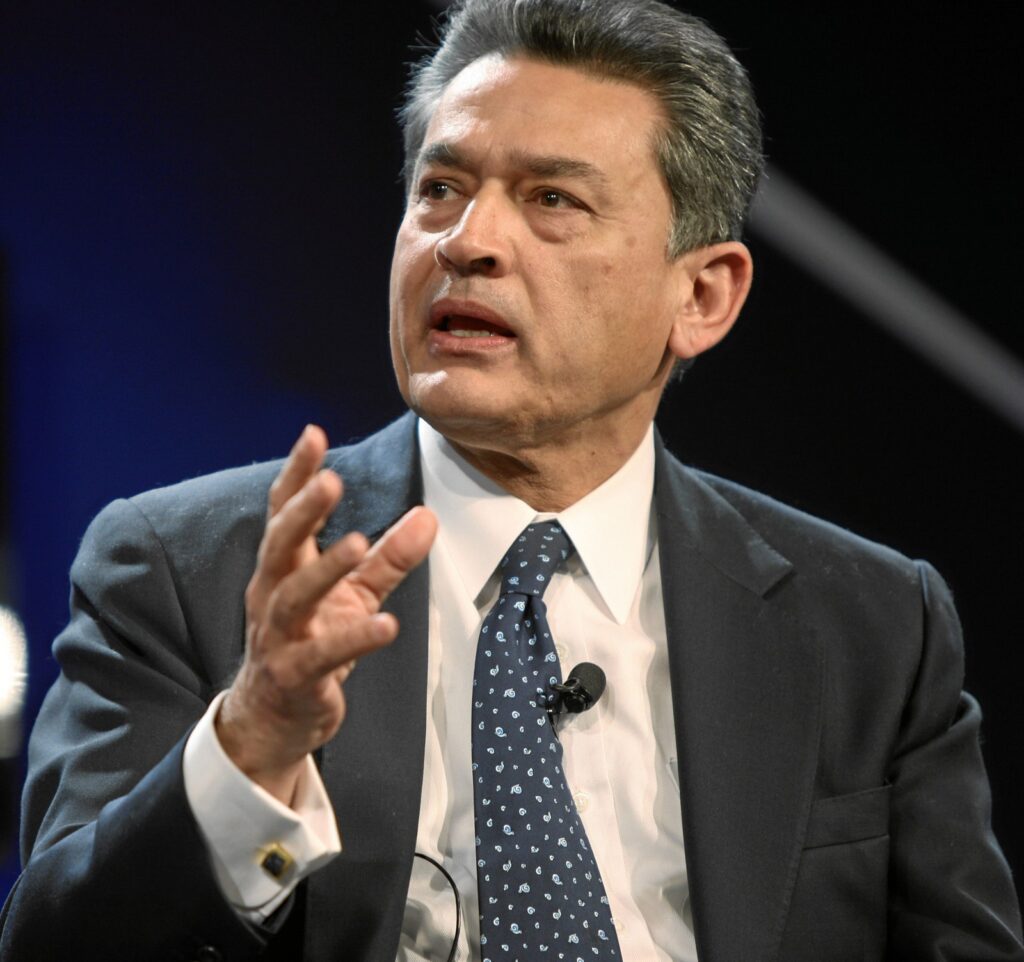
For a generation of Indian students, Rajat Gupta was the proof that an IIT degree could lead to the top of global business. He ended up in a federal prison in Massachusetts. The distance between those two points is the story.
An orphaned student from Delhi
Gupta was born in Calcutta in 1948. His father was a journalist, and the family moved to New Delhi when Gupta was five. His father died when he was sixteen and his mother two years later. He and his siblings, in his words, “decided to live by ourselves. It was pretty unusual in those days.”
He ranked 15th in the country in the IIT entrance exam and took a mechanical engineering degree at IIT Delhi in 1971. He turned down a job offer from ITC to attend Harvard Business School, where he finished in 1973 as a Baker Scholar. McKinsey first rejected him for thin work experience. A Harvard professor, Walter Salmon, phoned Ron Daniel, who ran the New York office, and the decision was reversed.
Running McKinsey
Gupta began in New York, then moved to Scandinavia in 1981 to run McKinsey’s offices there, a region then seen as a backwater. He became a senior partner in 1984 and head of the Chicago office in 1990. In 1994 the partners elected him managing director, the first born outside the United States, and re-elected him in 1997 and 2000. During his time the firm opened offices in 23 new countries and its revenue rose 280 percent to $3.4 billion.
The record was not spotless. Critics said his expansion drive diluted the firm’s founding principles, Enron collapsed while he was in charge, and his successor Ian Davis won election by calling for a return to the McKinsey heritage. Gupta stepped down in 2003 after three full terms, the maximum, under a rule he had introduced himself.
Boards and philanthropy
Out of the top job, Gupta turned to boards and causes. He joined the Goldman Sachs board in 2006, serving until 2010, and sat on Procter & Gamble’s board from 2007 to March 2011. He also served at American Airlines’ parent AMR. With Anil Kumar he co-founded the Indian School of Business in 1997. He chaired the Global Fund to Fight AIDS, Tuberculosis and Malaria from 2007 to 2011 and was founding chairman of the Public Health Foundation of India.
Some friends said that after he left the managing director’s chair he missed its status, and reportedly grew resentful about money as Wall Street peers made fortunes.
The call
The case against him grew out of the Galleon Group investigation. Raj Rajaratnam, who founded the hedge fund, was arrested in October 2009 and later sentenced to 11 years. Gupta had invested in Galleon funds and the two had worked together on a South Asia investment vehicle.
Prosecutors focused on September 23, 2008. Goldman’s board met by phone to approve a $5 billion investment from Warren Buffett’s Berkshire Hathaway. Within minutes of the call ending, Galleon began buying Goldman shares, just before the public announcement. They also alleged he passed Rajaratnam confidential Procter & Gamble results. On October 26, 2011, the SEC charged Gupta with insider trading, and prosecutors in Manhattan obtained an indictment the same day.
There was no recording of Gupta passing a tip, so the government built its case on timing, lining up Galleon’s trades against the board meetings he attended. Its witnesses included Kumar, the former McKinsey partner who had pleaded guilty and agreed to cooperate. Gupta’s lawyers argued that he was paid nothing for any tip and had lost money on his Galleon investments, so he had no motive.
Verdict and prison
The jury convicted him on June 15, 2012, of conspiracy and three counts of securities fraud, and acquitted him on two. On October 24, 2012, Judge Jed Rakoff sentenced him to two years in prison, a year of supervised release and a $5 million fine, below the guidelines, citing his charity work. US Attorney Preet Bharara said Gupta “has now exchanged the lofty board room for the prospect of a lowly jail cell.”
A 2013 SEC action added a $13.9 million penalty and a permanent bar on serving as an officer or director of a public company. The appeals court affirmed the conviction in March 2014, and the Supreme Court declined to hear the case. He reported to Federal Medical Center Devens in June 2014, served about 19 months and went to home confinement in early 2016, which ended that March. McKinsey, which dropped him from its alumni database, kept rebuffing him afterwards.
Gupta has denied the charges since his arrest. His 2019 memoir, Mind Without Fear, restates that he never tipped Rajaratnam.




