
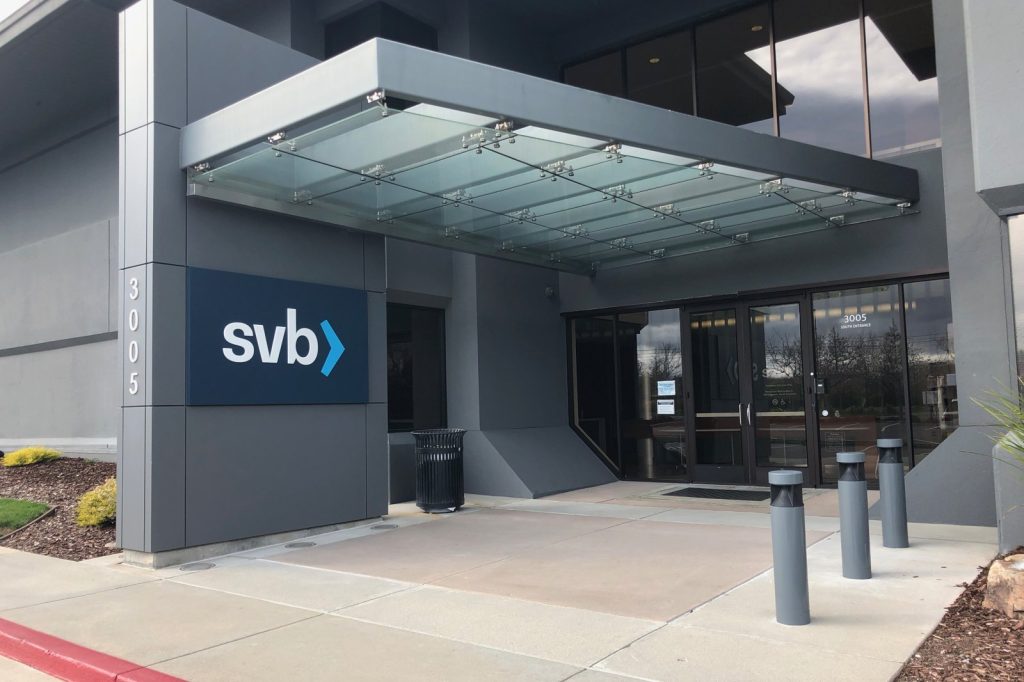
SVB Financial Group, the holding company above the failed Silicon Valley Bank, has filed for Chapter 11 bankruptcy protection in a New York court, opening the formal restructuring of what remains of the lender’s parent a week after regulators seized its bank.
According to the statement announcing the petition, the group holds roughly $2.2 billion in liquidity and other assets it is shopping to buyers, carries about $3.3 billion in unsecured notes, with $3.7 billion in preferred equity outstanding. Left outside the filing are SVB Securities and the funds and general-partner entities of SVB Capital, which keep operating normally, along with the bridge bank the government erected in place of the seized institution.
“The Chapter 11 process will allow SVB Financial Group to preserve value as it evaluates strategic alternatives for its prized businesses and assets, especially SVB Capital and SVB Securities,” William Kosturos, the group’s chief restructuring officer, said in a statement. The parent has been detached from the bank itself since the Federal Deposit Insurance Corporation took the lender over, so the commercial banking business sits outside the bankruptcy. Fortune notes the filing also landed days after a class-action lawsuit accused the company of hiding what rising interest rates would do to its business.
The record shows how fast the fall was. California regulators shut Silicon Valley Bank the previous Friday and installed the FDIC as receiver, the largest American bank failure since Washington Mutual in 2008. The trigger was a loss of $1.8 billion on bonds it had to dump for $21 billion, and then the run. The FDIC has since guaranteed all deposits at the bank, waiving the usual $250,000 cap, and moved the operations into Silicon Valley Bridge Bank. Its new chief executive, Tim Mayopoulos, issued a public appeal: “The number one thing you can do to support the future of this institution is to help us rebuild our deposit base, both by leaving deposits with Silicon Valley Bridge Bank and transferring back deposits that left over the last several days,”
The wider plumbing is straining. Cash-short banks borrowed around $300 billion from the Federal Reserve in the past week, the central bank said, with nearly half, some $143 billion, going to the bridge banks built around SVB and Signature. The Treasury backstopped a new Fed lending facility with $25 billion. President Joe Biden has told Americans the banking system is “safe” and they can “have confidence” their deposits are secure. FDIC chair Martin Gruenberg put industry-wide unrealized bond losses near $620 billion, while insisting banks remain “generally in a strong financial condition and have not been forced to realize losses by selling depreciated securities.” Moody’s has six banks on review for downgrade and has cut its view of the whole sector, citing “rapid deterioration in the operating environment.”
Not everyone reads 2008 into the numbers. “This is a classic asset-liability mismatch, triggered by higher rates, and compounded by leverage,” said Jurrien Timmer of Fidelity, who added: “The good news is that this seems to be an isolated incident or at least a problem that may be limited to some smaller banks”. Shareholders and bondholders of the parent stand exposed in the Chapter 11; depositors, by the government’s arrangement, do not.
Sources
- How Omsom's cofounder saved her startup and became a viral star | Fortune
- SVB Parent Company Files For Bankruptcy Amid Bank Turmoil | NTD




