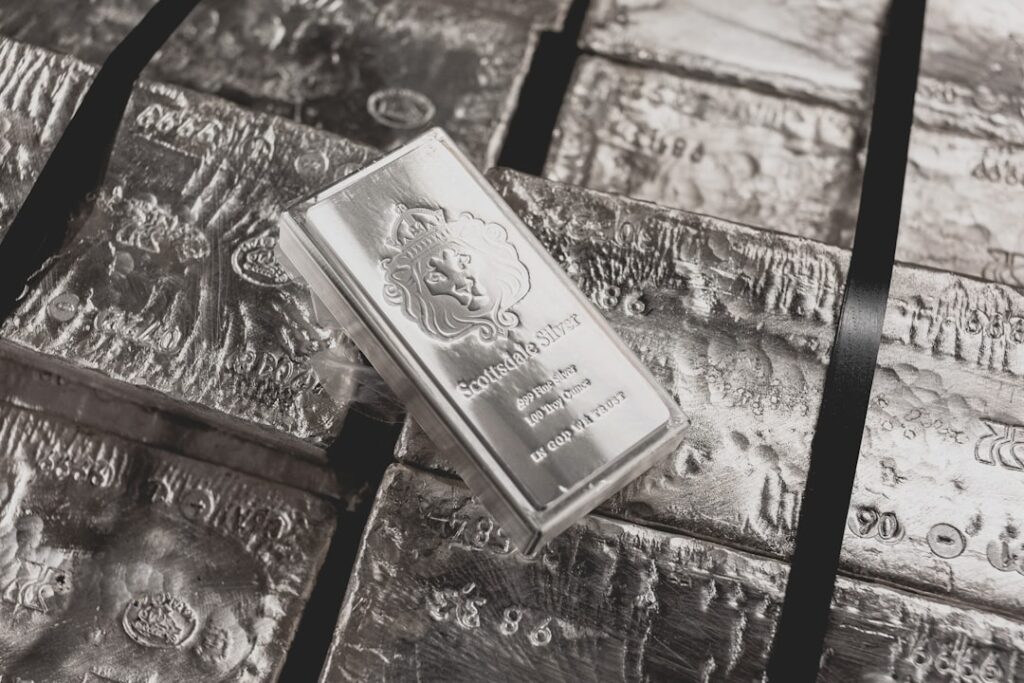
For 4,000 years, silver functioned as money. That changed in 1935 when developed nations abandoned the silver standard, stripping the metal of its legal tender designation.
Yet investor interest never faded. Today, silver occupies an unusual space — no longer official currency, but still traded like one by those who understand its value. The metal is not scarce, and that fact shapes its market dynamics. Platinum is 139 times rarer, and gold is roughly 8 times rarer.
Scarcity drives price, so silver remains cheaper and more accessible. That accessibility also creates volatility.
An investor in silver is betting on volume and industrial demand rather than on a small, controllable market. Global silver reserves totaled 530,000 tonnes in 2011. That substantial stockpile provides a buffer.
If demand surges or mining slows, the supply prevents market disruption. The real risk is not shortage but the possibility that silver is treated primarily as a commodity rather than a store of value.
The 2009 demand breakdown illustrates this point. Industrial applications consumed 40% of all silver that year. Jewelry accounted for another significant portion.
Bullion coins and exchange-traded products made up the remainder. The metal is not merely stored in vaults — it appears in circuit boards, solar panels, medical equipment, and wedding bands.
This diversity is meant to stabilize prices. However, it also means silver rises and falls with factory output and construction activity, not solely with fear or inflation concerns. Consider coins like the American Silver Eagle, Canadian Silver Maple Leaf, and British Silver Britannia.
These carry nominal face values and are technically legal tender, but no one spends them on everyday purchases. Their real worth follows the silver spot price.
They represent a hybrid — government-stamped currency that serves as a speculative asset. Holders are not collectors but investors who trust the metal more than the currency in which it is denominated. The implications are concrete.
If industrial demand declines, silver suffers. If industrial demand grows, silver thrives.
Gold primarily functions as a fear-and-greed trade. Silver must work. That means its price moves more sharply and quickly. For portfolio diversification, that dual nature is both the attraction and the risk.
Greater upside potential exists, but so does greater downside when industrial activity slows. Silver has existed for four millennia as coinage, jewelry, tableware, and industrial material.
It lost its official monetary role in 1935, but people continue to buy, hoard, and treat it as a hedge. The metal does not depend on legal definitions. It retains value because enough people agree it does.
With 40% of demand coming from industry, that agreement rests on a solid foundation. Silver represents a bet on the physical world — on manufacturing, electronics, and energy.
That distinguishes it from gold and makes it riskier. An investor buying silver is betting on the global industrial machine. If the machine falters, silver falters.
But if it keeps running, silver has room to outperform gold. The metal’s abundance — 8 times greater than gold — keeps entry prices low and the market deep.
No one can corner 530,000 tonnes of anything.