
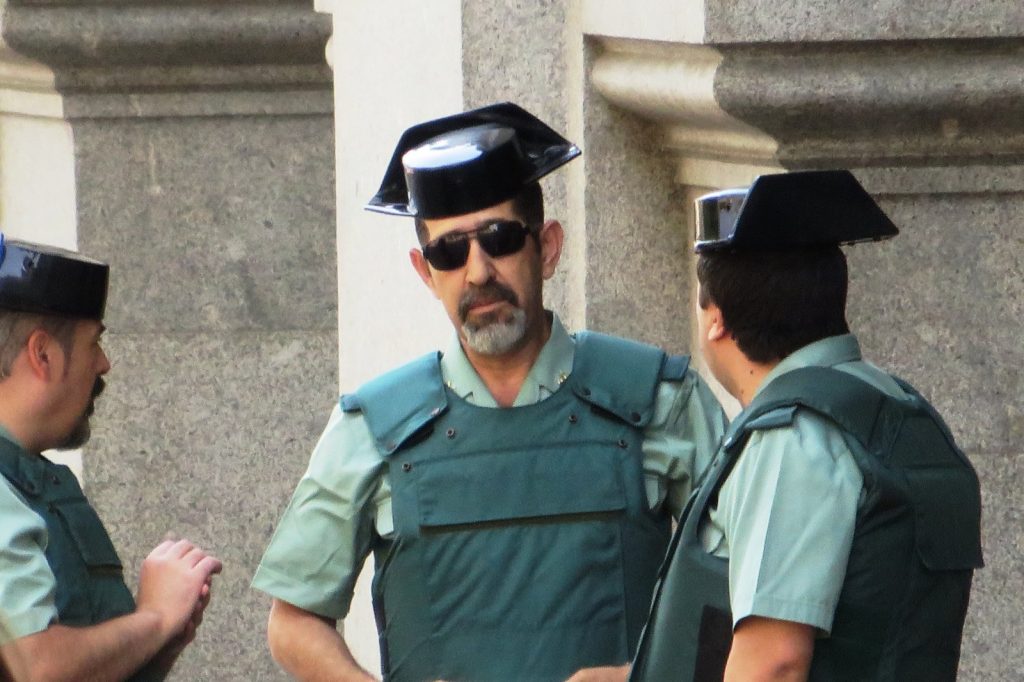
Madrid – In response to a growing truckers’ strike that threatens to cripple supply chains, the Spanish government has stationed more than 23,000 police officers along the nation’s highways. The forces are tasked with escorting convoys, containing picketers and maintaining order on roads that have become flashpoints of protest.
The deployment, announced on 19 March, is a direct reaction to a strike organised by the Platform for the Defense of the Road Transport Sector. The platform, which emerged spontaneously in 2008 when six self‑employed drivers in Galicia voiced dissatisfaction with the country’s main trucking associations, now represents a largely independent group of mostly self‑employed truckers. Their protest targets a series of grievances, the most pressing of which is the surge in fuel prices.
Fuel costs have spiralled to record levels as Europe grapples with an energy crisis exacerbated by Russia’s war in Ukraine. The conflict has driven oil and natural gas prices to historic highs, inflating household expenses and raising operational costs for businesses that depend on transport and agriculture.
Farmers in France and Greece have already disrupted traffic with similar demonstrations, underscoring the pan‑European nature of the unrest. Spanish Finance Minister María Jesús Montero condemned the strike as “extortion” and accused far‑right factions of exploiting the situation to obstruct the distribution of food and produce. The minister’s statement links the protest to broader political manipulation, suggesting that the walkout serves interests beyond the truckers’ own economic concerns.
Truckers, however, reject any affiliation with extremist politics. In their view, the government is attempting to criminalise the sector and attach ideological labels to a group that simply wishes to earn a living.
They argue that they feel excluded and disrespected by national leaders, a sentiment that has intensified as they remain off the road for extended periods without the constraints of union contracts or corporate oversight. The heavy police presence signals that authorities anticipate a potential escalation. While the exact duration of the strike remains unknown, the deployment of such a large force demonstrates the state’s intent to keep essential goods moving and to deter further disruptions.
Europe’s reliance on Russian energy supplies has become a strategic vulnerability, and the resulting price spikes have placed additional strain on sectors that are already operating on thin margins. For Spanish truckers, the cost of fuelling vehicles and equipment has become a critical pressure point, prompting the current walkout.
Although negotiations have not been publicly disclosed, the situation highlights a clash between a government seeking to safeguard food distribution and a transport community that feels marginalized. Both sides present starkly different narratives: the finance minister points to political exploitation, while the drivers stress a lack of respect and an attempt to criminalise their profession. What is evident is that the country’s road network is under strain, with police escorts and blockades affecting the timely delivery of produce and other goods.
The underlying drivers of the dispute—high energy costs, inflation and Europe’s dependence on Russian oil and gas—are unlikely to resolve quickly, suggesting that the tensions on Spain’s highways may persist for some time.




