
NEW YORK, July 10 — The machines have taken over Wall Street. Not the trading floor kind — the ones humming in server rooms, making decisions in microseconds. As of 2023, over 70% of U.S. stock trades are executed by algorithms, a milestone that caps more than a century of accelerating automation.
Think of it like this: For most of its history, the stock market was a slow, human-powered machine. Traders shouted in pits, clerks scribbled prices on chalkboards, and news traveled at the speed of a telegraph wire.
Today, that wire has been replaced by fiber optics and code, and the shouting has been replaced by the silent hum of data centers. The practical upshot? Your 401(k) is now being traded by software that can buy and sell a stock in less time than it takes a human to blink.
From Tickertape to Ticker Code
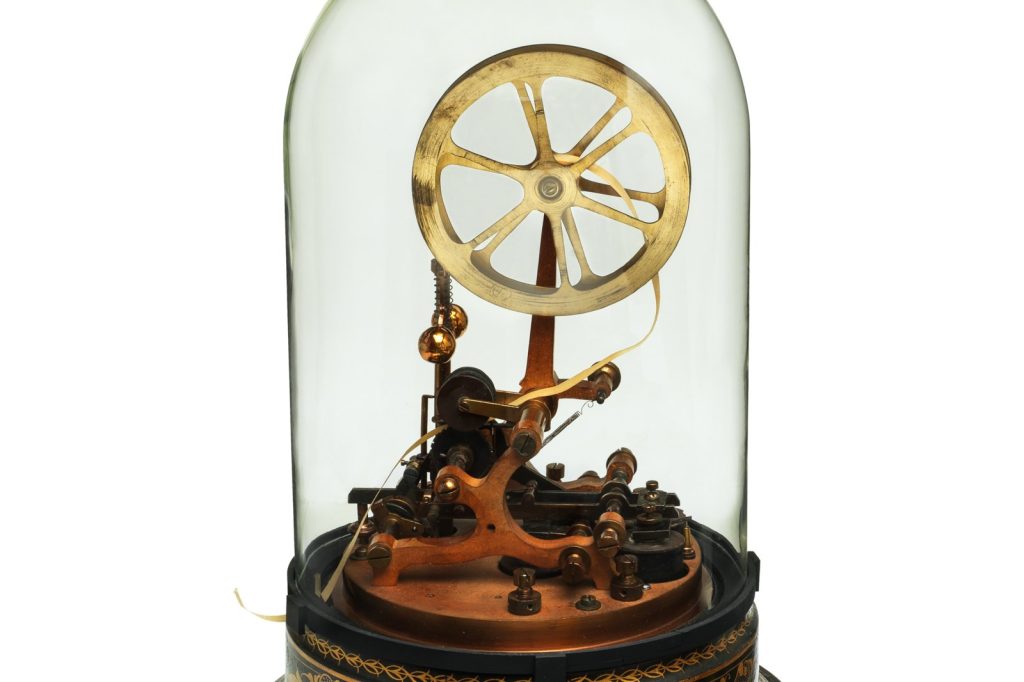
The story of automated trading begins in 1867, when Edward Calahan invented the first stock ticker. It was a simple device that transmitted stock prices over telegraph lines, but it revolutionized the speed of information. Thomas Edison improved the design in 1869, and suddenly, investors in New York could know what was happening in Philadelphia before the news arrived by train.
For a century, that was the state of the art. The New York Stock Exchange introduced its “Big Board” electronic display in 1966, but the actual trading still happened face-to-face on the floor.
The real breakthrough came on February 8, 1971, when the NASDAQ was founded as the world’s first electronic stock market. It had no physical trading floor — just computers matching buyers and sellers. That was the opening shot.
In the 1980s, program trading emerged, using computers to execute large orders automatically. It seemed like a clever efficiency at the time.
Then came October 19, 1987 — Black Monday. The Dow Jones Industrial Average dropped 22.6% in a single day. Regulators and market watchers pointed fingers at program trading, arguing that the machines had amplified the sell-off.
In plain terms, the computers that were supposed to make markets more efficient had instead made them more volatile.
The Speed Revolution
The 1990s brought another leap. In 1998, the Securities and Exchange Commission approved electronic communication networks, or ECNs. These were private electronic systems that matched buy and sell orders directly, bypassing traditional exchanges.
Two of the most prominent were Instinet, founded in 1969, and Island, founded in 1996. This opened the door for high-frequency trading, or HFT, which grew in the 2000s.
Firms began using sophisticated algorithms to execute trades in microseconds — millionths of a second. These aren’t trades based on a hunch about a company’s earnings. They’re trades based on tiny price discrepancies that exist for only a fraction of a second.
The speed became so extreme that it created new kinds of risk. On May 6, 2010, the market experienced the Flash Crash.
The Dow dropped nearly 1,000 points in minutes, then recovered almost as quickly. Regulators were baffled. The crash was later blamed on a combination of algorithmic trading and market structure issues.
In response, the SEC implemented single-stock circuit breakers — automatic pauses in trading when a stock’s price moves too fast. It was a recognition that the machines needed guardrails.
What the Algorithms Are Actually Doing
So what does it mean that over 70% of trades are now algorithmic? In practical terms, it means the human role in the stock market has fundamentally changed. Individual investors still make decisions about what to buy and sell, but the actual execution of those trades is increasingly handled by software.
The algorithms do several things. Some are simple: they break up large orders into smaller pieces to avoid moving the market.
Others are complex: they scan multiple exchanges and dark pools for the best price, executing trades in milliseconds. The most sophisticated ones use machine learning to predict short-term price movements based on patterns in trading data. Here’s what it means for ordinary investors: The market you’re participating in is not the market of 1980.
It’s faster, more fragmented, and more complex. But it’s also more efficient in some ways — bid-ask spreads are narrower, and transaction costs are lower.
The downside is that the system can break in ways that are hard to predict. The 2010 Flash Crash showed that algorithms can create feedback loops, where one machine’s sell order triggers another machine’s sell order, and so on, until the market spirals. The circuit breakers help, but they’re not a complete solution.
Looking Ahead
As of mid-2026, the trend shows no signs of slowing. The percentage of algorithmic trading has been climbing steadily for decades, and there’s no reason to think it will reverse. Firms continue to invest in faster hardware, better algorithms, and more data.
The next frontier is likely artificial intelligence. While current algorithms follow rules written by humans, AI-powered systems could learn and adapt on their own, making decisions that even their creators don’t fully understand.
That raises questions about oversight and accountability.
{“@context”: “https://schema.org”, “@type”: “NewsArticle”, “headline”: “Stock Trading’s Tech Shift: From Ticker Tape to Algorithms”, “description”: “NEW YORK, July 10 — The machines have taken over Wall Street. Not the trading floor kind — the ones humming in server rooms, making…”, “datePublished”: “2026-07-10T09:30:00+00:00”, “author”: {“@type”: “Person”, “name”: “Erika Johnson”}, “publisher”: {“@type”: “Organization”, “name”: “InfoPulse Today”, “url”: “https://newsfeed.infopulsetoday.com/”}}




