
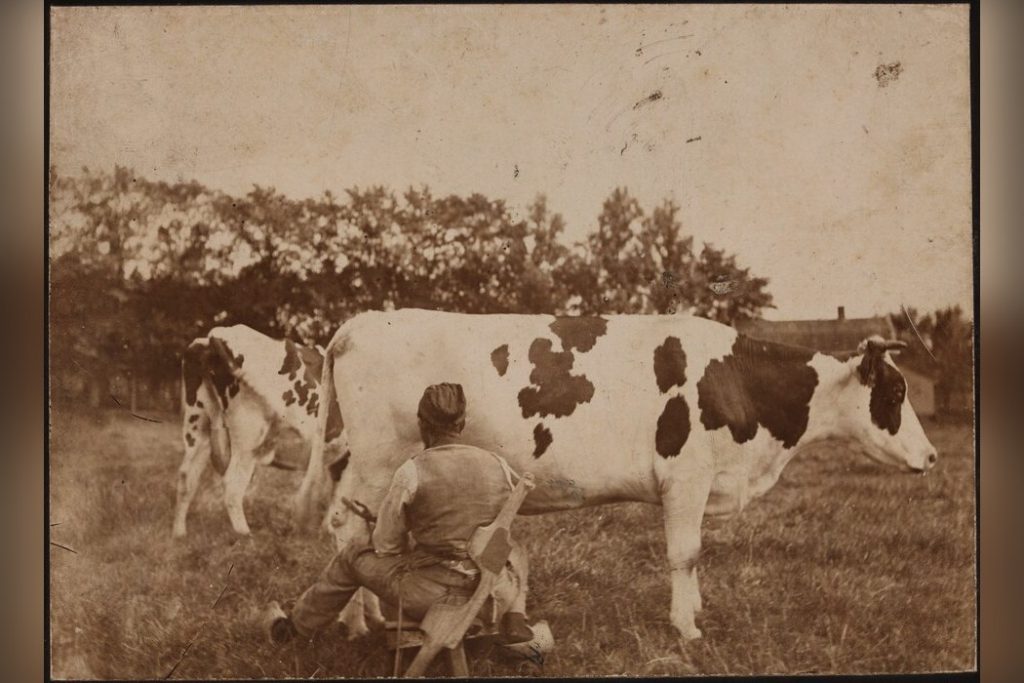
Every morning across Haryana, millions of families pour milk into their tea. That daily act now sits under a threat most consumers have never considered — the weather. A study in Scientific Reports tracked 35.56 million buffaloes, 4.66 million cross-bred cattle, and 2.86 million indigenous cattle across 1,148 villages in Haryana from 2004 to 2019.
The state sits in the trans-Gangetic plains, what researchers call “the high milk production tract.” These are not just numbers. These are the animals that supply India’s dairy — the world’s largest.
When temperatures hit above 38°C and humidity climbs over 70% in July and August, milk yields drop. The summer heat meets the monsoon, and the combination hits herds hard. Buffaloes, which dominate Haryana’s dairy, proved especially vulnerable.
Winter temperatures showed no measurable effect. This is not a future problem.
The study examined over a decade of data already in the books. The strain is already registered in the yield records. Farmers in those 1,148 villages live with this reality every summer.
They watch their buffaloes slow down, eat less, produce less. The study points to evapotranspiration in May and June as a key factor — the process by which moisture leaves soil and plants, intensifying before the rains arrive. The temperature-humidity index, solar radiation, ambient temperature, and vapour pressure all played into the analysis.
But the blunt finding is this: extreme heat plus high humidity creates physiological stress that undermines dairy production across the global south. For a farmer with a dozen buffaloes, a yield drop during the monsoon months can mean the difference between profit and loss.
Milk is sold daily. There is no warehouse to wait out the weather. When production falls, income falls with it.
And this reaches far beyond the farm gate. India’s trans-Gangetic plains are one of the country’s biggest milk sources.
A climate-driven drop here does not stay in the village. It moves down the supply chain — to the collection centers, the chilling plants, the trucks that carry milk to Delhi and beyond, the shops where families buy it each morning. The researchers matched milk yields against yearly minimum, maximum, and mean temperatures, heavy rainfall, the temperature-humidity index, and evapotranspiration.
They had the data to trace exactly what combination of conditions hurts production most. The answer is July and August — the peak of summer heat colliding with monsoon humidity. For the people who raise buffaloes in Haryana, this is not an abstract climate model.
It is the afternoon heat pressing down on the shed. It is the animal that won’t stand for milking.
It is the bucket that comes back lighter than it should. The study’s authors say the physiology is straightforward. The combination of extreme heat and high humidity strains the animals’ ability to cool themselves.
Buffaloes, with their dark hides and limited sweat glands, take the worst of it. India produces more milk than any other country.
That production depends on millions of small farmers with a few animals each. When those animals produce less, the whole system feels it. The study does not offer solutions.
It does not predict the future. It simply reports what the data already shows — that in the high milk production tract of Haryana, the weather is already cutting into the daily yield. The people who depend on those animals, and the people who drink their milk, are living with the consequences now.
{“@context”: “https://schema.org”, “@type”: “NewsArticle”, “headline”: “Study of 43 million animals links rising temperatures to reduced milk yields in Haryana”, “description”: “Every morning across Haryana, millions of families pour milk into their tea. That daily act now sits under a threat most consumers have never considered…”, “datePublished”: “2026-07-06T06:04:27+00:00T09:30:00+00:00”, “author”: {“@type”: “Person”, “name”: “Henry Thomas”}, “publisher”: {“@type”: “Organization”, “name”: “InfoPulse Today”, “url”: “https://newsfeed.infopulsetoday.com/”}}




