
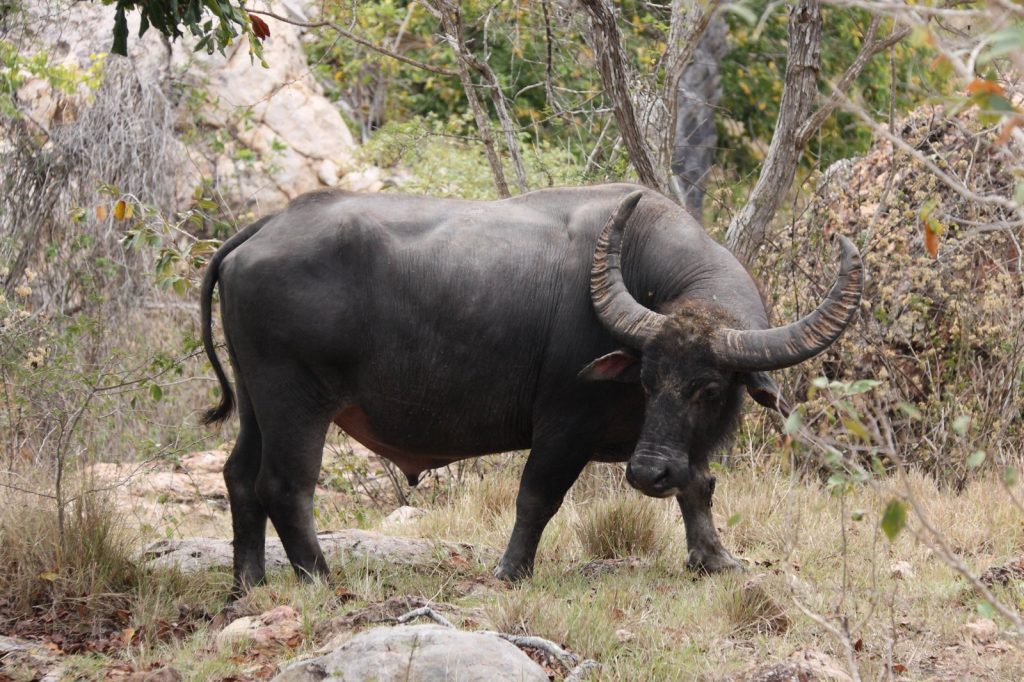
Buffaloes are built to soak up the sun. Dark skin, sparse hair and few sweat glands make them poor at shedding heat, and that design flaw is now showing up in India’s milk supply.
A study in Scientific Reports, published on 23 June 2026, tracked milk output in Haryana, part of the trans-Gangetic plains and what the authors call the high milk production tract. The data came from the state’s Integrated Sample Survey, which ran from 2004 to 2019 and covered about 1,148 villages in a year. Across those years the survey counted 35.56 million buffaloes, 4.66 million crossbred cattle and 2.86 million indigenous cattle. Daily yields averaged 7.64 kg for buffaloes, 8.08 kg for crossbreds and 5.23 kg for indigenous cattle.
The researchers then lined those yields up against the weather: yearly minimum, maximum and mean temperatures, heavy rain, the temperature-humidity index (THI) and potential evapotranspiration, a measure of how hard the air pulls water out of the ground and the animals.
What the numbers showed
Temperatures above 38°C with humidity over 70% in July and August cut milk production significantly. Winter cold made almost no difference. Potential evapotranspiration in May and June turned out to matter just as much as THI and heatwaves. One extra unit of it, measured in millimetres a day, took roughly 1.4 litres a day off each buffalo’s yield. Crossbred cattle also lost output during heatwaves.
Indigenous breeds such as Sahiwal and Hariana held up better. Loose skin, efficient sweating and low metabolic heat appear to buffer them, and the paper says they also resist local parasites and pathogens, which heat stress tends to weaken in other animals.
The mechanism is straightforward. Hot, humid animals eat less and pant, sweat more and move less. Stress hormones, cortisol among them, interfere with milk ejection, so yield drops, and in severe cases animals die. Heat also hits fodder, changing how much grows, how good it is and when it is available.
The cost, and what farmers are doing
The study puts current heat-related losses across India at 3.2 million tonnes of milk a year, worth Rs. 2,661 crore, and says that could climb to 15 million tonnes by the 2050s. Abhinav Gaurav of Environmental Defense Fund India told The Hindu that lactating animals divert energy from milk to cooling themselves, which can cut yield by 20 to 30% in the worst summer months. He cited a Lancet report suggesting climate-driven warming could reduce Indian milk production by 25% by 2085.
The stakes are large because India is the world’s biggest milk producer and consumer. About 80 million smallholder dairy farmers produce 85% of the country’s milk, according to Gaurav.
Haryana’s farmers are not waiting around. The authors found them well informed and already using wallowing ponds for buffaloes, agroforestry, shade shelters, sprinklers, foggers and misters, and adjusted feeding. The paper recommends building potential evapotranspiration and THI into regional early warning systems, breeding more heat-tolerant animals using traits from Bos indicus cattle, and protecting indigenous breeds on their home ground.
Gaurav says the hard part is scale: reaching millions of small farmers with little money, little awareness and no coordinated national plan for climate-smart dairying.
Sources
- Climate Change Severely Impacts Milk Production in India's Gangetic Plains – Brandz Magazine | Magazine For Small Business & Entrepreneur
- Effect of climate change on milk production and yield of buffalo, indigenous cattle and crossbred cattle in Haryana, India | Scientific Reports




