
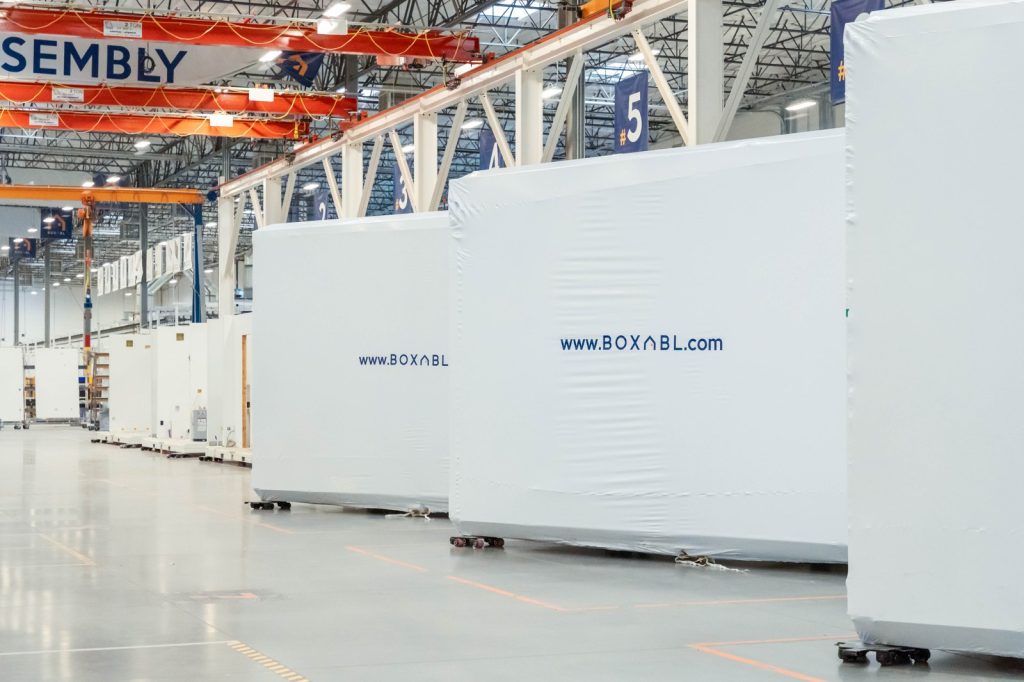
The story begins, as it often does in American housing, with a shortage — and, this time, with a factory attached to the fix. Boxabl has struck a multiyear deal with LC Vegas Acquisitions for up to 1,500 homes, the biggest residential order in the company’s history. Around the same stretch of the calendar, Freddie Mac changed a rule that quietly unlocks a corner of the factory-built market: it will now buy eligible mortgages on manufactured homes already moved from one property to another, provided the home clears a structural-integrity inspection and lands where zoning rules are the same or better.
A fine-print distinction matters here. The new eligibility covers manufactured housing only, a category that is legally and financially separate from modular construction. But it is one more meaningful opening across the broader factory-built market, where production is beginning to scale and financing options are gradually expanding.
What unfolded in the details, though, is the real story. Paying for the house itself is just one step on the road to a finished home on a plot of land. A buyer may also need to arrange the land purchase, transport and delivery, foundation and site work, utility hookups, permits and zoning, a general contractor, insurance, title and closing, plus a construction loan that eventually bridges into a permanent mortgage. Freddie Mac’s widened eligibility does not sweep all of that in: getting the home delivered, set up, founded, and hooked to utilities can still take separate financing. As proptech writer Joe Dahleen put it, “This is not just a credit problem. It is a coordination problem.”
At its heart, what makes this moment different is the journey it asks of a buyer. A traditional mortgage lead finds an agent, finds a house, gets referred to a lender, and then a loan officer competes for the deal. Factory-built housing turns that sequence around. A consumer might first discover a home on Instagram, YouTube, a builder’s website, or through an AI-powered housing search. They may already own the land outright, or receive a plot from a family member.
The reasons they come are as varied as the homes themselves: priced out of conventional new construction, rebuilding in the wake of a disaster, shaping a multigenerational homestead, or bolting on an accessory dwelling unit. The project might be a compact ADU, or a full 2,000-square-foot primary home. Rather than beginning at a listing, the buyer can arrive through almost any participant in the ecosystem — the landowner, the builder, the transporter, the site crew.
For those involved, from buyers to lenders, the lesson is that the loan is becoming the easy part. The scarce skill will be coordination: someone able to sequence land, transport, foundations, utilities, permits and closing into a single moving process, so that a family signs once at the end rather than ten times along the way. The factory can now supply the house at a scale the site-built industry struggles to match. What the housing market still has to build is the assembly line around it — the ecosystem that carries a family from empty lot to front door.




