“You name it, and we have a shortage on it.” That was Tom Linebarger, chairman and chief executive of engine maker Cummins, on a call in May 2021. His company’s president, Jennifer Rumsey, said customers are “trying to get everything they can because they see high demand,” and expect it to run into next year.
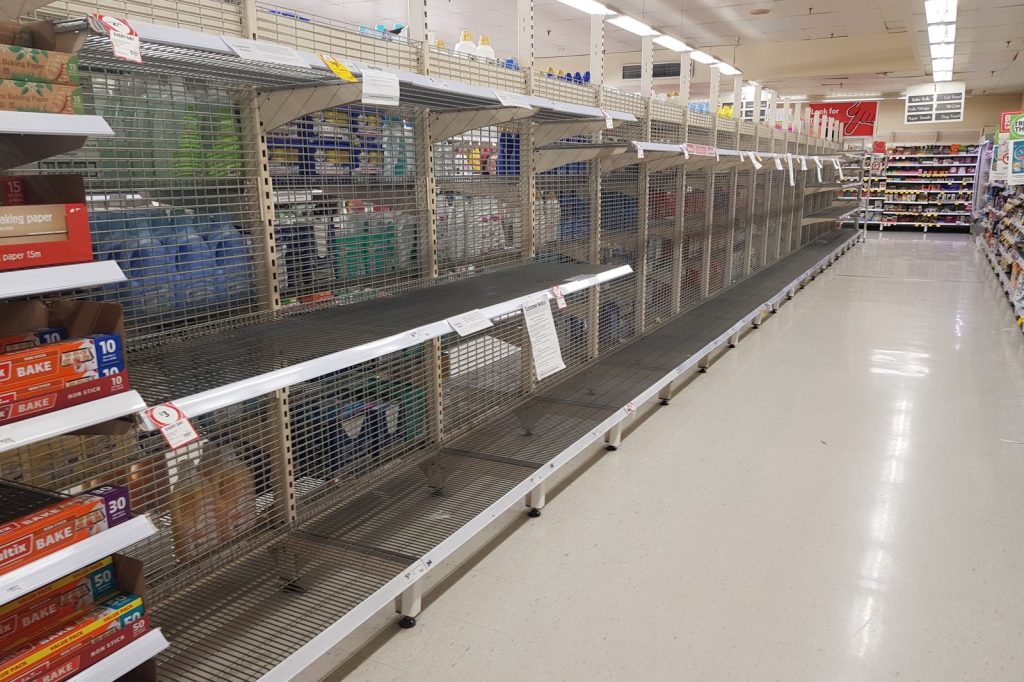
A year earlier, shoppers were the ones stockpiling. Now it is companies. Mattress makers, carmakers and aluminum foil producers are ordering more material than they need, spooked by the speed of the rebound in demand for goods. The rush is straining supply chains close to breaking point, and shortages, transport bottlenecks and price spikes are near the worst in recent memory.
A long list of shocks
Copper, iron ore, steel, corn, coffee, wheat, soybeans, lumber, semiconductors, plastic and cardboard are all tight. What sets 2021 apart from earlier squeezes is scale, and nobody can see an end. Girteka Logistics, which runs Europe’s largest truck fleet, has struggled to find capacity. Monster Beverage cannot get enough aluminum cans. Hong Kong’s MOMAX Technology has put off a new product because chips are scarce.
Recent events piled on. A freak accident in the Suez Canal backed up shipping in March. Drought hit crops. A deep freeze and blackout in February knocked out energy and petrochemical plants across the central U.S. Less than two weeks before, hackers shut the largest fuel pipeline in the country, and gasoline went above $3 a gallon for the first time since 2014. India’s COVID-19 outbreak now threatens its biggest ports.
The Logistics Managers’ Index, built from a monthly survey of supply chiefs, gives little reason to expect quick relief. It sits at its second-highest reading since records began in 2016, and its forward gauge shows no real easing a year out. The index has matched actual costs about 90% of the time. Zac Rogers, a Colorado State University assistant professor who helps compile it, said: “Essentially what people are telling us to expect is that it’s going to be hard to get supply up to a place where it matches demand.”
Prices climb
U.S. consumer prices excluding food and fuel rose in April by the most since 1982 from the month before. Producer prices increased twice as much as economists forecast. Fed Governor Lael Brainard urged officials to be “patient through the transitory surge.” Policy makers point out that some of the jumps reflect comparisons with steep drops a year earlier, and that U.S. retail sales stalled in April while commodity prices have eased from multi-year highs. David Landau of BluJay Solutions was less relaxed: the mix of factors, he said, is “ripe for significant inflation, with limited levers” for central banks.
Food is getting dearer. Palm oil has risen by more than 135% in a year to a record. Soybeans passed $16 a bushel for the first time since 2012. Corn futures reached an eight-year high and wheat the highest since 2013. A United Nations index of world food costs rose for an 11th month in April, to a seven-year high. Reynolds Consumer Products, maker of Reynolds foil and Hefty bags, plans its third price increase of 2021.
Small firms and big names
Dennis Wolkin, whose family has made crib mattresses for three generations, cannot get polyurethane foam. It costs 50% more than before the pandemic, and he would buy double what he needs and hunt for warehouse space rather than turn away new customers. “Every company like us is going to overbuy,” said Wolkin, vice president of operations at Atlanta-based Colgate Mattress.
Whirlpool CEO Marc Bitzer told Bloomberg Television its supply chain is “pretty much upside down.” The company now builds what the available parts allow, instead of following orders and forecasts. “I know there’s talk of a temporary blip, but we do see this elevated for a sustained period,” he said.
Shipping is stretched too. Container vessels are full, ocean rates are at records, and dozens of ships wait off California. Columbia Sportswear’s shipments were delayed three weeks. Maersk expects only a gradual decline in freight rates this year, and new ships take two or three years to build. Spot truckload prices are on track to rise 70% in the second quarter from a year earlier, according to KeyBanc analyst Todd Fowler.
In Asia, the chip drought has spread from autos to smartphone supply chains. South Korea plans to spend roughly $450 billion over the next decade to build the world’s biggest chipmaking base.