
Axiata Group Bhd’s shareholders have gone eight years without the 20 sen per share dividend the company keeps saying it wants to pay. Group CEO Vivek Sood now puts the return to that level at 2028.
“My guess is we should be able to get back to that kind of level [20 sen dividend per share] by 2028 … but we should be able to get back,” he told The Edge Malaysia.
Patience had worn thin by the recent annual general meeting. Questions there centred on the multibillion-ringgit losses booked in 2023 when Axiata left Nepal, and on April’s decision to exit Edotco Group’s tower business in Myanmar, probably at a loss too. Vivek sounded more confident than a year earlier, helped by better broader macroeconomic conditions. He was Axiata’s group chief financial officer from 2017 until he took the top job in March 2023, so investor questions on returns are familiar ground.
Why 20 sen slipped
Axiata once aimed to pay 20 sen annually as early as 2025, and it did so each year from 2012 to 2015. The plan slid after Indosat Ooredoo and CK Hutchison’s Hutchison 3 Indonesia merged in 2022 into PT Indosat Ooredoo Hutchison, Indonesia’s new second-largest mobile operator. Axiata judged that its Indonesian unit XL would struggle as a marginal player once 5G arrived, so it bought LinkNet and set out to make XL the leading converged operator. That cost money up front. Hence the shift to about 10 sen in the short term.
The Celcom deal followed similar logic. Axiata gave up full ownership of Celcom for a 33.1% stake in the larger CelcomDigi. Celcom used to contribute around RM1.1 billion in profit. A 33% share equals RM500 million, or RM600 million less. Vivek said that was a price worth paying in a market with zero or 1% growth over four years, four players and virtual operators coming in, and he cited RM8 billion in targeted synergies. Integration costs, he conceded, have bitten over the two years since.
The arithmetic
A 10 sen dividend costs roughly RM900 million a year, so 20 sen by 2028 would be about RM1.8 billion annually. Shareholders received a one-off special dividend of four sen in 2022 on top of the usual 10 sen, partly funded by proceeds from the CelcomDigi merger.
Balance-sheet repair comes first. Axiata wants its net debt-to-Ebitda ratio at 2.5 times by 2026. It fell from 3.36 times at end-December 2023 to 3.01 times at end-March 2024. Audited accounts at end-March showed cash of RM4.41 billion against borrowings of RM3.26 billion. Operating companies, including CelcomDigi, have committed to send at least 50% of cash back as dividends each year, and Vivek says this supports a floor of at least 10 sen per share from business-as-usual operations.
Nepal, Myanmar and what stays
Chairman Tan Sri Shahril Ridza Ridzuan told the virtual AGM on May 30 that the board investment committee has been strengthened to examine capital allocation. “Sometimes, it is the right decision going in, but over the course of ownership, politics and regulations change,” he said. He defended the 2016 entry into Nepal, noting RM2.5 billion in dividends came home from NCell. Net loss from the exit is understood to be about RM2 billion, with extra taxation issues and a possible licence non-renewal in 2029 also behind the decision.
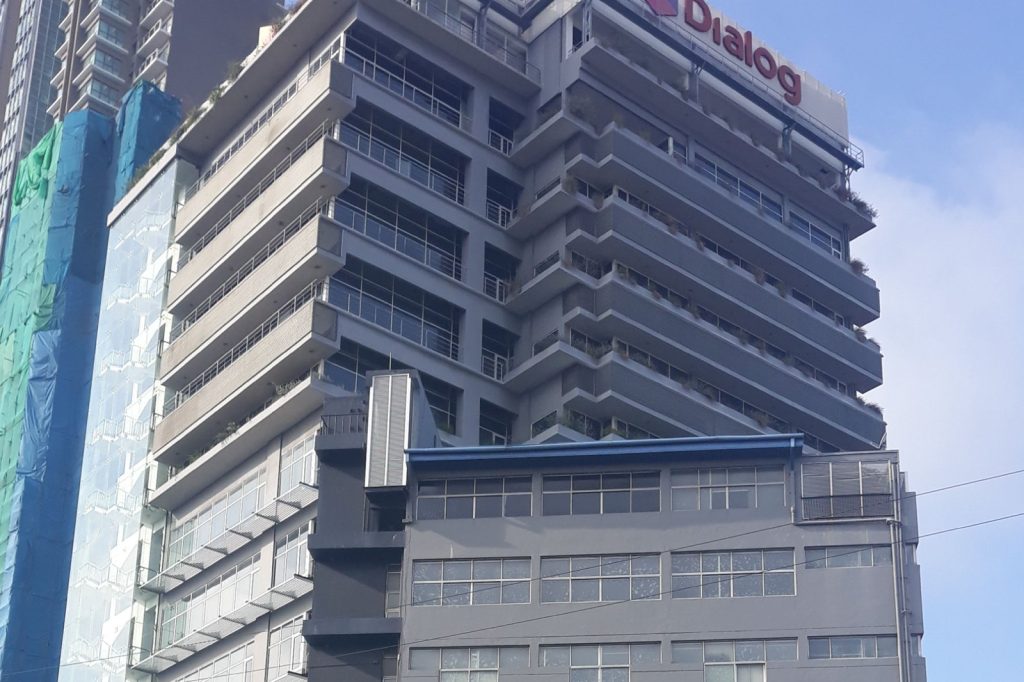
Vivek said Axiata has brought back more than RM6.3 billion in dividends from operating companies outside Malaysia. Cambodia, Sri Lanka and Bangladesh are doing well, he said. Smart Cambodia makes more than US$100 million in profit a year with zero debt. Robi in Bangladesh has grown profits 2½ times between 2022 and 2023. Dialog Sri Lanka cut US dollar debt from about US$260 million to about US$135 million.
In Indonesia, the proposed XL and Smartfren merger should have details by year end once due diligence is done. Axiata’s eventual stake in the combined company has not been decided.
Sources
Sources
- Cover Story: Why resilient units in the region remain key to Axiata's …
- Rihannariley's Videos – Cloudbate




