
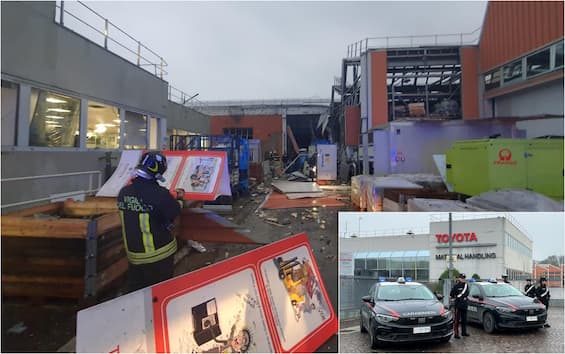
Bologna, Italy, October 23, 2024 — cybernewschronicle.com — The explosion at a Toyota Material Handling factory in Bologna, Italy, which killed two workers and injured eleven others on October 23, 2024, now forces a hard look at how industrial safety protocols hold up under real-world pressure. The cause remains under investigation. But the event itself, unfolding at a facility that builds forklifts and industrial equipment, carries weight beyond one tragic morning.
This factory is not an obscure outpost. It is a subsidiary of Toyota Industries Corporation, a global giant.
The parent company, Toyota Material Handling, Inc., sits in Columbus, Indiana, and has been a leading supplier of lift trucks in North America since 2002. The Bologna plant is part of that supply chain. When a facility tied to such a dominant player suffers a fatal explosion, the ripple effects are operational and reputational.
Industrial accidents of this scale are rare for Toyota. The company’s history in material handling stretches back to 1967.
Its current corporate structure, formed in January 2020 after the integration of two business units, is relatively young. But the brand carries decades of engineering discipline. An explosion that kills two people and wounds eleven suggests a failure somewhere in that system.
It could be equipment malfunction, a lapse in procedure, or an environmental factor. Investigators will determine that. What is already clear is that the factory will face intense scrutiny.
Safety audits, regulatory reviews, and likely a halt to production will follow. The broader context matters.
This incident raises questions about the environmental and safety costs of industrial manufacturing. Toyota Material Handling produces forklifts, tow tractors, and aerial work platforms. It is also the sole United States distributor for Aichi aerial work platforms.
These machines move goods, lift workers, and keep warehouses running. They are essential to modern logistics.
But the factories that build them are not risk-free environments. Explosions, chemical leaks, and structural failures remain hazards in heavy industry. The Bologna blast is a concrete example of that danger.
For the company, the immediate consequences are clear. Operations at the Bologna site will be disrupted. Investigations will demand resources and time.
Legal liabilities will surface. For the families of the two dead workers and the eleven injured, the cost is personal and permanent.
For the industry, the event serves as a pressure point. Regulators in Italy and across Europe may tighten rules. Companies will review their own plants.
The market will watch how Toyota responds. Toyota Material Handling has a significant global presence.
Its products are sold in dozens of countries. A serious accident at one of its core factories does not stay contained. It affects customer confidence, supplier relationships, and internal morale.
The company now has to manage a crisis while continuing to operate its other facilities. That is a difficult balance. No one yet knows what caused the explosion.
It could be a single error or a chain of failures. Either way, the event is a reminder that industrial work carries real physical risk.
Safety protocols exist on paper. They must work in practice. When they do not, people die.
That is the blunt reality behind the headlines from Bologna.




