
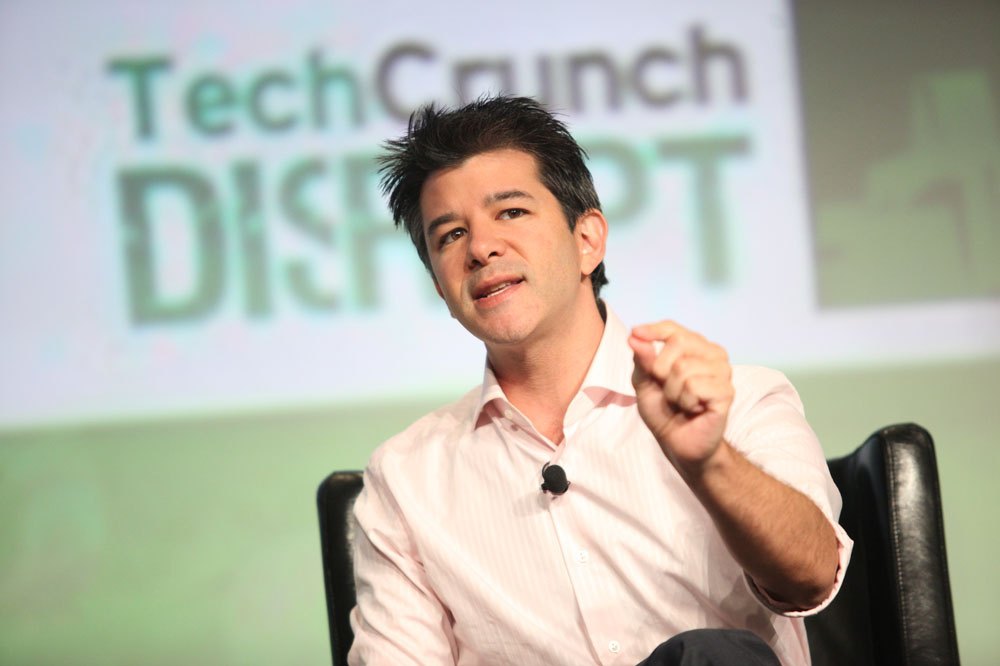
Travis Kalanick, the co-founder of Uber Technologies Inc., will step down from the company’s board of directors on 31 December 2019, severing his final formal connection to the ride-hailing giant he helped build. The 43-year-old announced the decision on 24 December, stating his intention to focus on CloudKitchens, a new business venture, and a personal investment fund established in 2018. Kalanick’s departure concludes a transformative decade for the company. He and Canadian entrepreneur Garrett Camp conceived the idea for Uber in 2008 after struggling to find a taxi during a snowy night in Paris.
They launched the service the following year as UberCab, a black-car network operating from a small office above a San Francisco bakery. Under Kalanick’s leadership, the company expanded from that modest start-up into a global transportation platform valued at approximately US $50 billion on public markets.
By the time he stepped down as chief executive in June 2017, Uber was active in more than 600 cities, completing over 40 million trips weekly and reshaping urban transport. “Uber has been a part of my life for the past 10 years,” Kalanick said in an emailed statement. “At the close of the decade, and with the company now public, it seems like the right moment for me to focus on my current business and philanthropic pursuits.”
Share Sales and New Ventures
The board exit follows a significant reduction in Kalanick’s ownership stake. According to Securities and Exchange Commission filings, he began selling shares immediately after Uber’s May 2019 initial public offering. By early November, he had sold more than 90 percent of his stake, generating roughly US $2.5 billion. Those sales reduced his voting power from about 16 percent at the time of the IPO to less than one percent, according to people familiar with the transactions.
Kalanick has directed part of the proceeds into CloudKitchens, a Los Angeles-based start-up that rents kitchen space to restaurants preparing meals exclusively for delivery apps. The company, controlled through his fund named 10100 (pronounced “ten-one-hundred”), has acquired more than 40 properties in the United States, India, China, and Europe since 2018.
Employees report the goal is to build a network of “ghost kitchens” that reduce overhead for restaurateurs while serving growing demand from Uber Eats, DoorDash, and other delivery services. The 10100 fund also backs for-profit projects in e-commerce and real estate, as well as non-profit initiatives focused on education and urban renewal. Public records show the fund committed US $50 million in March to purchase a shuttered shopping mall in southern California for conversion into a vocational training centre.
Tumultuous Tenure and Cultural Reckoning
Kalanick’s final departure comes 30 months after he was forced to resign as chief executive amid a series of scandals. In February 2017, former engineer Susan Fowler published a blog post accusing managers of routinely ignoring sexual harassment complaints, triggering an internal investigation that led to more than 20 employee dismissals.
Weeks later, Alphabet Inc.’s self-driving unit Waymo sued Uber, alleging theft of trade secrets; the case settled in 2018 with Uber paying US $245 million in equity and agreeing to independent software monitoring. Directors and investors concluded the controversies had become a liability. In June 2017, five major shareholders demanded Kalanick’s immediate resignation, which he tendered on 20 June.
Dara Khosrowshahi, previously CEO of Expedia Group, took over in August 2017 and has since worked to recast Uber as a more conciliatory corporate citizen. “Travis’s vision and tenacity built Uber,” Khosrowshahi wrote in an internal note to staff on 24 December.
“While the company and I are moving forward, we recognise the foundational role he played and wish him well in his next chapter.”
Market Reaction and Governance Shift
Wall Street reacted calmly to the news. Uber shares closed flat on 24 December in a shortened holiday session, with analysts noting that Kalanick’s diminished equity stake had already reflected his reduced influence.
“The board transition removes an overhang that had worried some institutional investors,” said Tom White, an analyst at D.A. Davidson & Co. “Governance is now clearly in the hands of a new team that can focus on the path to profitability.” The 11-member board will shrink to 10 at year-end. Lead independent director Ronald Sugar praised Kalanick’s “immense contribution” but noted the change gives outside directors a majority for the first time since 2015.
Governance specialists say the shift could ease regulatory scrutiny as Uber negotiates labour rules and congestion charges in cities from London to New Delhi. Kalanick, who retains the honorific title of co-founder, has not ruled out future technology investments.
People close to him say CloudKitchens could expand into robotic food preparation and automated delivery, areas that overlap with Uber’s own logistics ambitions. For now, however, he appears content to step away from the spotlight he once dominated. The exit bookends a decade that began with a simple smartphone app and ended with a public corporation grappling with the social consequences of gig-economy growth. Whether Kalanick’s next ventures replicate that scale remains uncertain, but his departure marks the definitive end of Uber’s founder-led era.




