
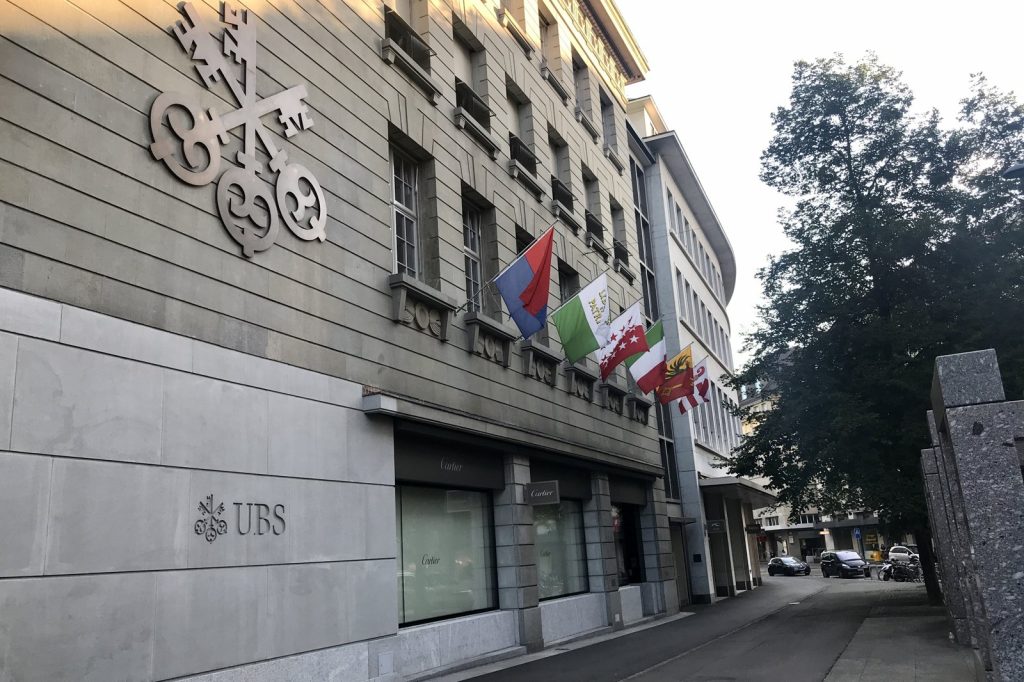
UBS AG, Switzerland’s largest bank, agreed on Wednesday to pay about $1.5 billion to international regulators and admitted to fraud over the rigging of Libor, the benchmark interest rate. The money goes to authorities in the US, Britain and Switzerland.
Only Barclays had settled before it. The penalty is more than triple the $450 million that American and British regulators imposed on Barclays in June for submitting false information between 2005 and 2009. Those fines set off the scandal that cost Barclays Chief Executive Bob Diamond his job and led Chairman Marcus Agius to announce he would step down at year end.
What UBS admitted
UBS said some of its employees “engaged in efforts to manipulate submissions for certain benchmark rates to benefit trading positions.” Some had also “colluded with employees at other banks and cash brokers” for the same purpose. The bank added that “inappropriate directions” went in partly because of “a desire to avoid unfair and negative market and media perceptions during the financial crisis.”
The bank’s Japan unit, where much of the manipulation took place, entered a plea to one count of wire fraud in an agreement with the US Justice Department.
Britain’s Financial Services Authority described the misconduct as “extensive and broad,” run out of UBS offices in London and Zurich. Different desks handled different rate submissions. The FSA documented at least 2,000 requests for inappropriate submissions, plus an unquantifiable number of oral requests that left no record.
“Manipulation was also discussed in internal open chat forums and group emails, and was widely known,” the FSA said. “At least 45 individuals including traders, managers and senior managers were involved in, or aware of, the practice of attempting to influence submissions.”
A hard year for the bank
Sergio Ermotti took over as UBS chief executive in November 2012, after a major trading scandal. He said the misconduct does not reflect the bank’s values or standards. “We deeply regret this inappropriate and unethical behavior. No amount of profit is more important than the reputation of the firm, and we are committed to doing business with integrity,” he said.
UBS expects a fourth-quarter net loss of $2.2-2.7 billion, counting fines, litigation, the unwinding of real estate investments, restructuring and other costs. Even so, the Zurich-based bank said it “remains one of the best capitalized banks in the world.” It has more than $2.4 trillion in invested assets, 63,745 employees in 57 countries at last count, and a target headcount of 54,000 in 2015.
This was not the first brush with regulators. In 2009, US authorities fined UBS $780 million for helping US citizens avoid taxes. In September 2011 the bank announced more than $2 billion in losses and blamed a 32-year-old rogue trader in London, Kweku Adoboli, for what Britain called its biggest-ever bank fraud. The FSA fined UBS because its internal controls were too weak to stop a relatively inexperienced trader from making vast, risky bets. Adoboli has been sentenced to seven years in prison. UBS has also faced a London trial over that scandal and continuing tax evasion probes.
The settlement came just over a week after HSBC agreed to pay nearly $2 billion over alleged money laundering. Other banks are expected to be fined over Libor. UBS described the probes as “industry-wide investigations into the setting of certain benchmark rates across a range of currencies.”
Sources
Sources
- UBS fined $1.5bn for Libor rigging – BBC News
- UBS to pay $1.5B in fines for LIBOR rate manipulation – CBS News




