
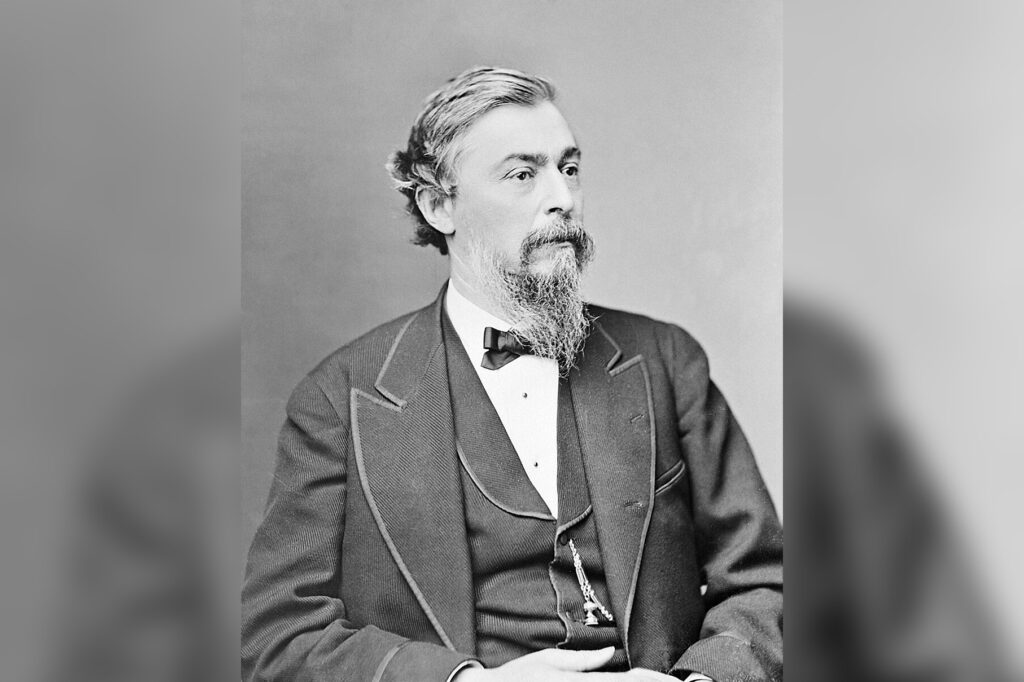
NEW YORK, July 8 — The figure that matters: 1,087 miles of track laid in just over three years. That was the accomplishment of Thomas C. Durant, the man who drove the Union Pacific Railroad across the American frontier — and who also engineered one of the most brazen corporate frauds of the 19th century.
The bottom line: Durant built a railroad and a scandal, and the two are inseparable. By the numbers, the Crédit Mobilier scheme overcharged the Union Pacific by millions of dollars, with insiders pocketing the difference while members of Congress looked the other way — because some of them were on the take.
Durant, who died in 1885 in relative obscurity, was born in Lee, Massachusetts, in 1820. He trained as a physician and became a professor of surgery at the University of Buffalo before pivoting to business. He made a fortune in grain trading and steamship lines — the kind of wealth that gave him the capital and the connections to take on the biggest infrastructure project of the era.
In 1862, Durant became vice president and general manager of the Union Pacific. He used his political ties to secure federal support for the transcontinental railroad.
But the real machinery of his fortune was Crédit Mobilier of America, a construction company that he organized. The company was secretly owned by Union Pacific insiders — including Durant himself and Congressman Oakes Ames of Massachusetts. Here is how the scheme worked.
Crédit Mobilier was hired to build the railroad. It overcharged the Union Pacific for construction work by millions of dollars. The insiders who owned Crédit Mobilier collected the inflated payments.
To keep the scheme from being investigated, Ames distributed shares of Crédit Mobilier to members of Congress. The scandal broke in 1872.
Congressional hearings followed. Ames was censured. Durant was forced out of the Union Pacific three years earlier, in 1869, after a power struggle with investor John Adams Dix.
But by then, the railroad was built — 1,087 miles of track in just over three years, a pace that would have been unthinkable without Durant’s relentless drive. Investors will note the pattern: the same qualities that made Durant effective — his aggressiveness, his willingness to bend rules, his political connections — were the qualities that brought him down.
The Crédit Mobilier scandal became a synonym for Gilded Age corruption, a cautionary tale about what happens when public subsidies meet private greed. Durant died in 1885, largely forgotten. The railroad he built still runs.
The scandal he engineered still echoes in the history books — and in the regulatory framework that followed.




