
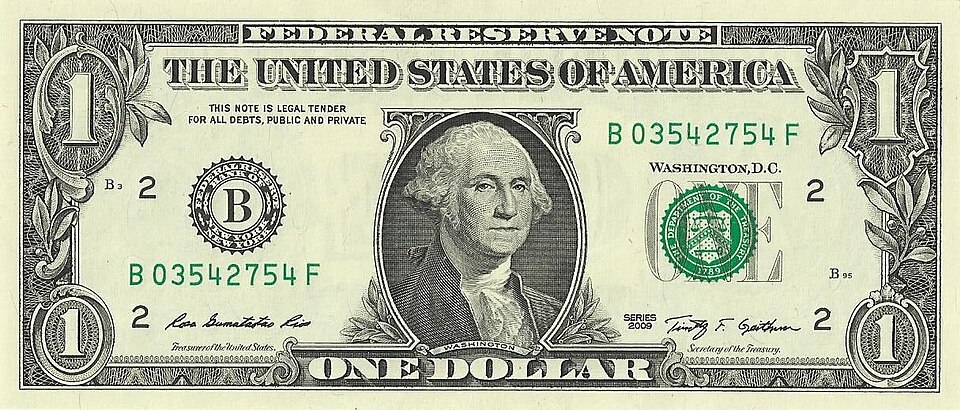
The dollar’s share of global securities holdings has fallen from 71% in 1999 to 58% in 2022. Vanguard’s economists still call that a wide lead, and they do not expect the slide to continue at the same pace.
Roger Aliaga-Díaz, Vanguard’s chief economist for the Americas, and senior economist Josh Hirt laid out the case in an April 2024 discussion. Their point: a reserve currency is what lets governments and investors settle trade, buy foreign assets, borrow, and price commodities such as oil or gold. It is also where they hide when things go wrong. Since World War II, that currency has been the dollar.
Three reasons it holds
Hirt gave three. The United States is a strong sovereign nation with steady economic growth. Its democratic institutions and property-rights standards earn the trust of other countries. And there is inertia, the plain difficulty of rebuilding a financial system that revolves around the dollar and U.S. capital markets. Rivals can claim some of these, Hirt said, but only the U.S. has all three.
Aliaga-Díaz explained the erosion. Globalization pushed trade and financial flows up faster than the U.S. economy grew, so demand for reserve currencies began to outrun what one issuer could supply. The euro, launched in the 1990s, took some business, and the yen and the pound a little. More recently a small but growing volume of transactions has been quoted in Chinese yuan. He said the peak effect of globalization is behind us, which is why he expects the decline to slow. The dollar is cheap to use and very liquid.
Calls for its demise are not new. Hirt noted they surged when the euro arrived in the late 1990s and again after the global financial crisis and China’s rise. Neither played out as predicted. Some countries have announced plans to bypass the dollar in trade contracts, but he said the dollar is still the currency of choice. Beating it would take significant global adoption of another currency, in reserves and in trade.
What the U.S. gets
Hirt put figures on the benefit. Demand for U.S. debt lets the government borrow more cheaply. One estimate cites about 1% in interest savings. Multiply that by roughly $8 trillion of Treasuries held overseas and it comes to about $80 billion a year.
Printing money pays too. About half of the $2.3 trillion in bills and coins in circulation is held abroad, and with the world economy growing about 3% a year, Hirt said the share of new currency going overseas amounts to around $35 billion, based on Fed data at year-end 2022.
There is a cost. In a crisis, flight to safety lowers U.S. interest rates just as the Fed wants to ease. In normal times, the same flows push the dollar up faster than other currencies, which hurts U.S. trade. Aliaga-Díaz said the advantages still outweigh the drawbacks.
What could change it
Vanguard sketched three scenarios. The likeliest is a “rising tide,” in which other nations slowly deepen their capital markets and institutions. The transition would be gradual and cheap. The second, an “innovator’s dilemma” led by crypto, it rated low, citing the lack of oversight and the volatility of fixed-supply assets. The third, an “unforced error” such as a fiscal crisis or a collapse of trust in U.S. politics, it also rated low, but it would hit hardest because the shift could come fast.
“People still have a tremendous amount of trust in the U.S. dollar and in the democratic institutions backing it,” Aliaga-Díaz said.




