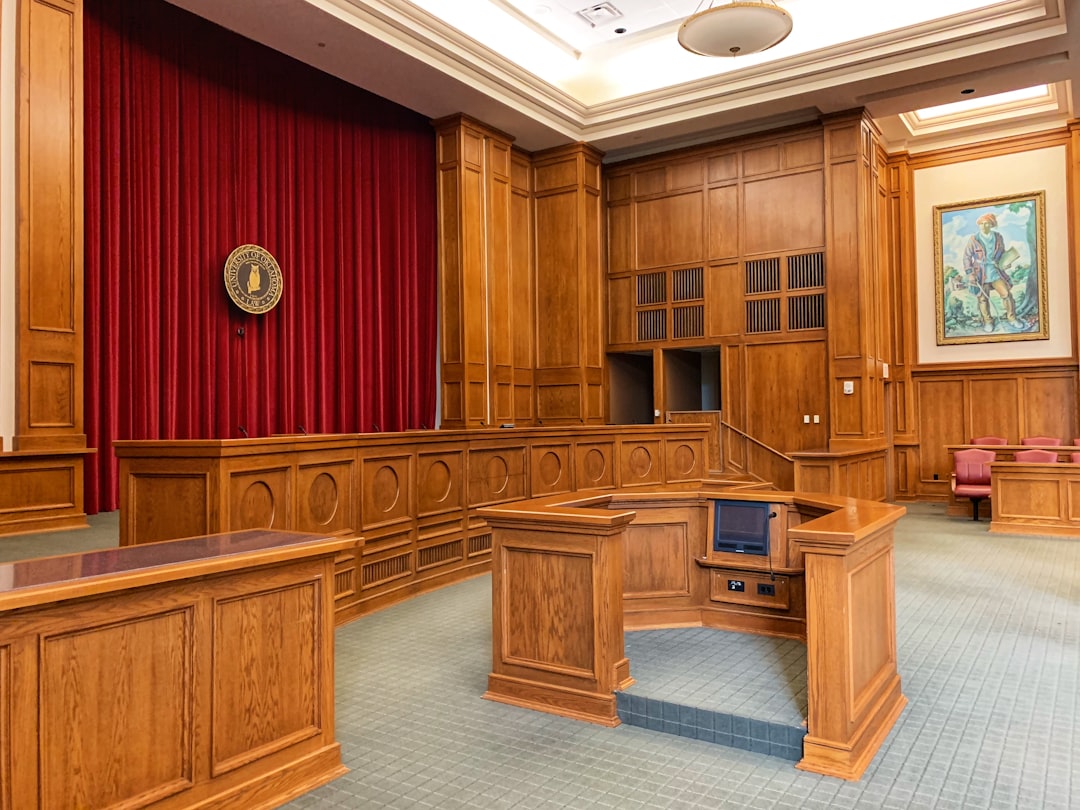
A trade ruling issued Wednesday in lower Manhattan strikes at the legal foundations of an era. The U.S. Court of International Trade declared the 10% global tariffs imposed by former President Donald Trump in 2018 illegal. The tariffs, applied broadly to imports from allies and rivals alike, were not authorized by U.S. law, the court found. The decision does not merely reverse a policy. It calls into question the legal architecture that supported it.
The court is no ordinary forum. It traces its lineage to the Board of General Appraisers, a Treasury Department body created by the Customs Administrative Act of 1890. That board became the U.S. Customs Court in 1926, gained independence in 1930, and today sits as a full federal court with jurisdiction over customs and international trade disputes. It is the institution best positioned to weigh the legality of trade actions. Its ruling carries weight accordingly.
Jennifer Hillman, a former U.S. trade official, said the decision could force a re-evaluation of how the United States approaches tariffs and trade agreements. The implications reach beyond the courtroom. The tariffs hit U.S. allies — Taiwan, Japan, the Philippines, the European Union, the United Kingdom, and Israel — directly. Those governments now have a legal basis to argue that the trade penalties imposed on their exporters were never valid under American law. The ruling may embolden them to seek restitution or to press for changes in future negotiations.
The legal logic is straightforward. The court found that the 2018 tariffs exceeded the authority Congress granted the executive branch. Trade law, as written, gives the president power to impose tariffs under specific conditions — national security threats, unfair trade practices, or serious balance-of-payments problems. The Trump administration argued that global economic conditions justified a broad, uniform tariff. The court disagreed. It said the law does not permit a blanket 10% levy on virtually all trading partners without a tailored finding of harm or threat.
This is not a policy dispute dressed as a legal one. It is a structural check on executive power. For decades, Congress delegated broad trade authority to presidents, and presidents used it. The court has now drawn a line. The executive branch cannot simply declare tariffs legal because it wants them. It must point to statutory authority that actually exists.
What happens next is uncertain. The ruling could be appealed. A higher court might reverse it. But the decision itself has immediate practical effects. Companies that paid the tariffs may seek refunds. Foreign governments may demand consultations. U.S. trade policy, already contested, now faces a judicial ruling that removes one of its central tools.
The international trade community is watching. The European Union, the United Kingdom, and Israel have all been affected by the tariffs. So have Taiwan, Japan, and the Philippines. Each of those governments will study the ruling for leverage. Each will calculate whether to demand compensation or to insist that future U.S. trade actions meet a higher legal standard.
The court did not rule on whether tariffs are good or bad policy. It ruled on whether they are legal. The answer was no. That distinction matters. Policy debates can be settled at the ballot box. Legal rulings settle questions of authority. This one says the 2018 tariffs were an unlawful exercise of power. The effects will be felt for years.