
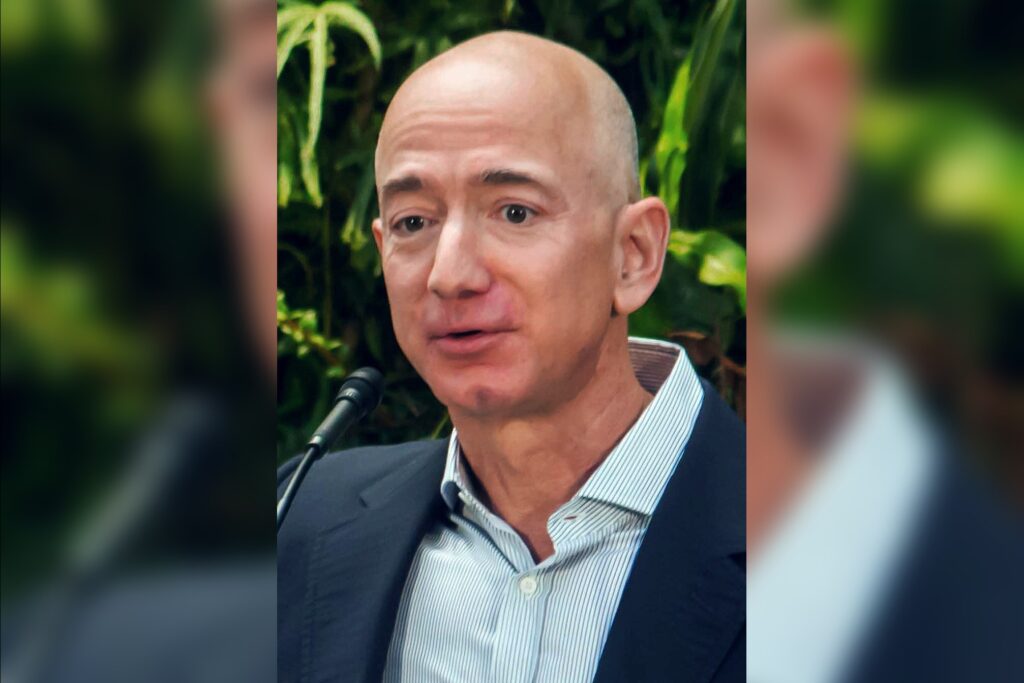
On paper, Amazon and SpaceX have started to rhyme. Both run satellite internet networks, both are spending heavily on AI infrastructure and hyperscale data centers, and each wagers that controlling the underlying “pipes”, in orbit or on the ground, buys durable pricing power across every business stacked on top. Together, the company Jeff Bezos founded and the one Elon Musk founded now carry a combined value of roughly $4.5 trillion on public and private markets.
That last number is the puzzle a new Fortune analysis by Amanda Gerut sets out to solve, as summarized by senior writer Sheryl Estrada in her July 14 CFO Daily briefing. Investors, the report argues, are applying Amazon-style valuation multiples to a company that generates only a few percent of Amazon’s revenue and still reports operating losses.
The size of the gap is the story. “If you squint, you can see them as doppelgängers with one big difference” she writes, before delivering the punchline in figures: “Amazon generated $716.9 billion in revenue in 2025 and $80 billion in operating income, compared with SpaceX’s $18.7 billion in revenue and a $2.6 billion operating loss.” Read as arithmetic, the difference between the twins runs to nearly $700 billion of annual revenue, and one sign flips from profit to loss.
The Boardroom Question
For finance executives, the stakes go past rockets and retail. The analysis frames the growing distance between valuations built on narrative and the financial performance actually being reported, and with it the inevitable question directors will ask of their own teams: why can’t we earn a SpaceX multiple? What markets are actually pricing, in this reading, is optionality, platform economics and founder-led bets on trillion-dollar opportunities, long before any earnings arrive to justify them.
The same briefing carries a sobering counterpoint from the world most companies actually inhabit. Glean’s Work AI Index 2026 finds 87% of surveyed digital workers using AI, saving each about 11 hours weekly, yet only 13% say their organization performs significantly better as a result. The report pins much of the shortfall on “botsitting”, staff spending their saved hours feeding context to models, checking outputs and fixing mistakes rather than producing net-new work; about 69% admit shipping machine-assisted work they neither fully verified nor fully understand.
And the organizational lesson travels beyond tech. “If you are not talking to your CFO all the time, your CIO, your CTO, any business constituent around that C-suite table, you really are at a disadvantage.” said Lara Balazs, Adobe’s chief marketing officer, whose own remit has stretched from campaigns into data infrastructure and capital allocation.
Whether SpaceX matures into the next Amazon or becomes the textbook warning on growth expectations, the comparison stands as a live experiment in how markets value story against ledger. The $4.5 trillion question is which of the twins the story turns out to be about.




