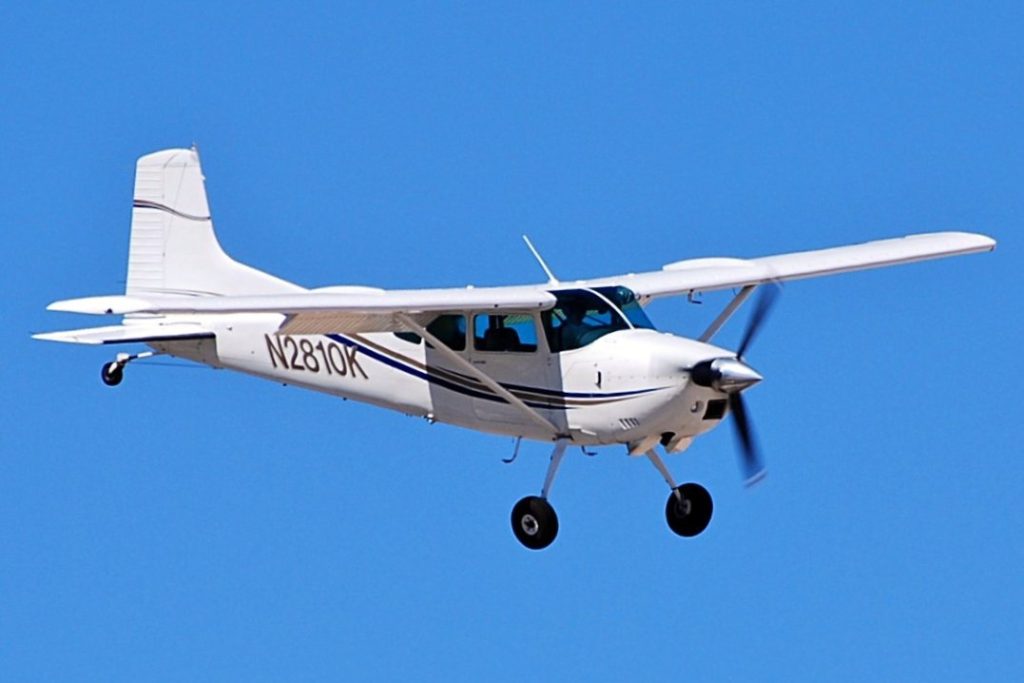
Cessna 180 Skywagon Crash in Nebraska Raises Questions About Aging Fleet
On April 18, 2025, a Cessna 180 Skywagon went down in the Platte River near Fremont, Nebraska, killing three occupants. The aircraft, which had been in service for at least 44 years, was built during a production run that ended in 1981. As a taildragger with fixed conventional gear and no nose wheel, the Skywagon is designed to operate from gravel bars, dirt strips and mountain airstrips, allowing it to haul cargo into areas where paved roads do not reach.
Such aircraft have long served as workhorses in Alaska, the Canadian bush and parts of South America, often accumulating thousands of flight hours and changing hands many times over the decades. The crash site lies just outside Omaha, on a stretch of the Platte River that is a shallow, braided channel flowing through the heart of Nebraska.
This river is a major stopover for sandhill cranes and whooping cranes during migration, and its shifting sandbars are used by wildlife, fishermen and pilots familiar with the area. Investigators have not yet determined what caused the Skywagon to leave the sky. The National Transportation Safety Board typically dispatches a team to examine wreckage, engine components and pilot records.
For an aircraft of this age, maintenance logs become a central focus, as known issues in aging general‑aviation fleets include corrosion in wing spars, engine wear and fuel‑system problems. The accident claimed three lives; their names have not been released.
Fremont, a city of roughly 27,000 residents, felt the loss immediately. Small aircraft are common throughout Nebraska, serving farmers, ranchers, flight schools and private owners, so when one goes down the impact is personal. The Cessna 180 Skywagon was produced for 28 years, from 1953 to 1981, with Cessna building thousands of examples that were sold as personal aircraft, utility planes and bush planes.
Its design features a high wing, a large radial or horizontally opposed engine and a fixed tailwheel, allowing it to carry four or six people depending on the variant and to take off and land in short distances. Although the Skywagon is not a fragile machine, age eventually catches up with every aircraft.
The average general‑aviation airplane in the United States is now more than 40 years old, and many are older than the people who fly them. Because Cessna halted production of the 180 model, no new replacements exist and no manufacturer builds a direct equivalent today. The remaining fleet stays airborne through part replacements, overhauls and meticulous maintenance—a system that works most of the time but, when it fails, can result in tragedy.
The Platte River itself runs about 310 miles across Nebraska, remaining slow and shallow, rarely deeper than a few feet. Its sandbars shift with the seasons, and unlike rivers that swallow wreckage, the Platte tends to leave debris exposed, which simplifies recovery efforts and leaves the wreckage plainly visible.
The sight of a broken airplane lodged in the river’s channel was jarring for observers, underscoring that the waterway is not merely scenery but a place where events—sometimes terrible—occur. The three occupants had been aboard a plane that had endured decades of weather, hard landings and countless takeoffs before the final flight on that Friday in April. As of now, the cause remains unknown, the wreckage rests on a sandbar in the Platte River, and the investigation continues.
Cessna 180 Skywagon Crash in Nebraska Raises Questions About Aging Fleet
”
Words inside heading: Cessna(1) 180(2) Skywagon(3) Crash(4) in(5) Nebraska(6) Raises(7) Questions(8) About(9) Aging(10) Fleet(11). That’s 11 words but heading not counted? Probably counts as part of article body but we can include; still counts toward total. We’ll count all.
Now paragraph 1:
“On(1) April(2) 18,(3) 2025,(4) a(5) Cessna(6) 180(7) Skywagon(8) went(9) down(10) in(11) the(12) Platte(13) River(14) near(15) Fremont,(16) Nebraska,(17) killing(18) three(19) occupants.(20) The(21) aircraft,(22) which(23