The Mechanics of a $117 Barrel and Market Volatility
Brent crude prices have breached the $117 per barrel threshold, a development that has triggered a broader selloff in equity markets and heightened concerns regarding corporate profitability. In the holiday-shortened week, the Indian benchmark Nifty50 fell 2.4%, reflecting a wider trend where elevated energy costs weigh heavily on investor sentiment, according to Business Today.
The mechanics here are straightforward but punishing for corporate balance sheets. Petroleum is a natural resource and chemical mixture found in geological formations, consisting primarily of hydrocarbons. As a non-renewable fossil fuel, it serves as the lifeblood of the global economy, with world consumption estimated at about 100 million barrels each day. When the price of this essential input spikes, the costs ripple rapidly through the transportation and manufacturing sectors, which rely on refined petroleum products like diesel, jet fuel, and chemical reagents to function.
From Geological Formations to Industrial Inputs
To understand the current squeeze, one must look at the role petroleum plays in industrial development. Since the Second Industrial Revolution, petroleum has been the primary driver of economic growth. It is not merely a fuel source; it is the raw material for thousands of petrochemicals, including solvents, textiles, refrigerants, synthetic rubber, fertilizers, and plastics. When the price of crude oil rises, the cost of producing these materials increases simultaneously.
The catch is that manufacturing firms often struggle to pass these higher input costs to consumers immediately. This lag creates a direct compression of profit margins. Similarly, the transportation sector faces an immediate hit to its bottom line as fuel costs represent a significant portion of operational expenses. Whether it is moving goods by truck or shipping them by air, the price of diesel and jet fuel acts as a tax on efficiency. As Brent crude futures recently rose 1.2% to $114.47 a barrel amid supply disruptions linked to the war against Iran, these sectors find their margins under siege, according to reporting by Time.
The Economic Toll on Import-Dependent Nations
High crude oil prices open up a can of worries for the Indian economy because of its dependency on imports for energy requirements, according to Gaurang Shah, Senior Vice-President at Geojit Investments. The numbers behind this dependency are significant. When oil prices remain elevated, the national import bill swells, which in turn fuels inflation concerns and forces central banks to navigate difficult monetary policy decisions. The recent market correction, which saw the Nifty Midcap 150 slide 5.5% and the Nifty Smallcap 250 decline 7.1%, is a direct reflection of this anxiety.
Gaurang Shah noted that crude oil prices were a major source of selling pressure in the domestic equity market. The pressure is not limited to large-cap stocks; it has extended into the broader market, as investors react to the potential for lower corporate earnings in the second quarter. While the Reserve Bank of India has taken measures to support the rupee, keeping it trading just below the 95 mark against the US dollar, the underlying reality of high energy costs remains a primary factor in the current market downtrend.
Policy Interventions and the Defense of Energy
The urgency of the current price environment has prompted direct government intervention in the United States. President Donald Trump has invoked the 1950 Defense Production Act, determining that petroleum production, refining, and related activities are essential to national defense. This move follows a national energy emergency declaration in January 2025. According to the presidential memorandum, ensuring resilient domestic petroleum production and logistics capacity is central to United States defense readiness.
The administration intends to use this authority to expand capacity at specific facilities, such as a Delek U.S. Holdings-owned refinery in Texas, as noted by Vice President J.D. Vance. By invoking Section 303 of the act, the government can provide financial support and purchase commitments to bypass infrastructure bottlenecks and supply chain limitations. This policy shift highlights how high energy prices are viewed not just as a market problem, but as a strategic risk. As investors track the ongoing Q2 earnings season, the interplay between these government interventions and the sustained high cost of crude will remain the focal point for global markets.
Geopolitical Disruptions and the Midterm Political Stakes
The surge in crude oil prices is directly linked to ongoing supply disruptions caused by the U.S. and Israel’s war against Iran. Brent crude futures rose 1.2% to $114.47 a barrel early Friday, extending gains after Thursday hit a five-month high. These market movements follow a period where Iran began disrupting shipping through the Strait of Hormuz in retaliation for U.S.-Israeli strikes. The resulting volatility has caused gas and diesel prices to soar across the country, with U.S. diesel pump prices averaging $6.32 a gallon, slightly higher than the previous day but below the September record, according to AAA.
This energy crisis has evolved into a defining political issue for voters in the coming midterm elections. The high energy prices and related inflation have become central to the political discourse, influencing how the administration approaches domestic policy. In response, the government has framed energy production shortfalls as a national defense risk. The presidential memorandum emphasizes that without immediate federal action, U.S. defense capabilities will remain vulnerable to disruption. This strategic framing justifies the use of emergency waivers to bypass ordinary congressional notification and authorization constraints, allowing for rapid intervention in private industry to address constrained financing and infrastructure bottlenecks.
Sources
- Markets Next Week: Crude oil at $117, broader market selloff and Q2 earnings in focus – BusinessToday
- Petroleum
- Trump Invokes Defense Production Act to Boost Oil Production
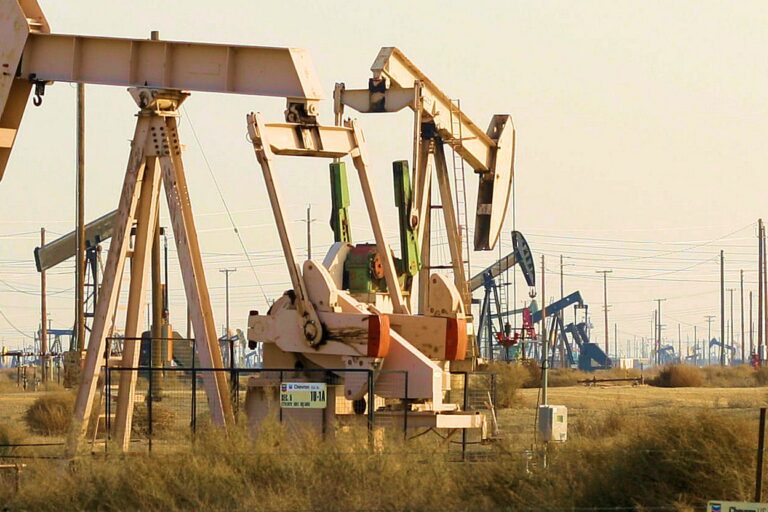
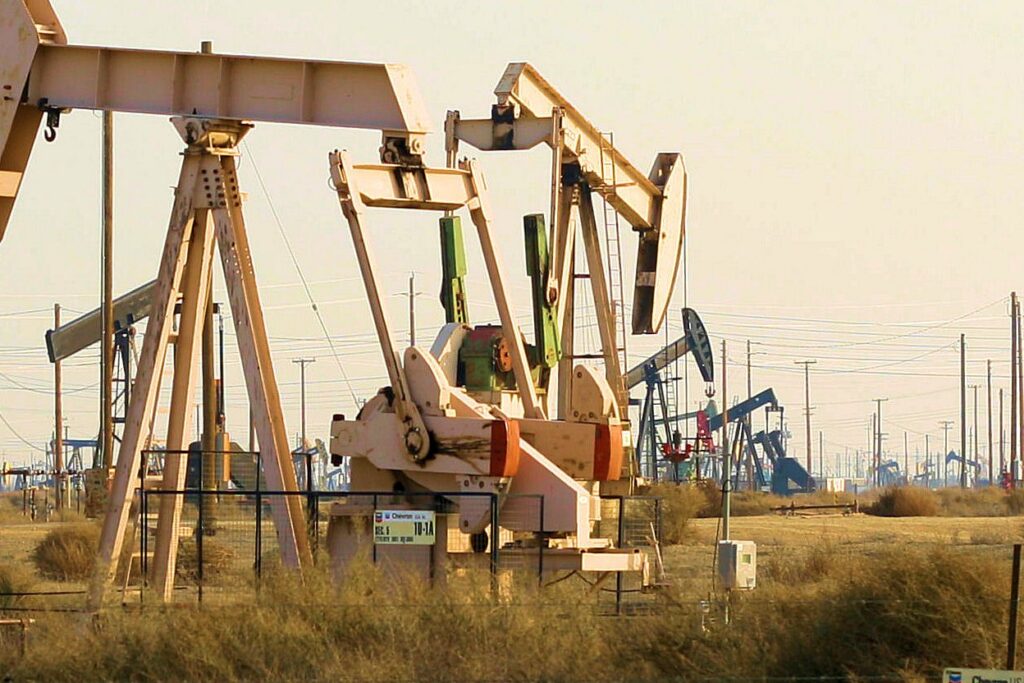
Photo: Richard Masoner / Cyclelicious (CC BY-SA 2.0)