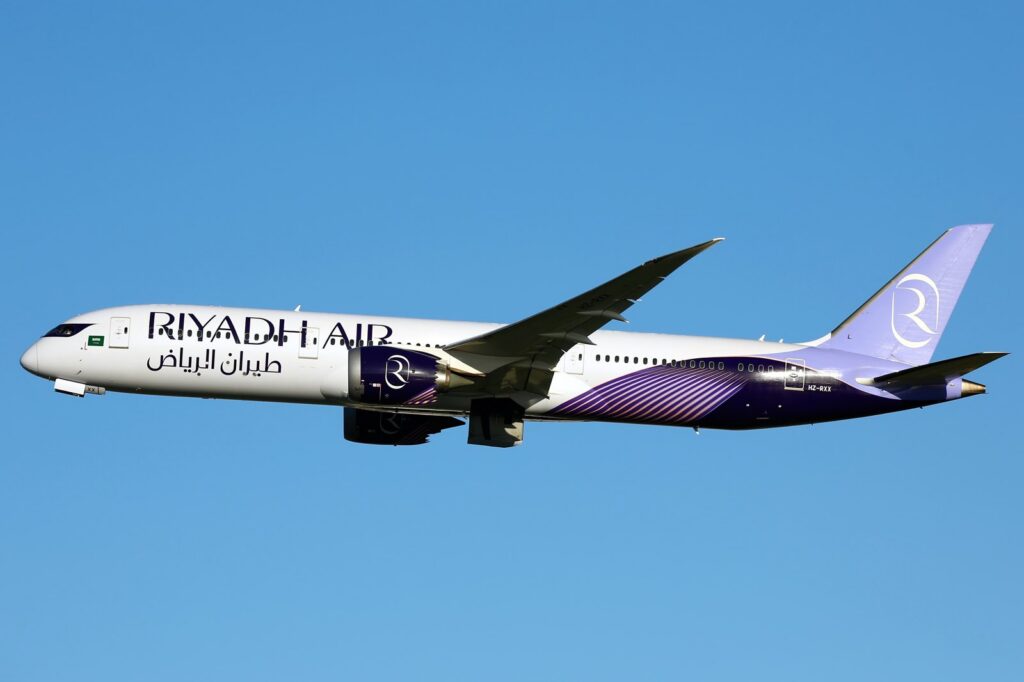
From October 25, Riyadh Air will fly six routes out of Al Qassim, a city 400 kilometers northwest of the capital it is named after. Cairo, Dhaka, Jeddah, London Heathrow, Lahore and Islamabad are all on the list. The airline has moved some of its Boeing 787-9 Dreamliners there because King Khalid International Airport in Riyadh has been hit by missiles.
Why the hub moved
Over several days, the missile strikes killed 15 people and injured more than 300. A direct hit on the terminal building on October 10 stopped operations altogether. Limited flying was allowed to restart eight days later, but plenty of airlines have not applied for the special permission that commercial passenger service now requires.
Riyadh Air pulled its brand-new 787s out of the city after the October 10 attack and suspended its schedule. That left two options: leave the aircraft on the ground or find another airport. It chose the second.
The Houthis in neighboring Yemen have said they will keep going after civil aviation targets across Saudi Arabia, with the Riyadh airport seen as the main one. Al Qassim is not out of reach. It sits within range of Houthi ballistic missiles. On October 21 the US Embassy in Riyadh warned American citizens to use “extreme caution” if they fly from any airport in the kingdom, saying Iranian-supported Houthis had attacked civilian airports and other critical infrastructure, with civilian casualties and severe travel disruption as a result. Some embassy staff and families have already left the country, reportedly by road to Bahrain, Qatar or the United Arab Emirates.
Getting passengers to the plane
Anyone booked on the six routes can take a free shuttle from the InterContinental Durrat Al Riyadh. The drive across the desert takes about three and a half hours.
A young airline with big targets
Riyadh Air is Saudi Arabia’s second flag carrier after Saudia. The Public Investment Fund owns it, Yasir Al-Rumayyan chairs it and Tony Douglas is chief executive. According to the Saudi Press Agency, the airline is expected to add US$20 billion to non-oil GDP growth and support more than 200,000 direct and indirect jobs.
The planned fleet is 60 Airbus A321neo, 31 Airbus A350-1000, 47 Boeing 787-9 and 20 Boeing 787-10 aircraft, with options for more. Getting there has been slow. Riyadh Air first aimed to start commercial flights in late 2024, but delivery delays pushed that back, and it took its first brand-new aircraft only in June. It now has eight 787-9s and has opened routes from Riyadh to Manchester, London Heathrow, Madrid, Cairo, Islamabad, Lahore, Mumbai, Dhaka, Kuala Lumpur, Milan, Jakarta, Dubai, Bangkok, Manila and Jeddah. Cooperation agreements are in place with carriers including Delta, Air France-KLM, Turkish Airlines, Singapore Airlines and Saudia.
Traffic shifts, risks stay
Simple Flying’s flight-tracker replays show that the dense flow of aircraft crossing the kingdom between Europe, Asia and Africa largely kept moving. What changed was where they landed. Activity picked up around Jeddah, while Riyadh went quiet.
Riyadh is not the only airport that has been hit. Since the attacks there, the Houthis have struck King Fahd International Airport in Dammam, killing two people. Operations at King Fahd have resumed. Saudi Arabia has Patriot interceptors and the THAAD anti-ballistic missile system, yet Houthi projectiles have slipped through more than once. The country is huge, and those defenses also have to cover its oil infrastructure, which the Houthis have attacked too.
Sources
- Riyadh Air
- Riyadh Air is No Longer Based in Riyadh: Airline Relocates to Airport 400 km North to Keep Limited Flights Operating
- Riyadh Airport Closure: How Airlines Are Flying Around Saudi Arabia Now
Photo: Colin Cooke Photo (CC BY-SA 4.0)