Relocating the Hub: The Operational Pivot
Riyadh Air has moved its aircraft 400 kilometers northwest to Al Qassim to maintain limited international service after King Khalid International Airport was damaged by missile strikes. The relocation allows the airline to restart flights to six key destinations beginning October 25, bypassing the suspended operations at its primary hub in the Saudi capital. This shift represents a significant logistical adjustment for a carrier that launched only weeks ago, forcing a rapid reconfiguration of ground handling and passenger access in the middle of an active security crisis.
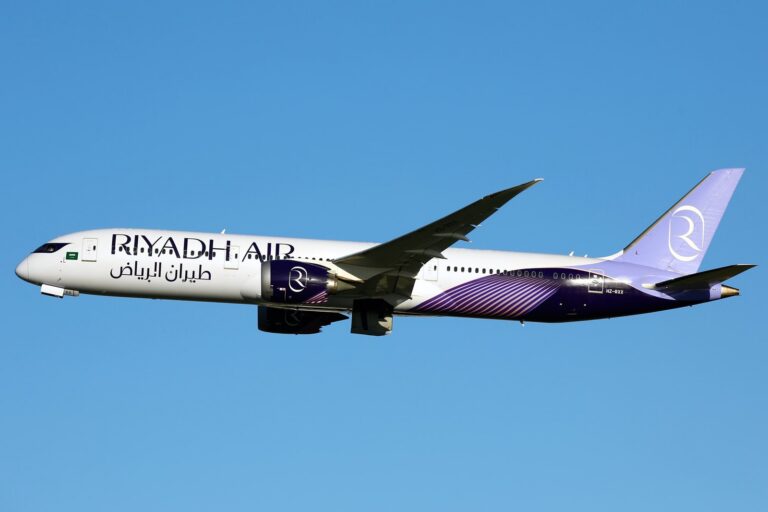
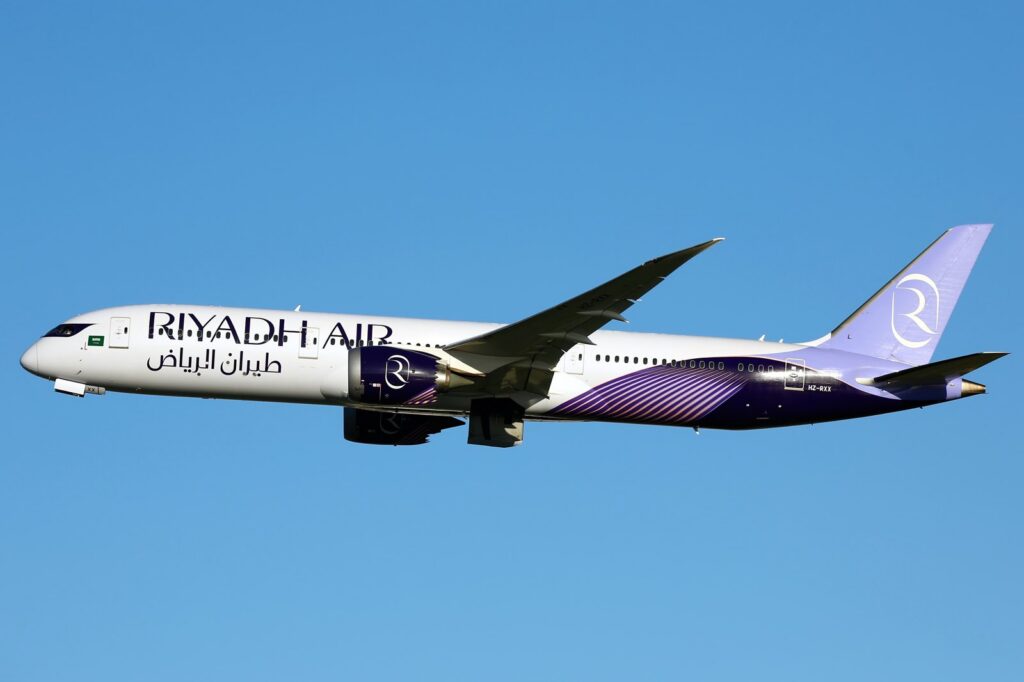
The decision to move operations stems from the severe impact of recent attacks on Riyadh’s main gateway. Following a direct hit to the terminal building on October 10, all operations at King Khalid International Airport were suspended. While limited operations have since resumed, many airlines have declined to apply for the special permission required to fly commercial passenger services to and from the airport. Riyadh Air chose to keep its planes flying rather than grounding them, identifying Al Qassim as a viable alternative base. The airline will resume service from this new location to Cairo, Dhaka, Jeddah, London Heathrow, Lahore, and Islamabad. This move keeps the carrier’s Boeing 787-9 Dreamliners in active service, preserving revenue streams and network connectivity despite the instability at its original hub.
Strategic Vision and Fleet Scale
Riyadh Air is the second flag carrier of Saudi Arabia, established to compete globally alongside the legacy carrier Saudia. The airline is owned by the country’s Public Investment Fund, with Yasir Al-Rumayyan serving as chairman and Tony Douglas as CEO. According to the Saudi Press Agency, the carrier is expected to add US$20 billion to non-oil GDP growth and create more than 200,000 direct and indirect jobs. This economic projection underscores the strategic importance of the airline to the Kingdom’s diversification goals, making its operational continuity a matter of national economic interest.
The carrier’s fleet strategy relies heavily on long-haul wide-body aircraft. The planned fleet consists of 60 Airbus A321neo, 31 Airbus A350-1000, 47 Boeing 787-9 Dreamliner, and 20 Boeing 787-10 Dreamliner aircraft, with options for additional orders. Riyadh Air operated its first commercial flight on October 26, 2025, marking the beginning of its scheduled operations. The airline has secured cooperation agreements with major global carriers, including SkyTeam members Delta Air Lines, China Eastern Airlines, Saudia, Air France-KLM, Air Europa, and Virgin Atlantic, as well as Star Alliance members Turkish Airlines, Singapore Airlines, Air China, All Nippon Airways, Air India, and EgyptAir. These partnerships are designed to integrate Riyadh Air into the global distribution network, leveraging codesharing and frequent-flier alignment to drive traffic from day one.
The initial launch timeline faced delays due to aircraft delivery schedules. The carrier originally planned to start commercial flights in late 2024 but slipped to late 2025. Since taking delivery of its first brand-new aircraft in June, Riyadh Air has received eight Boeing 787-9 Dreamliners. The airline opened routes from King Khalid Airport to Manchester, London Heathrow, Madrid, Cairo, Islamabad, Lahore, Mumbai, Dhaka, Kuala Lumpur, Milan, Jakarta, Dubai, Bangkok, Manila, and Jeddah. This rapid expansion highlights the aggressive growth strategy of the new entrant, which aimed to establish a dense global network quickly. The current relocation to Al Qassim tests the resilience of this strategy in the face of external security threats.
Impact of Regional Conflict on Aviation
The disruption at King Khalid International Airport is part of a broader pattern of attacks on Saudi civil aviation infrastructure. Houthi forces in Yemen have targeted airports across the Kingdom, with Riyadh serving as a primary objective. The missile attacks that killed 15 people and injured over 300 over several days have severely impacted the airport’s functionality. A direct hit to the terminal building on October 10 forced a complete suspension of operations, a critical blow to the airport’s status as the primary gateway to the Saudi capital.
The conflict has forced a rapid adaptation in air traffic management across the region. While Riyadh Airport faced disruptions, the dense stream of aircraft crossing the Kingdom between Europe, Asia, and Africa largely continued moving. Traffic patterns shifted, with heavier activity observed around Jeddah Airport as airlines rerouted flights to avoid the affected airspace and terminal. This adaptation demonstrates the flexibility of the global aviation network, which can absorb shocks by diverting traffic to secondary hubs. However, the security environment remains volatile, with Houthi rebels threatening to continue targeting civil aviation assets.
The US Embassy in Riyadh has issued warnings regarding the ongoing hostilities. In a statement posted on October 21, the embassy noted that Iranian-supported Houthis have engaged in attacks on civilian airports and critical infrastructure, resulting in civilian casualties and severe travel disruptions. The embassy advised US citizens to use “extreme caution” if they choose to fly from any airport across Saudi Arabia. These advisories reflect the persistent risk to aviation operations in the region, influencing airline decisions on which airports to serve and how to manage passenger safety.
Passenger Logistics and Service Continuity
To manage the transition to Al Qassim, Riyadh Air has implemented a specific logistics plan for its passengers. Travelers booked on the six resuming routes will use a complimentary shuttle service that departs from the InterContinental Durrat Al Riyadh. The journey takes approximately three and a half hours through the Saudi Arabian desert, a significant increase in ground travel time compared to standard airport transfers. This arrangement allows the airline to maintain its presence in the capital city for passenger boarding while operating its aircraft from a safer, albeit more distant, location.
The use of a hotel as a departure point is an unconventional solution to the airport closure. It highlights the operational challenges faced by the carrier in maintaining service continuity. The shuttle service acts as a bridge between the commercial hub of Riyadh and the operational base in Al Qassim, ensuring that passengers can still access the airline’s flights without needing to travel to the damaged King Khalid International Airport. This logistical setup is temporary, designed to keep the airline’s network alive until conditions at the primary hub improve or further security measures are implemented.
The relocation also affects the broader ecosystem of airport services. Ground handling, catering, and fueling operations must be reorganized to support the flights from Al Qassim. The airline’s ability to execute this pivot quickly speaks to the preparedness of its operations team, which had to coordinate with local authorities and service providers in Al Qassim within days of the attacks. The success of this temporary arrangement will depend on the reliability of the shuttle service and the efficiency of the ground operations at the new location.
Market Implications and Future Outlook
The situation at Riyadh Air serves as a case study in the vulnerability of new market entrants to geopolitical shocks. The airline’s launch coincided with a period of heightened regional tension, forcing it to adapt its business model almost immediately. The decision to relocate to Al Qassim preserves the airline’s international presence, allowing it to continue serving key markets in Europe, Asia, and the Middle East. This continuity is crucial for maintaining customer confidence and upholding the airline’s reputation for reliability.
The economic stakes are high. With an expected contribution of US$20 billion to non-oil GDP, any prolonged disruption to Riyadh Air’s operations could have significant implications for Saudi Arabia’s economic diversification plans. The airline’s ability to navigate the current security environment will be a key factor in its long-term success. The relocation to Al Qassim is a short-term measure, but it demonstrates the carrier’s commitment to keeping its flights in the air despite the challenges.
As the conflict continues, the aviation industry in the region will need to remain vigilant. The Houthi threat to civil aviation targets poses a persistent risk to all operators in the area. Airlines are likely to continue monitoring the security situation closely, adjusting their route networks and operational bases as needed. For Riyadh Air, the focus remains on executing its strategic vision of becoming a global carrier, even as it deals with the immediate operational hurdles posed by the regional conflict. The company’s response to the crisis will be closely watched by investors and industry observers as a test of its management’s capability and resilience.
Sources
- Riyadh Air
- Riyadh Air is No Longer Based in Riyadh: Airline Relocates to Airport 400 km North to Keep Limited Flights Operating
- Riyadh Airport Closure: How Airlines Are Flying Around Saudi Arabia Now
Photo: Colin Cooke Photo (CC BY-SA 4.0)