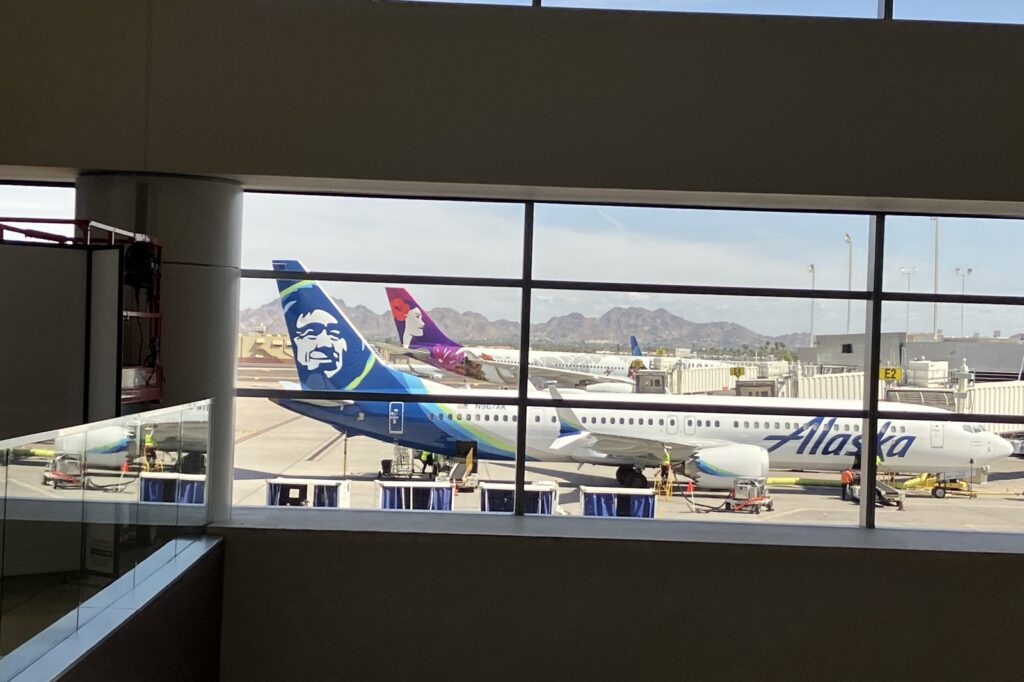
The number that matters: up to $700 million. That is how much Alaska Air Group could lose in 2026 if conditions stay as they are, CEO Ben Minicucci told employees in a memo seen by Reuters. On Friday the company said it will cut about 200 non-contract positions to start getting ahead of it.
By the numbers, the layoffs are small. They hit less than 1% of a workforce of roughly 32,500. Of the jobs going, 125 are in Washington state and 48 are in Hawaii. People affected work their last day on November 13, but pay runs through December 31, with severance and other support on top. Pilots, flight attendants, airport staff and mechanics are untouched; the memo says no frontline, non-management jobs are being eliminated.
Minicucci put the blame partly on the company’s own habits. Overhead, he wrote, had “grown at a disproportionate rate to revenue” over the past few years. “We must return to the financial discipline that has long been a key competitive advantage,” he said.
Fuel is the whole story
A gallon of jet fuel went from $2.51 to $3.94, up 57%. The third-quarter fuel bill came to $1.214 billion, 60% higher than a year earlier. Alaska’s original 2026 plan assumed $2.50 a gallon. For the fourth quarter it now expects $4.65 to $4.85, and it puts the extra fuel spending for the full year at $1.8 billion above plan.
Revenue did its part. Third-quarter sales rose 14% to $4.308 billion on capacity only 2.4% higher. It was not enough: Alaska still booked a net loss of $147 million. Full-year guidance calls for an adjusted loss of $5.00 to $5.50 per share. Investors will note that a $700 million pretax loss would be the airline’s first adjusted pretax loss outside the pandemic since 2003.
Structure makes it worse. Fuel eats between 15% and 25% of operating costs at US airlines, and the big carriers have largely dropped financial hedges, Southwest among them since 2025. European airlines cover 70% to 80% of their needs. With no cushion, price jumps go straight to the bottom line.
Fares are up, and it is not enough
Passengers are paying more. US airfares rose nearly 23% in the seven months through September, according to Labor Department data, and the average round-trip fare hit $669. Yet Delta Air Lines, American Airlines and Southwest Airlines have all lowered their 2026 earnings forecasts anyway. The International Air Transport Association now sees 2026 net profit for the global industry at $23 billion, half of what it had expected.
Cuts in the middle of a merger
Alaska is making the cuts while it digests Hawaiian Holdings, which it bought in September 2024 for $1.9 billion plus about $900 million in net debt. The pieces are mostly in place: one FAA operating certificate, the Atmos Rewards loyalty program, a single reservations system. Joint collective bargaining agreements are not. Hawaiian’s 787s fly in Alaska colors, but with Hawaiian crews.
Management says it will keep spending on its fleet, customer experience and network, including long-haul flying from Seattle. Paris and Athens are planned for 2027, and the Alaska Accelerate program targets $1 billion in incremental profit that year, half of it from merger synergies.
Sources
- Alaska Air Group cuts about 200 non-union jobs and warns of losses of up to $700 million in 2026
- Alaska Air to cut about 200 jobs as fuel shock squeezes earnings – SRN News
- Alaska Air cuts jobs as fuel costs threaten annual loss
- Alaska Air plans 200 job cuts as fuel costs soar
- Alaska Air to Cut 200 Jobs as Fuel Costs Raise Risk of $700 Million Loss
Photo: Ziongarage (CC0)