MUMBAI, November 2, 2026 — The Reserve Bank of India has classified Tata Sons among 16 upper-layer non-banking financial companies, a designation that forces the holding company to either list on Indian exchanges or restructure its balance sheet to escape enhanced regulatory oversight. The move arrives two years after Ratan Naval Tata’s death and places his half-brother, Noel Tata, at the centre of a boardroom battle over the conglomerate’s future structure.
From Shop Floor to Global Chairman
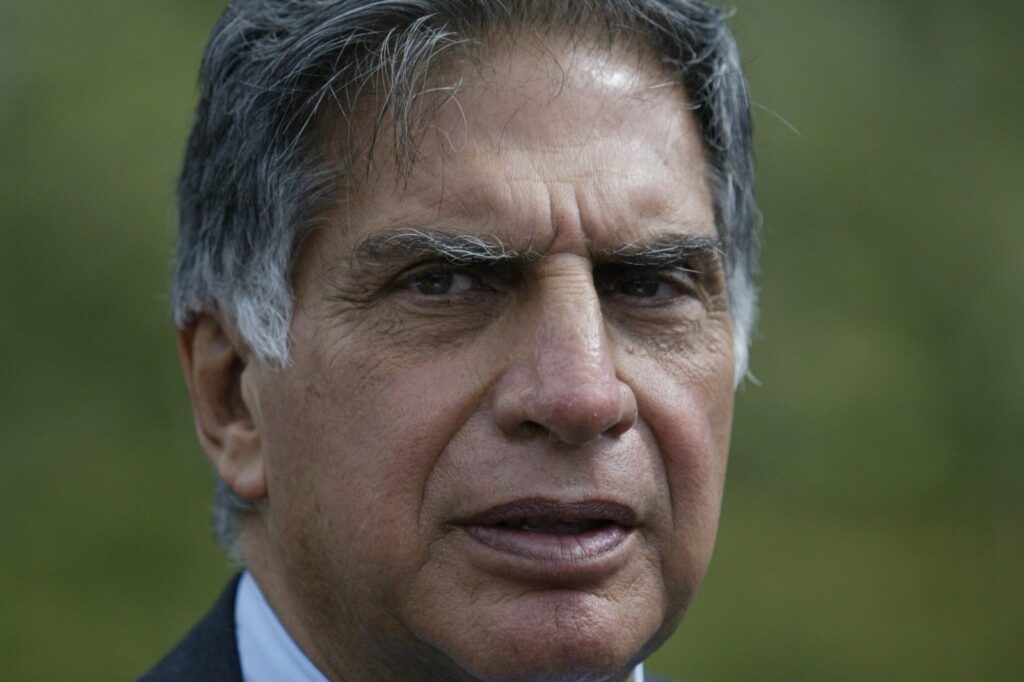
Ratan Naval Tata joined the Tata Group in 1962, starting on the shop floor of Tata Steel after graduating from Cornell University with a degree in architecture. He succeeded JRD Tata as chairman of Tata Sons in 1991, inheriting a conglomerate that was largely India-centric. Over the next two decades, he executed a string of cross-border acquisitions — Tetley in 2000, Corus in 2007, and Jaguar Land Rover in 2008 — that reshaped the group’s revenue profile and global footprint. He stepped down in 2012, returned as interim chairman from October 2016 to February 2017 following the ouster of Cyrus Mistry, and died on 9 October 2024 at the age of 86.
The Regulatory Trigger
The RBI’s September 11 letter declined Tata Sons’ request to voluntarily surrender its Certificate of Registration as a core investment company. Instead, the central bank directed the firm to comply with the rules applicable to NBFC-Upper Layer entities. According to the filing, the company held total assets of INR 2.01 lakh crore as of March 31, 2026, well above the INR 1,000 crore threshold that complicates deregistration. Under the current framework, an entity classified as an upper-layer NBFC remains subject to enhanced requirements for at least five years, even if it later falls below the qualifying criteria.
Restructuring Plan Tabled
To alter its regulatory classification, the Sir Dorabji Tata Trust and the Sir Ratan Tata Trust filed a restructuring proposal on September 28. The plan would fold two wholly owned subsidiaries — Tata Electronic Systems Solutions (TESS) and Tata Consulting Engineers (TCE) — into Tata Sons. Adding operating businesses alongside the holding-company function could move the entity outside the definitions of a non-banking financial company and a core investment company. Because both subsidiaries are wholly owned, the merger would not require fresh share issuance or alter the existing ownership structure. Tata Sons would seek the RBI’s no-objection before approaching the National Company Law Tribunal, and would later apply to give up its CIC registration.
Deadlock and the SP Group Buyback
The restructuring vote coincides with a long-running dispute with the Shapoorji Pallonji (SP) Group, which owns 18.37 percent of Tata Sons and has sought to monetise part of its holding to reduce debt. Noel Tata, in his capacity as Tata Trusts Chairman, has forced a board vote on a ₹25,000 crore selective capital reduction that would buy back and cancel a slice of the SP Group’s shares. The two resolutions — one for the restructuring, one for the buyback — were tabled via letters dated October 29 invoking Article 121B of the Articles of Association, which allows directors to set agenda items with 15 days’ notice. The vote is scheduled for the November 26 board meeting.
Governance Fractures
Tata Trusts controls 66 percent of Tata Sons through the Sir Ratan Tata Trust and Sir Dorabji Tata Trust. However, differences among Tata Trusts stakeholders have complicated the leadership transition and governance structure. The two Tata Trusts-nominated directors on the Tata Sons board have taken opposing positions, reflecting deeper disagreements within the shareholder group. Noel Tata has favoured keeping Tata Sons private despite the regulatory pressure, while the SP Group has pushed for a liquidity event.
Retail Flagship Signals Shift
The governance tensions spilled into Trent, the group’s fashion and retail flagship established by Simone Tata. On October 30, Noel Tata appointed close friend Bahram Vakil, co-founder of AZB & Partners, as chairman effective November 12, a day after Noel retires from the role. The revamped board removes Tata Sons nominees despite the holding company owning 32 percent of Trent and having recently participated in the retailer’s Rs 2,500-crore rights issue. Vakil, also vice-chairman of Tata Investment Corporation, is seen as a strong contender to succeed Noel as its chairman when he steps down on November 11 upon reaching the group’s retirement age of 70 for non-executive directors.
Sources
- Ratan Tata
- Noel picks top lawyer, friend as Trent successor
- Ganesh Rayala joins Ratan Tata Innovation Hub AP as head of youth, ecosystem and marketing – Indian Television Dot Com
- Noel Tata Forces Board Vote on ₹25,000 Crore SP Group Buyback and RBI-Driven Restructuring at Tata Sons — BigGo Finance
- Tata Group's Leadership Dilemma
- Tata Investment stock: RBI decision revives Tata Sons listing debate
Photo: Wikimedia Commons (CC BY-SA 4.0)