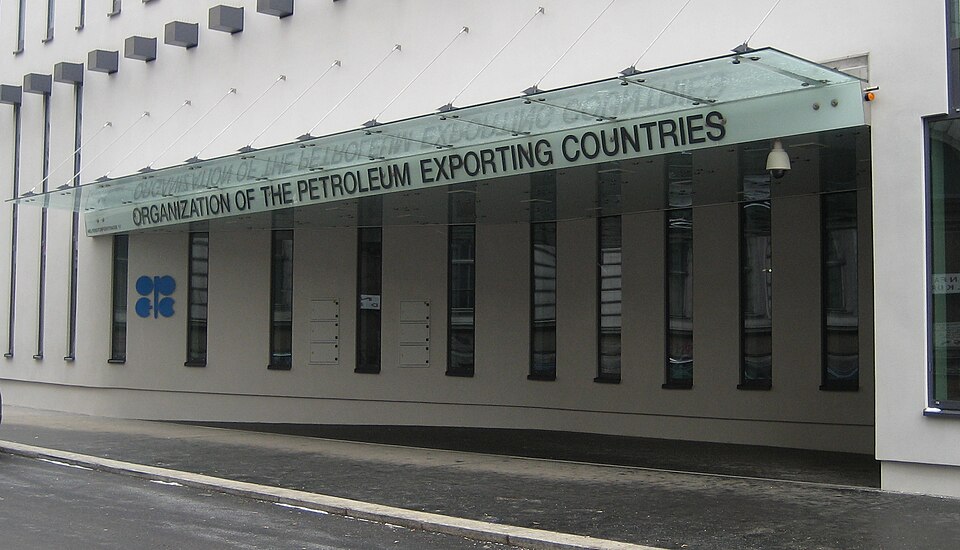
The Organization of the Petroleum Exporting Countries (OPEC) is an intergovernmental cartel that enables the cooperation of leading oil-producing and oil-dependent countries to collectively influence the global oil market and maximize profit. Founded on 14 September 1960 in Baghdad by the first five members – Iran, Iraq, Kuwait, Saudi Arabia, and Venezuela – the organization has played a significant role in shaping the global oil industry.
Currently comprising 11 member countries, OPEC accounted for 38 percent of global oil production in 2022. This significant share of global oil production underscores the organization’s influence on the global energy landscape. Furthermore, it is estimated that 79.5 percent of the world’s proven oil reserves are located within OPEC nations, with the Middle East alone accounting for 67.2 percent of OPEC’s total reserves. This concentration of oil reserves within OPEC member countries highlights the organization’s critical role in meeting global energy demands.
In the 1960s and 1970s, OPEC undertook a series of steps to restructure the global system of oil production in favor of oil-producing states. This effort was aimed at reducing the dominance of the “Seven Sisters,” a group of Anglo-American oil firms that had previously controlled the global oil industry. By asserting their collective influence, OPEC member countries were able to negotiate more favorable terms and increase their share of oil revenues. This shift in the global oil landscape had far-reaching consequences, including a dramatic rise in oil prices in the 1970s.
The 1970s oil price shock had significant and long-lasting impacts on the global economy. As oil prices soared, many countries faced economic challenges, including inflation, recession, and trade imbalances. The oil price shock also spurred efforts to reduce energy consumption, increase energy efficiency, and develop alternative energy sources. While OPEC’s actions in the 1970s had a profound impact on the global economy, the organization’s influence on world oil-supply and oil-price stability has been limited since the 1980s.
One of the key challenges facing OPEC is the frequent cheating by member countries on their commitments to production quotas. This lack of adherence to agreed-upon production levels can undermine the organization’s efforts to stabilize the global oil market and maintain price stability. Despite these challenges, OPEC remains a critical player in the global oil industry, and its actions continue to be closely watched by energy market participants, policymakers, and consumers around the world.
Looking ahead, it will be important to monitor OPEC’s efforts to balance the global oil market and maintain price stability. As the global energy landscape continues to evolve, with growing demand for cleaner energy sources and increasing competition from non-OPEC oil producers, the organization will need to adapt its strategies to remain relevant and effective. With its significant share of global oil production and proven reserves, OPEC is likely to remain a major influencer of the global oil market for the foreseeable future. As such, its actions and decisions will continue to have far-reaching implications for the global economy, energy security, and the environment.