
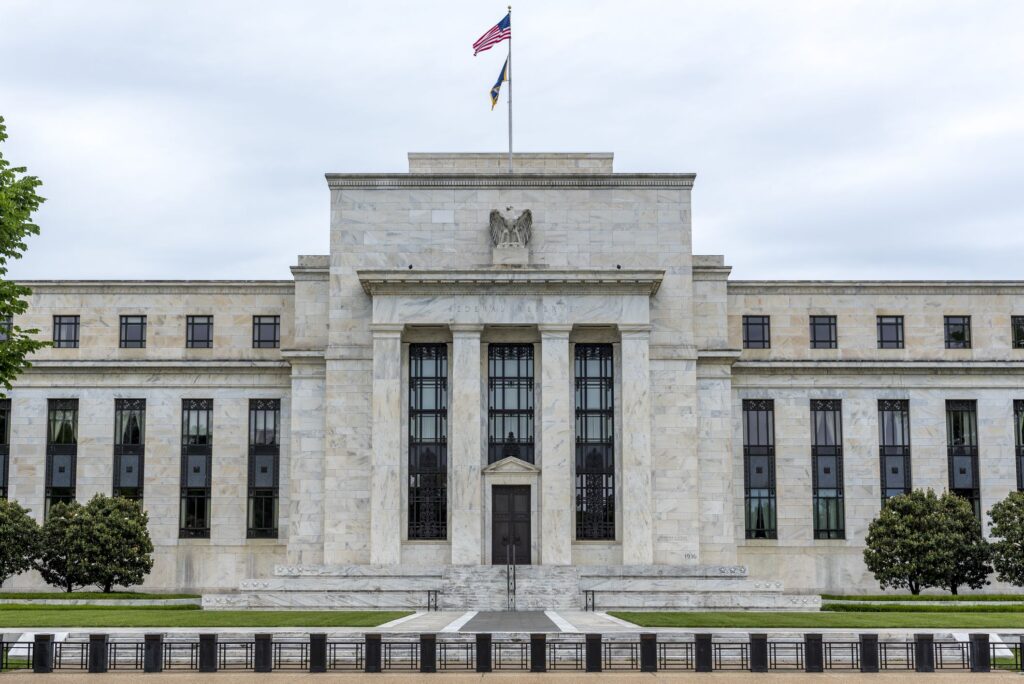
WASHINGTON, July 25 — The Federal Reserve System, created on December 23, 1913, after the Panic of 1907, sets U.S. monetary policy through the Federal Open Market Committee by adjusting the target for the federal funds rate. That rate, in turn, influences market interest rates and economic activity via the monetary transmission mechanism — the chain of cause and effect that runs from a central bank decision to borrowing costs, spending, and ultimately prices.
Under the hood, it is a lever that works slowly and unevenly, but the technical reality is that the Fed has held that lever since the Wilson administration. Congress, in the Federal Reserve Act, established three objectives: maximising employment, stabilising prices, and moderating long-term interest rates.
The first two are often referred to as the Fed’s dual mandate. When the FOMC raises the federal funds rate to combat inflation, borrowing costs rise across the economy, reducing consumer spending and business investment. The detail that matters is that this dampens demand for non-essential goods — including luxury foods such as premium chocolates, imported cheeses, and high-end wines — which are particularly sensitive to changes in disposable income.
The Fed’s price-stability goal means higher rates are designed to cool inflation by squeezing overall demand. The Federal Reserve considers itself an independent central bank.
Its monetary policy decisions do not require approval by the president or Congress, and its funding does not come from appropriated congressional funds. The board of governors consists of seven members appointed by the president, with terms that span multiple presidential and congressional terms. That structure is intentional: the framers wanted insulation from political cycles.
The FOMC includes all seven governors and all twelve regional Federal Reserve Bank presidents, though only five bank presidents vote at any one time — the New York Fed president plus four others on rotating one-year terms. It is a committee designed to be deliberative, not swift. ## The books and the barbs The Fed’s financial performance is substantial. In 2015, the Federal Reserve earned net income of $100.2 billion and transferred $97.7 billion to the U.S. Treasury.
In 2020, earnings were approximately $88.6 billion, with remittances of $86.9 billion. The technical reality is that the Fed is largely self-funding through interest on its securities portfolio and returns the vast majority of its earnings to the Treasury, making it a curious hybrid of private and public.
That has not shielded it from criticism. Critics have argued that expansionary Fed policies and bailouts contribute to inflation, asset bubbles, and moral hazard. They contend that the shift from a gold standard to fiat currency has led to long-term inflation and financial instability.
The criticisms are not new, but they remain a persistent undercurrent in the ongoing debate about the central bank’s role. As ever, the Fed’s dual mandate pulls in different directions — taming inflation risks slowing employment, and vice versa.
With the FOMC meeting schedule set and the federal funds rate in the spotlight, the next moves will be watched not only on Wall Street but in the aisles of shops selling imported cheeses.
Sources
{“@context”: “https://schema.org”, “@type”: “NewsArticle”, “headline”: “Federal Reserve Rate Hikes Drive Up Luxury Food Prices”, “description”: “WASHINGTON, July 25 — The Federal Reserve System, created on December 23, 1913, after the Panic of 1907, sets U.S. monetary policy through the Federal…”, “datePublished”: “2026-07-25T09:30:00+00:00”, “author”: {“@type”: “Person”, “name”: “Sebastian Smith”}, “publisher”: {“@type”: “Organization”, “name”: “InfoPulse Today”, “url”: “https://newsfeed.2bme.xyz/”}, “citation”: [{“@type”: “CreativeWork”, “url”: “https://en.wikipedia.org/wiki/Federal_Reserve”}]}




