
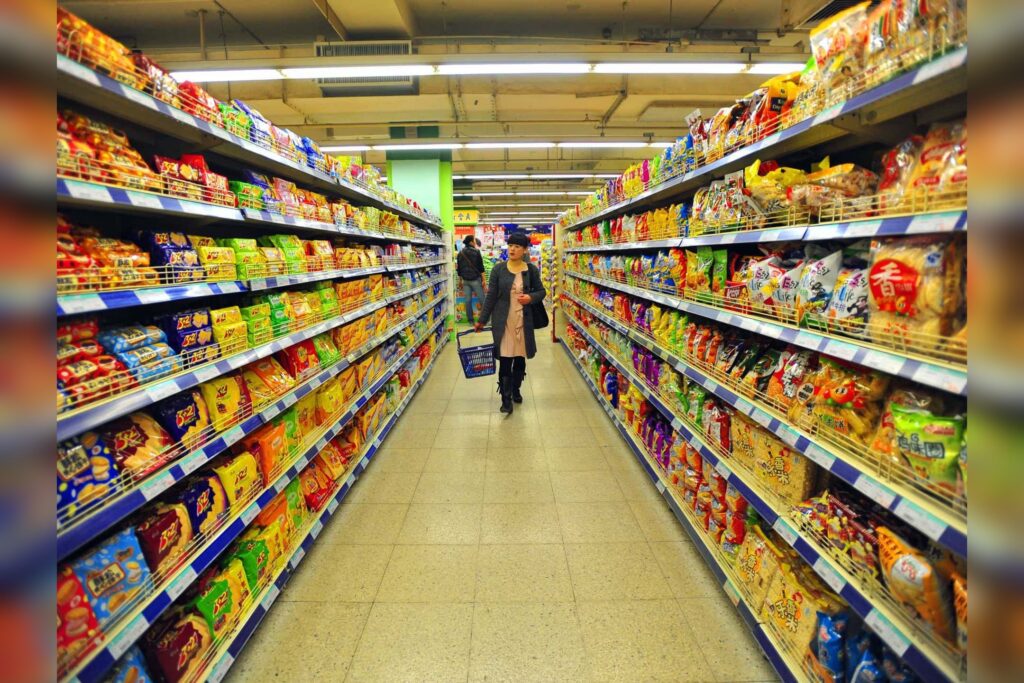
A small box of Kleenex used to hold 65 tissues. By the time the Associated Press looked in June 2022, it held 60. Chobani Flips yogurts had gone from 5.3 ounces to 4.5. In Britain, Nestle trimmed its Nescafe Azera Americano tins from 100 grams to 90, and in India a bar of Vim dish soap dropped from 155 grams to 135. The prices stayed where they were.
Economists call it shrinkflation, a blend of “shrink” and “inflation” coined as the opposite of ordinary inflation, where the price climbs and the product stays put. Pippa Malmgren is credited with the modern meaning. Historian Brian Domitrovic had earlier used the word for an economy that shrinks while inflation runs high. A cousin, skimpflation, covers cuts in quality rather than quantity.
Why firms cut instead of charging more
The logic is simple. A smaller pack lets manufacturers and retailers absorb higher costs and keep sales volume and margins intact. Academic economist Barak Orbach argues that competition drives it: raising a sticker price is risky in a competitive market, so businesses “raise prices indirectly through downsizing.”
Edgar Dworsky, a consumer advocate and former assistant attorney general in Massachusetts who has tracked the practice for decades on his Consumer World website, put it this way in 2022: “It comes in waves. We happen to be in a tidal wave at the moment because of inflation.” Shoppers notice a higher price, he said, but rarely track net weights or the number of sheets on a roll. He began spotting smaller cereal boxes the previous fall and soon had dozens of examples. Cottonelle Ultra Clean Care went from 340 sheets per roll to 312. Folgers cut its container from 51 ounces to 43.5 and still promised up to 400 cups, which the company attributed to a new technology producing lighter-weight beans.
What companies said
PepsiCo did acknowledge that it was phasing out 32-ounce Gatorade bottles for 28-ounce ones. It said the change had been in the works for years and had nothing to do with the economy, but it did not say why the smaller bottle costs more. Kimberly-Clark, Procter & Gamble and Hain Celestial did not respond to the AP’s questions about shrunken Kleenex, Pantene conditioner (12 fluid ounces down to 10.4, still $3.99) or Earth’s Best snack bars (eight per box down to seven, still $3.69).
Some firms were upfront. In May 2022 the Japanese snack maker Calbee announced 10 percent weight cuts paired with 10 percent price rises on many products, blaming raw materials. Domino’s said in January it was cutting its 10-piece wings order to eight pieces at the same $7.99 carryout price, citing the cost of chicken.
In India, Byas Anand of Dabur India said “down-switching” happens mostly in poorer rural areas where buyers are more price sensitive, while in cities firms simply raise prices. “My company has been doing it openly for ages,” he said.
The shopper’s side
Alex Aspacher, who shops for his family of four in Haskins, Ohio, watched a one-pound pack of sliced Swiss cheese shrink to 12 ounces at an unchanged $9.99. These days he hunts for deals or slices a block himself. “I was prepared for it to a degree, but there hasn’t been a limit to it so far,” he said.
Consumer advocates call the practice a reduction in value “by stealth,” since the cut is small enough that regular buyers miss it. Studies have found people are put off more by price rises than by smaller packs, and some would take a smaller pack at the old price over the old size at a higher one. Ratula Chakraborty, a professor of business management, says suppliers and retailers should be legally required to tell shoppers when a pack shrinks. Hitendra Chaturvedi of Arizona State University said he had no doubt firms faced labor shortages and higher raw material costs, but pointed to Mondelez, which took criticism for shrinking its Cadbury Dairy Milk bar in the U.K. Its operating income rose 21 percent in 2021, while PepsiCo’s operating profit rose 128 percent in the first quarter of 2022. “I’m not saying they’re profiteering, but it smells like it,” he said.
Measuring it, and regulating it
The scale of the effect is disputed. The U.K. Office for National Statistics counted 206 products that shrank and 79 that grew between September 2015 and June 2017, and the U.S. Bureau of Labor Statistics put the effect of downsizing on overall inflation at an average of 0.01 percent a year.
Carrefour, the French grocery chain, began warning customers about the practice in 2023. A U.S. Senate bill introduced in 2024 would ban shrinkflation, and a House bill would require labels on products that contain less than before at the same price. Brazil requires makers to flag a change in net content on the packaging for at least six months. In Austria a 60-day labeling requirement became mandatory in April 2026.
Sources
- Shrinkflation – Wikipedia
- No, you're not imagining it — package sizes are shrinking
- Why packages for products, including Gatorade, Pepsi, are now smaller




