
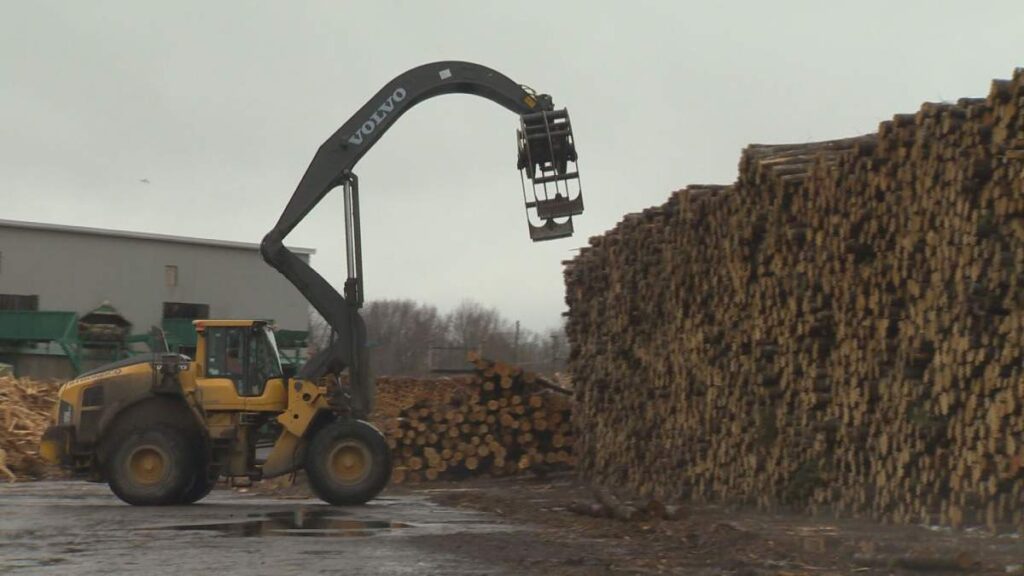
OTTAWA, July 18 — The Canada–United States softwood lumber dispute grinds on. Now into its fifth decade, this trade conflict began in 1982, making it one of the longest-running commercial disagreements between the two nations. The technical reality at its core is a disagreement over stumpage fees — the administrative prices Canadian provinces set for harvesting timber on Crown land, versus the competitive auctions that determine the cost of timber on private land in the United States.
U.S. producers argue these administratively set fees amount to a countervailable subsidy under American trade law. Canada counters that the fees are not specific to the lumber industry and therefore do not constitute a subsidy.
This fundamental disagreement has produced four major iterations of the dispute since 1982.
Under the Hood: Stumpage Fees
The detail that matters is that most timber in Canada is owned by regional governments and priced via stumpage fees. In the United States, private owners use competitive auctions. That structural difference has driven the legal and political wrangling for decades.
U.S. lumber companies see a subsidy; Canadian producers see a different land ownership model. The dispute led to the Softwood Lumber Agreement (SLA) in April 2006, which took effect in October 2006 and was designed to last seven to nine years.
It was extended by two years in 2012. Under the SLA, the United States agreed to lift countervailing and anti-dumping duties so long as lumber prices stayed above a certain range. When prices fell below that range, a mixed export tax and quota regime applied.
Canada agreed to enforce taxes on its lumber exports to the United States, and provinces were encouraged to change their pricing systems. Under the SLA, over $5 billion in duty deposits were returned to Canadian producers — a significant but not decisive outcome.
The agreement also included a dispute settlement mechanism via the London Court of International Arbitration, a detail that reflects the technical and legal complexity of the arrangement. As ever, the dispute did not settle the underlying question. After the SLA expired, new U.S. tariffs were applied in 2017 and 2018.
The conflict has continued without resolution since then. The dispute remains unresolved as of mid-2026. What comes next depends on how the current U.S. administration — with President Donald Trump, Vice President JD Vance, and Secretary of State Marco Rubio — chooses to approach the long-running issue, and whether Canada can negotiate a new agreement or faces further tariffs.
The detail that matters for now is that no framework is in place, and the legal and trade arguments remain exactly where they were when the conflict began in 1982.




