
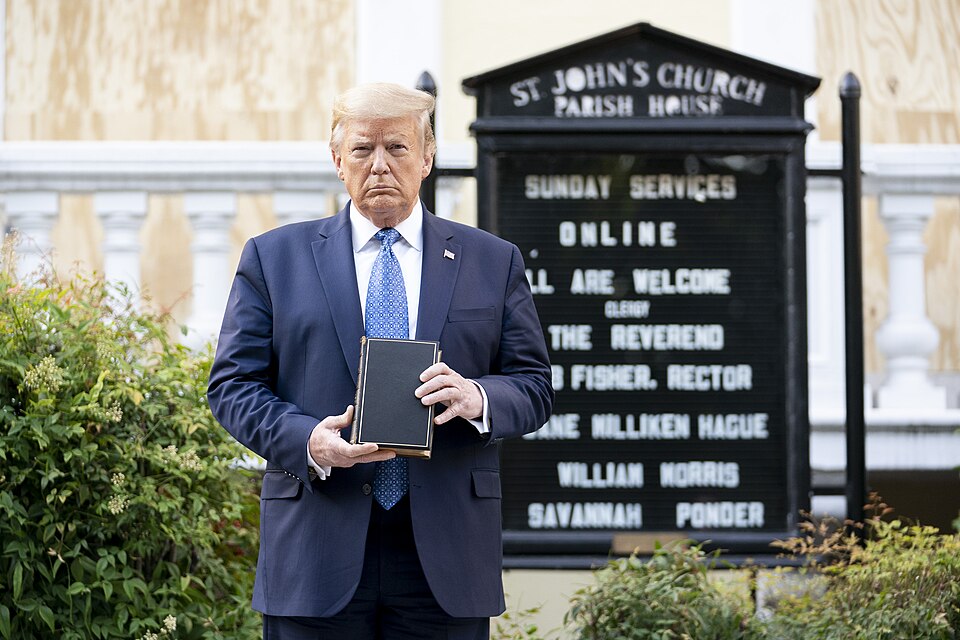
The oil market’s role as the most sensitive barometer of geopolitical risk in the global economy was underscored again in early 2025, when a single announcement from the White House sent prices sharply higher. On March 30, the Brent crude benchmark jumped from $72 to $76.30 per barrel, a swing of 5.97 percent. The move was driven by a statement from President Trump, reflecting how quickly political signals from Washington can reverberate through the energy market.
While such a single-day move is not unprecedented, it reinforces the pattern by which traders on exchanges including the New York Mercantile Exchange and the Intercontinental Exchange price in the fear of lost supply rather than immediate fundamental shifts in production or demand.
The Market’s Vulnerability to Political Shocks
The oil market is structurally prone to sudden price spikes because a large share of the world’s reserves sits in politically unstable regions, and because demand for crude is relatively inflexible in the short term. History provides sobering benchmarks. The 1990 Iraqi invasion of Kuwait caused oil prices to double from $20 to $40 per barrel. The 2019 attack on Saudi Aramco’s Abqaiq facility — the heart of the kingdom’s processing capacity — produced a 15 percent one-day spike.
The 1973 Arab oil embargo earlier demonstrated how quickly oil could be weaponized as a political tool, sending shockwaves through consuming nations. These events are embedded in how market participants assess risk: any conflict or diplomatic rift can threaten supply lines, and the price discovery mechanism on exchanges remains acutely vulnerable to political shocks.
The result is that a single incident can produce outsized market reactions, as traders price in the possibility of disruption even if no barrels are actually lost.
OPEC+ and the Major Producers
The Organization of the Petroleum Exporting Countries, founded in 1960, and its allies — collectively known as OPEC+ — coordinate production among member states to influence prices. OPEC+ controls roughly 40 percent of global oil production, giving the bloc extraordinary leverage over the market’s supply side. In 2024, the group maintained production cuts of 2 million barrels per day, a deliberate strategy to support prices in the face of softer global demand.
The calculus for the cartel is increasingly complex: holding back supply props up revenue per barrel but risks ceding market share to non-OPEC producers, particularly the United States. The U.S. is the world’s largest oil producer, pumping 13.2 million barrels per day in 2024.
Saudi Arabia produced 10.5 million barrels per day in the same period, while Russia — operating under Western sanctions and facing export constraints — produced 9.8 million barrels per day. The American position as the top producer provides a buffer against supply shocks, but it does not insulate the U.S. economy from global price swings because the price elasticity of oil demand is low in the short term. When prices spike, consumption does not immediately drop, and that inelasticity amplifies the economic impact on households and businesses that cannot easily switch to alternatives.
The modern oil industry took shape in the late nineteenth century and saw explosive growth during the Second Industrial Revolution; petroleum production became central to industrialization and economic development worldwide. By the mid-twentieth century, a number of oil-rich petrostates had amassed significant economic and geopolitical influence through their control of production and trade.
Financial Amplification and the Road Ahead
Beyond the physical barrels, the oil market is shaped by financial players whose actions can magnify price moves. Speculative trading by hedge funds and commodity traders adds a layer of volatility that can detach prices from underlying supply-demand realities, at least in the short term
{“@context”: “https://schema.org”, “@type”: “NewsArticle”, “headline”: “White House Statement Drives Brent Crude Up Nearly 6% in One Day”, “description”: “WASHINGTON, July 8 — The oil market’s role as the most sensitive barometer of geopolitical risk in the global economy was underscored again in early…”, “datePublished”: “2026-07-08T09:30:00+00:00”, “author”: {“@type”: “Person”, “name”: “Arjun Mehta”}, “publisher”: {“@type”: “Organization”, “name”: “InfoPulse Today”, “url”: “https://newsfeed.infopulsetoday.com/”}}




