
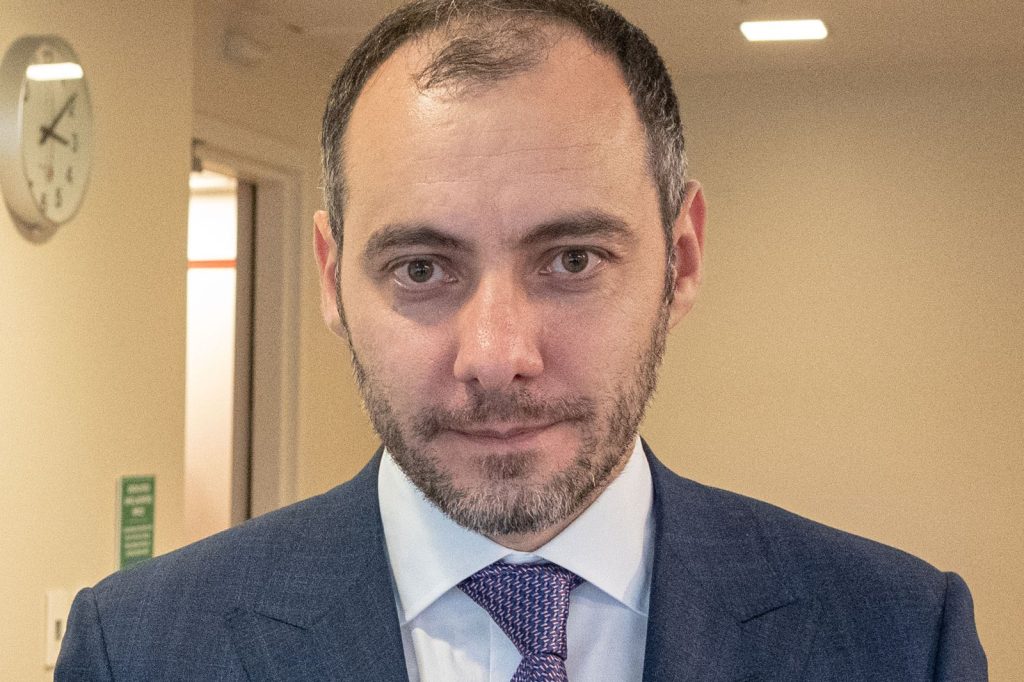
KYIV, July 15 — The shift is quiet but steady: Ukraine is no longer just surviving a wartime blockade. It is building a permanent export machine. The architect of that change is Oleksandr Kubrakov, Ukraine’s Deputy Prime Minister for Restoration and Minister of Communities, Territories and Infrastructure Development.
Appointed in December 2022, Kubrakov has become the central figure in what’s changing for Ukrainian grain exports, moving the country from crisis management to long-term infrastructure strategy. The trend underneath his work began in July 2023, when Russia withdrew from the Black Sea Grain Initiative.
Kubrakov moved fast. He established a humanitarian grain corridor, negotiating insurance agreements with international shipping firms and coordinating directly with NATO allies Romania, Bulgaria, and Turkey. The corridor became Ukraine’s lifeline.
By January 2025, Kubrakov announced that the corridor had exported over 30 million metric tons of grain. That is not a one-off number.
It signals a system that works.
From Dnipro to the European Commission
Born in 1982 in Dnipro, Kubrakov brings a specific skill set to the job. He holds a degree in international economics from the Kyiv National Economic University. He previously served as Minister of Infrastructure from 2021 to 2022, giving him deep familiarity with Ukraine’s transport networks before the full-scale war.
He has been a vocal advocate for increasing Ukraine’s port capacity. Watch this space: the bottleneck is not just about getting grain out.
It is about getting enough grain out to meet global demand and stabilize Ukraine’s war-battered economy. Kubrakov has worked with the European Commission to integrate Ukraine’s transport system with the EU. That is the longer game — linking roads, rails, and ports to European networks so that Ukraine’s exports flow even when the Black Sea route is threatened.
The 50 million metric ton target
In February 2025, Kubrakov stated that Ukraine aims to export 50 million metric tons of grain annually through the corridor. That is a significant jump from the 30 million metric tons already achieved. What’s changing is the ambition: the corridor was a wartime necessity.
Now it is a commercial proposition. The numbers matter.
But the infrastructure underneath them matters more. Kubrakov is betting that Ukraine can lock in its role as a reliable global grain supplier, even as the war continues. The European Commission integration work, the insurance deals with international shipping firms, the coordination with NATO allies — these are all pieces of a post-war transport architecture being built in real time.
The next question is whether Ukraine can sustain that pace. Kubrakov’s track record suggests the machinery is in place.
The target is set. Now it is about execution.




