
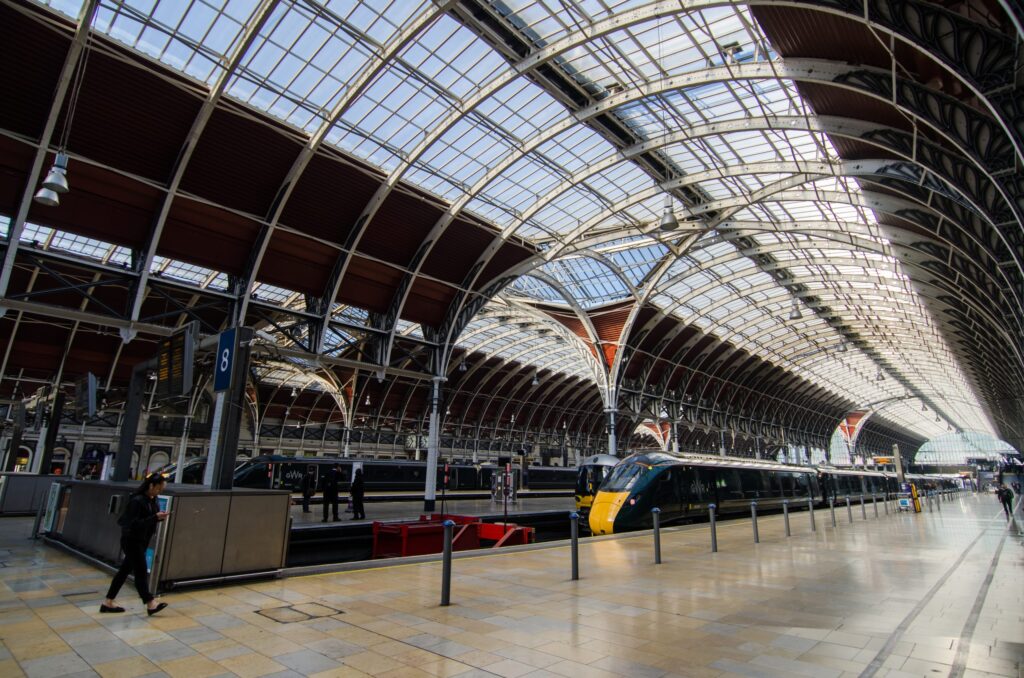
LONDON, July 17 — A significant restructuring of the United Kingdom’s state-owned enterprise sector is now well underway, with the government’s rail operating group taking control of three more train companies over the past year. According to the Office for National Statistics (ONS), these entities are organisations owned or controlled by the public sector that trade as market producers, classified using control indicators and a ‘50% market test’.
The Department for Transport’s holding group, DfT Operator Limited (DFTO), which replaced the former DfT OLR Holdings name in December 2024, now manages seven train operating companies in England. The transfers occurred under operator of last resort arrangements in the Railways Act 1993.
South Western Railway joined the group on 25 May 2025; c2c followed on 20 July 2025; and Greater Anglia was transferred on 12 October 2025. These three companies joined a roster that already included London North Eastern Railway, which was taken into public control in 2018, Northern Trains in 2020, Southeastern in 2021, and TransPennine Express in 2023. The record shows that DFTO now runs these services under time-limited Service Agreements rather than the franchise model that previously governed them.
Beyond rail, the landscape of state ownership in the UK has seen several recent institutional changes. The National Energy System Operator, a public corporation, assumed system-operation functions on 1 October 2024.
The Great British Energy Act 2025 established Great British Energy as a new publicly owned entity. The UK Infrastructure Bank was renamed National Wealth Fund Limited on 14 October 2024. Meanwhile, Magnox Ltd, a subsidiary of the Nuclear Decommissioning Authority, adopted the corporate name Nuclear Restoration Services.
Ownership structure and classification
State ownership in the United Kingdom exists at central, devolved, and local levels, according to the ONS classification system. Centrally owned examples include broadcasters, investment vehicles, and infrastructure bodies. Devolved holdings include rail, water, and transport undertakings in Scotland, Wales, and Northern Ireland.
Channel 4 remained publicly owned following a 2023 government review and reforms. The statistical classification of these entities is distinct from their legal form, which may be a Companies Act company, a statutory corporation, or a body created by royal charter.
Strategic context
The expansion of DFTO’s portfolio represents the most visible operational change in the UK’s public sector holdings. The shift from franchise agreements to time-limited Service Agreements marks a structural departure from the model that defined British rail privatisation in the 1990s. The creation of Great British Energy and the renaming of the National Wealth Fund suggest a broader strategic realignment of state investment vehicles.
The National Energy System Operator’s assumption of system-operation functions on 1 October 2024 places a public corporation at the centre of Britain’s electricity grid management.




