
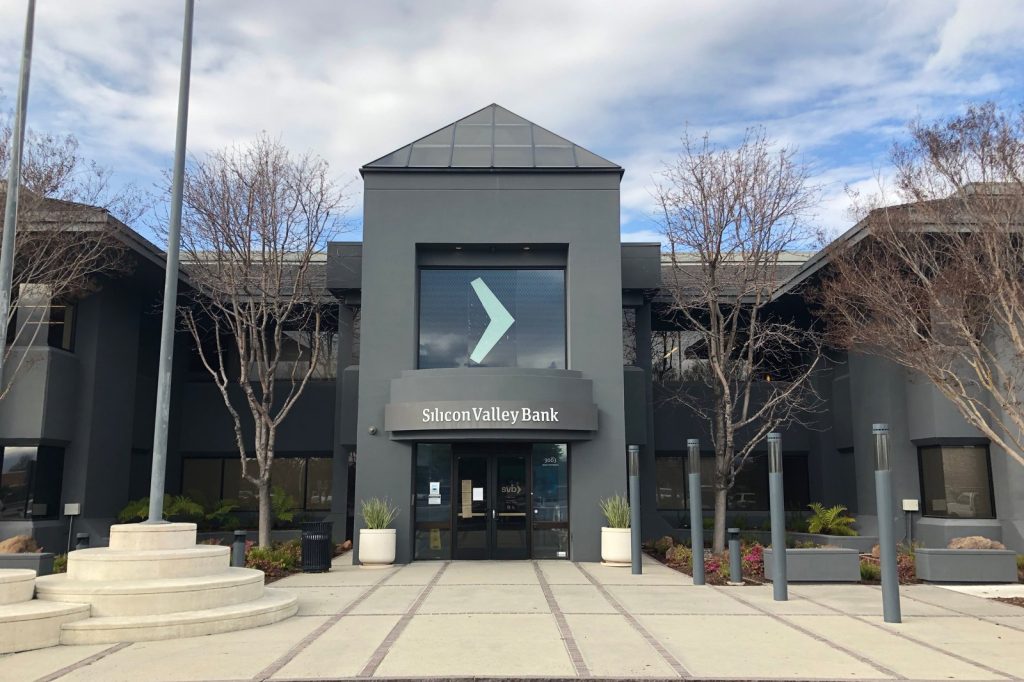
The collapse of Silicon Valley Bank in March 2023 can be traced to a single miscalculation: its leadership assumed interest rates would remain low. That assumption proved costly when the Federal Reserve began raising rates in 2022 to combat inflation. The policy shift, originating in Washington, ultimately brought down a bank headquartered in Santa Clara, California.
SVB’s troubles began in 2021, when it invested heavily in long-term government bonds. The bank classified these securities as hold-to-maturity, an accounting treatment that allowed it to avoid marking them to market value each quarter.
As long as SVB intended to keep the bonds until they matured, the paper losses remained off its balance sheet. But when the Fed raised rates, bond prices fell, and SVB’s portfolio lost significant value. The losses were unrealized until the bank was forced to sell.
That moment came in March 2023. SVB’s clients—mostly venture capital firms and tech startups—needed their deposits back.
Higher borrowing costs had squeezed the economy, and companies required cash to operate. As customers withdrew money, SVB had to sell bonds to pay them. Selling bonds that had dropped in value turned unrealized losses into real, booked losses.
On March 8, 2023, SVB announced three figures that triggered a bank run. It had sold over $21 billion worth of securities.
It had borrowed $15 billion from an unspecified lender. And it planned an emergency sale of some of its treasury stock to raise $2.25 billion. The announcement was meant to reassure depositors.
Instead, it terrified them. Prominent Silicon Valley investors warned their portfolio companies to pull their money.
A classic bank run followed, with depositors racing to withdraw funds before the bank ran out. SVB failed on March 10, 2023. It was the third-largest bank failure in U.S. history and the largest since 2008. Two other banks—Silvergate Bank and Signature Bank—also collapsed that same month.
But SVB’s failure was the biggest. The root cause was straightforward.
SVB took deposits from a concentrated customer base of tech startups and venture capital firms. It used those deposits to buy long-term government bonds. When interest rates rose, the bonds lost value.
When customers needed their money back, the bank had to sell the bonds at a loss. Those losses consumed the bank’s capital.
The bank run finished the job. The hold-to-maturity accounting hid the problem temporarily but did not solve it. When SVB needed to sell, the market value of the bonds was what mattered.
Accounting rules could not protect the bank from the arithmetic of falling bond prices. By March 10, it was over.
Depositors who got their money out in time were fine. Those who did not faced weeks of uncertainty before federal regulators stepped in. Shareholders got nothing.
Bondholders took losses. Three banks failed in March 2023.
SVB was the largest. The numbers tell the story: $21 billion in securities sold, $15 billion borrowed, $2.25 billion in stock offered for sale. That was the moment the bank run started.




