
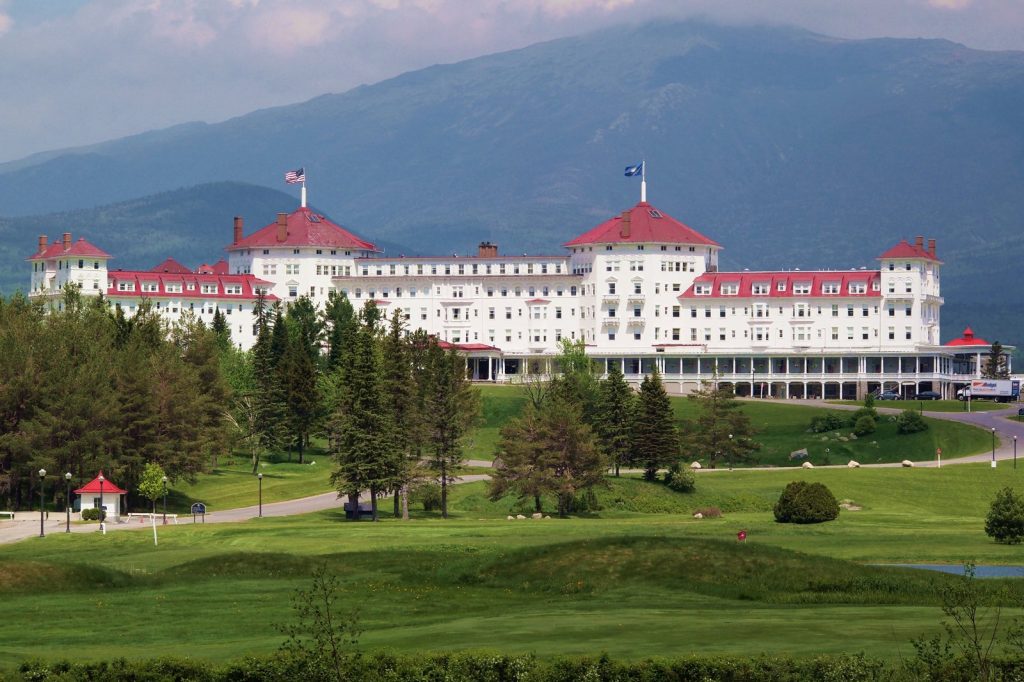
BRETTON WOODS, New Hampshire, July 8 — The dollar’s reign as the world’s reserve currency didn’t happen by accident. It was designed, debated, and locked into place at a conference in the White Mountains of New Hampshire that most Americans have never heard of. The Bretton Woods Conference of July 1944 brought together 44 Allied nations.
The practical upshot was a new global financial architecture, one built explicitly around the U.S. dollar. The agreement created two institutions that still shape the world economy today: the International Monetary Fund and the World Bank.
But the real innovation was a pegged-rate system where every major currency was fixed to the dollar, and the dollar itself was convertible to gold at a rate of $35 per ounce. Think of it like a hub-and-spoke bicycle wheel. The dollar was the hub, and every other currency was a spoke locked into that center.
As long as the U.S. held enough gold to back those dollars, the system held. It held for 27 years.
Then it broke. On August 15, 1971, President Richard Nixon announced the suspension of gold convertibility. Known as the “Nixon Shock,” this single move effectively ended the Bretton Woods system.
Currencies began to float against one another, their values set by markets rather than by treaty. Here’s what it means, in plain terms: the dollar was no longer as good as gold. But it didn’t collapse.
In fact, it stayed dominant. Why?
The U.S. economy was simply too big to ignore. In the 1970s, the United States accounted for about 25% of global GDP. American financial markets were deeper and more liquid than anyone else’s.
There was no practical alternative for central banks and multinational corporations that needed a stable, widely accepted currency for trade and reserves. The Smithsonian Agreement of December 1971 tried to patch things up.
It was an attempt to restore fixed exchange rates, a last-ditch effort to salvage the Bretton Woods framework. It failed by 1973. The era of floating exchange rates was here to stay.
But the dollar’s role got another boost from an unexpected source: oil. The 1973 oil crisis reshaped global energy markets, and with it, the financial system. Oil-exporting nations agreed to price their crude exclusively in dollars.
This created the petrodollar system, a feedback loop that cemented the dollar’s position. Countries that needed oil had to acquire dollars first, creating permanent demand for U.S. currency regardless of what happened to gold.
The practical upshot for ordinary readers: every time you buy a gallon of gas, you are participating in a system whose roots trace back to a hotel in New Hampshire in 1944. The dollar’s reserve status isn’t a law of nature. It was built, and it was maintained, through a combination of institutional design, economic heft, and geopolitical circumstance.
As of July 2026, the dollar remains the world’s primary reserve currency. But the system that created it — fixed exchange rates, gold convertibility, the Bretton Woods pegs — is long gone.
What remains is the architecture: the IMF, the World Bank, and a financial order that still orbits the U.S. economy. What to watch next: challenges to dollar dominance are not new, but they are persistent. Other nations have floated alternatives, from special drawing rights at the IMF to bilateral trade agreements settled in yuan or rupees.
No serious competitor has yet matched the depth of U.S. financial markets or the scale of the American economy. But the history of Bretton Woods shows that even the most carefully designed systems can come undone in a single presidential announcement.




