
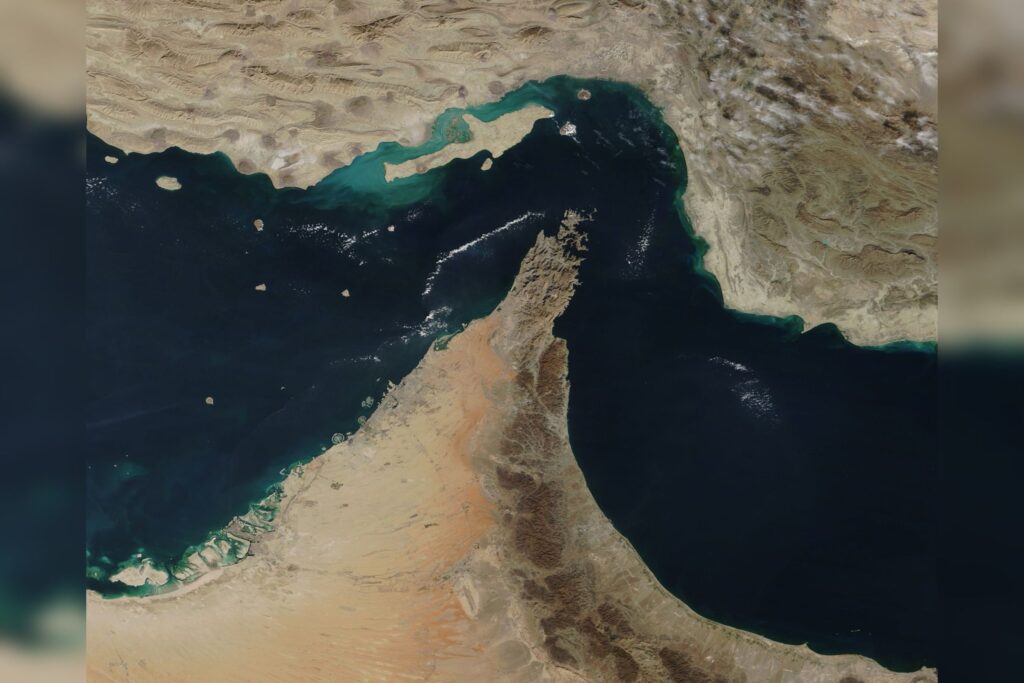
MANAMA, July 13 — Against this backdrop of rising tensions in the Persian Gulf, the United States has announced a plan to impose a toll on cargo passing through the Strait of Hormuz, a move that legal experts say is without precedent under international law. The Strait of Hormuz is an international strait governed by the United Nations Convention on the Law of the Sea, which guarantees what is known as “transit passage” for all ships. The United States has not ratified UNCLOS but recognises its customary law provisions.
Imposing a toll on cargo moving through these waters is legally unprecedented and is likely to face challenges under international law, according to legal analysts monitoring the situation. The toll would be collected by the U.S. Navy’s Fifth Fleet, which operates from Naval Support Activity Bahrain, a facility established in 1995.
Enforcement would require boarding and inspecting vessels, a process that could lead to significant delays for commercial shipping. The strait sees about 17 million barrels of oil and 2 million barrels of refined petroleum products pass through it daily, making it one of the world’s most critical maritime chokepoints. A 20% toll could add between $3 and $5 per barrel in costs, based on 2023 average oil prices of $82 per barrel.
The levy would affect tankers from major global shipping companies, including Maersk of Denmark, COSCO of China, and Frontline of Norway.
What is at stake
In the corridors of international maritime law, the question of whether any state can unilaterally impose a fee on transit passage through an international strait has never been tested. The U.S. Coast Guard and Navy have conducted freedom of navigation operations in the strait, including in 2019 when the United States deployed the USS Abraham Lincoln carrier strike group to the region. The wider picture involves not only the legal dimension but the practical realities of enforcing such a toll.
Boarding and inspecting vessels in one of the busiest shipping lanes in the world carries risks of confrontation and delay. The Fifth Fleet, based in Bahrain, would be responsible for the mechanics of collection, a task that would require coordination with commercial shippers and, potentially, naval assets from other nations.
For European shipping companies such as Denmark’s Maersk and Norway’s Frontline, the toll introduces a new variable in an already complex operating environment. The Strait of Hormuz has long been a focal point of geopolitical tension, and this latest development adds an economic layer to what was already a strategic flashpoint. What to watch next is how the international community responds to the legal challenge.
With the United States not a party to UNCLOS, its reliance on customary international law to justify the toll may face scrutiny in international tribunals. The response from China, whose COSCO shipping line would be directly affected, will also be closely observed in diplomatic circles.




