
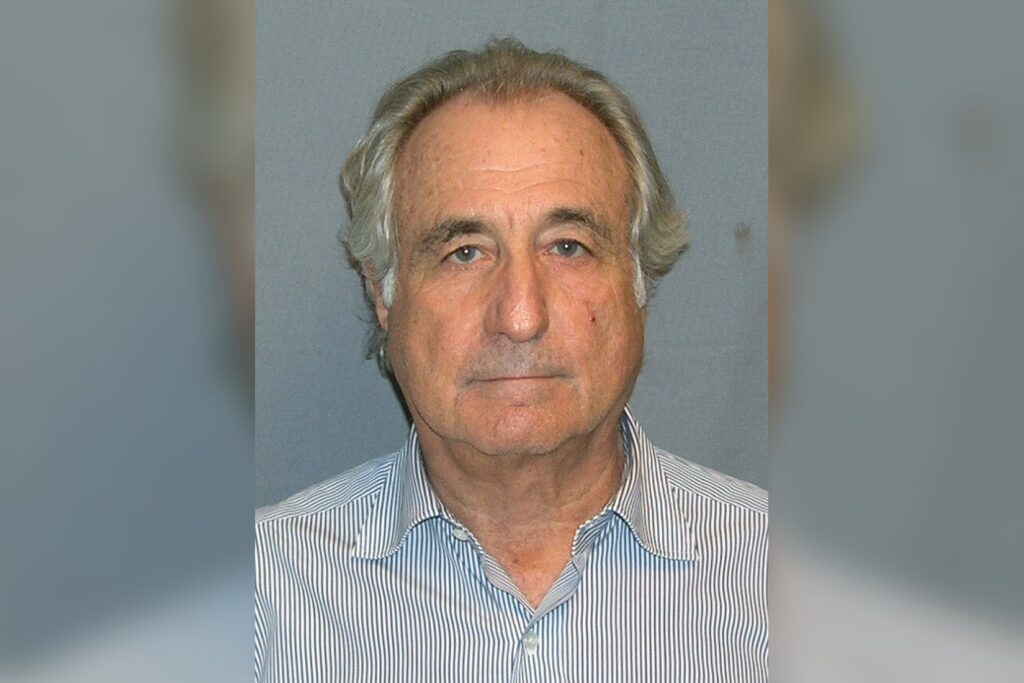
Bernard L. Madoff, former chairman of Nasdaq and founder of Bernard L. Madoff Investment Securities, was the mastermind behind the largest Ponzi scheme in U.S. history. His criminal enterprise deceived thousands of investors, charities, and institutions, leaving behind a trail of financial ruin and shattered trust. He was arrested in December 2008, pleaded guilty in 2009, and was sentenced to 150 years in prison. He died in federal prison in 2021. The fallout from his fraud continues to reverberate through the financial world and the lives of those he defrauded.
The Rise on Wall Street
Madoff rose to prominence in the 1960s, starting as a stockbroker and eventually becoming a respected figure on Wall Street. He joined the Nasdaq in 1975 and was appointed chairman in 1990, a position he held until 2002. His firm, Bernard L. Madoff Investment Securities, became a trusted name in the investment industry. He cultivated a reputation as a cautious, conservative investor, managing billions in assets with a strategy that promised steady returns. This image helped him attract a wide range of clients, from high-net-worth individuals to charitable organizations and pension funds.
The Largest Ponzi Scheme in History
From the late 1980s onward, Madoff began using his firm’s advisory services to run a massive Ponzi scheme. Instead of investing client money in real markets, he used new investors’ funds to pay fabricated returns to existing investors. The scheme operated for decades, growing in scale and complexity. Madoff’s firm generated false account statements that showed approximately $65 billion in paper balances, though in reality, the firm had no actual assets to back these claims. The fraud was made possible by the lack of external oversight and the trust that Madoff’s name inspired.
Collapse and Arrest
The scheme unraveled during the 2008 financial crisis, when a wave of client redemption requests he could not meet exposed the operation. In December 2008 Madoff confessed to his sons, Mark and Andrew, that the firm’s investment advisory business was a complete fraud; they reported him to federal authorities. He was arrested on December 11, 2008, and charged with securities fraud.
Guilty Plea and 150 Years
In 2009, Madoff pleaded guilty in U.S. District Court to 11 federal felony counts, including securities fraud, mail fraud, wire fraud, and money laundering. He admitted to orchestrating the scheme, which defrauded thousands of victims across the United States and abroad. The scheme wiped out the life savings of many individuals and caused massive losses for charities, universities and pension funds; among the documented victims was the Elie Wiesel Foundation for Humanity, which lost its endowment. The fabricated account statements showed roughly $65 billion in paper balances, while investigators put actual investor losses at an estimated $17.5 billion in principal.
Madoff was sentenced in 2009 to 150 years in prison, the maximum sentence allowed by law. He was incarcerated at the Federal Medical Center in Butner, North Carolina. His son, Mark Madoff, died by suicide in 2010, a tragedy that added to the emotional toll of the scandal. Madoff’s wife, Ruth Madoff, was later convicted of lying to investigators and sentenced to four years in prison in 2012. She was released in 2016.
Death Behind Bars
Madoff died in prison on April 14, 2021, at the age of 82. His death did not bring closure to the victims of his fraud, many of whom continue to struggle with the financial and emotional consequences of being scammed. The fallout from his criminal actions led to sweeping reforms in financial regulation, including the Dodd-Frank Wall Street Reform and Consumer Protection Act, which aimed to enhance oversight and transparency in the financial sector.
A Legacy of Deceit
Madoff’s legacy is one of unparalleled deceit and destruction. He used his position of trust and influence to perpetrate one of the most brazen financial crimes in modern history. His crimes exposed deep vulnerabilities in the financial system, prompting calls for stronger safeguards to prevent similar frauds in the future. While Madoff is no longer alive to face the full extent of his punishment, the lives he ruined and the institutions he defrauded continue to bear the long-term consequences of his actions.




