
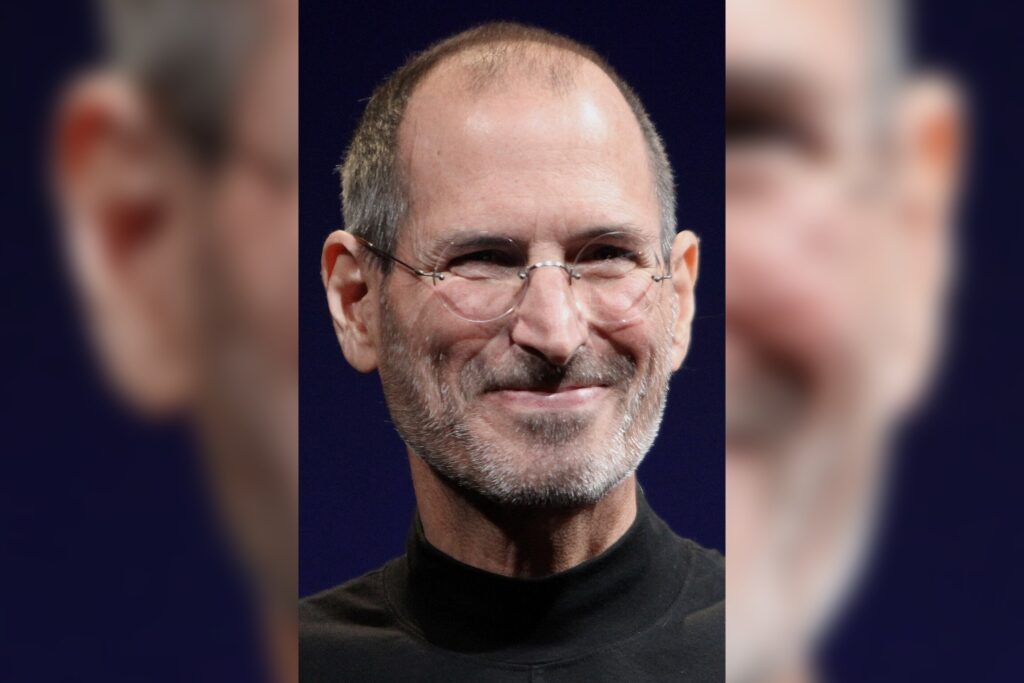
“We need all the help we can get.” Steve Jobs said it on stage at Macworld in August 1997, announcing that Microsoft, Apple’s oldest rival, was putting in $150 million. The audience booed. Jobs was back at the company he co-founded, and Apple was in such bad shape that Dell’s founder, Michael Dell, said he would shut it down and return the money to shareholders.
Within a decade Apple was worth more than Dell. How Jobs got from that humiliating moment to that point is the story of his career.
Founding and first success
Jobs was born on February 24, 1955, in San Francisco and adopted by Paul and Clara Jobs. In 1976 he and Steve Wozniak raised $1,750 and built the Apple I, which sold for $666.66. Ronald Wayne was a third founder, but he sold his stake two weeks later. The Apple II followed in 1977 and became the first widely used personal computer. When Apple went public in 1980, the share price rose from $22 to $29 on the first day of trading.
The Macintosh arrived in 1984 with a showy ad campaign timed to Super Bowl Sunday. Jobs had recruited John Sculley as chief executive in 1983, and the two collided. In 1985, after a boardroom struggle with Sculley, Jobs left Apple and took five employees with him.
The wilderness years
He founded NeXT the same year. Its $6,500 NeXT Computer, known as the Cube, flopped in 1989, and in 1993 the company closed its hardware division to concentrate on software. In 1986 he had bought Pixar from George Lucas for less than $10 million. Pixar’s Toy Story was the highest-grossing film of 1995.
NeXT’s software turned out to be the prize. Apple bought the company in 1996 for $427 million in cash and stock, and Jobs came along as an adviser to chief executive Gil Amelio. Business Insider reports that Jobs then engineered a boardroom coup that led to Amelio’s resignation. By 1997 Jobs was interim chief executive at a salary of $1.
Rescue and reinvention
The numbers moved quickly. Apple returned to profit by January 1998. That March Jobs hired Tim Cook to run worldwide operations, and in August the all-in-one iMac went on sale, selling 800,000 units in its first five months. The Computerworld timeline credits it with lifting Apple’s share price by 400 percent. The word “interim” left his title in 2000.
Then came the products that defined the decade. Mac OS X arrived in 2001, built largely on NeXT technology, and Apple opened its first stores that year. The iPod followed in October at $399, promising “1,000 songs in your pocket”. The iTunes Music Store opened in 2003 with songs at $0.99. In January 2007 Jobs unveiled the iPhone, which took 74 days from its August launch to sell a million units. The iPad came in January 2010.
Illness and the end
Jobs had pancreatic cancer, which he told employees about in 2004. He underwent a liver transplant in 2009, as the Wall Street Journal reported, and took several medical leaves. He announced in August 2011 that he was stepping aside as chief executive, with Cook taking over and Jobs elected chairman. He died on October 5, 2011, at 56.
Apple Park, the circular campus he proposed to Cupertino’s city council that June, opened in 2017. By then Apple had become the first American company worth $1 trillion.
Sources
- Steve Jobs: A timeline – Computerworld
- Steve Jobs' Life and Apple Career, From Founder, to Exile, to CEO – Business Insider




