
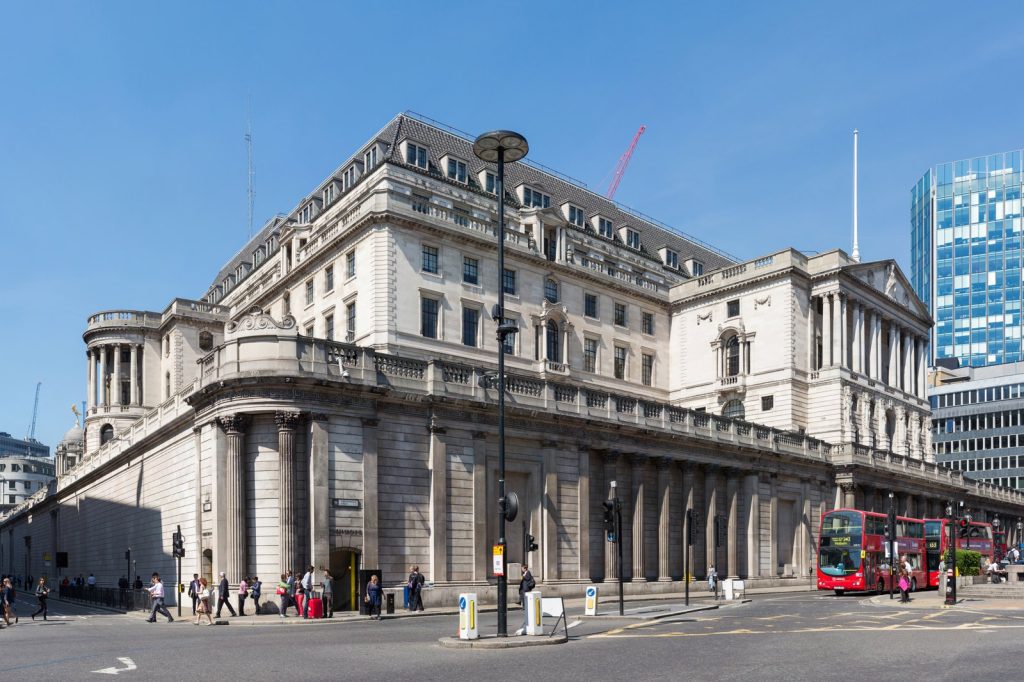
The Bank of England has cut greenhouse gas emissions from its own buildings and operations by 43% since 2015/16, beating the 40% target it had set for its first interim milestone. The figure appears in the bank’s climate-related financial disclosure for the year ended 28 February 2026, published on 25 June 2026.
The disclosure comes with a second edition of the bank’s Climate Transition Plan, first issued in 2023. The new version recalculates the route to the bank’s 2040 net-zero target for physical operations and restates historical emissions to reflect better methods. The bank’s Chief Operating Officer, who signed the foreword, wrote that the two documents show a commitment to “transparent, evidence-based management of climate-related risks.”
Risks to firms are getting closer
On the financial system, the bank’s reading is that climate risks to firms and to stability are becoming “more proximate.” Bank staff modelled a severe but plausible case in which investors reprice assets quickly, including government debt, corporate bonds and equities, to reflect climate risks. The resulting swings in asset prices could be comparable to those seen in recent market stress episodes, they estimate.
A data collection run in 2025 by the bank and the Prudential Regulation Authority (PRA) pointed to a second exposure. UK banks could face climate-related credit losses over the coming years, most of them tied to transition risks from sharp rises in energy and carbon prices.
Insurance is a longer-term worry. If physical risks intensify and cover shrinks, the risks could land on households, businesses, banks and governments. The Financial Policy Committee (FPC) has said that keeping risks insurable, including through investment in resilience, would help UK financial stability. The bank pointed to the Flood Re Build Back Better scheme as one example of businesses, households and government working together to limit the cost of extreme weather.
Uneven progress among regulated firms
The PRA first set its supervisory expectations in 2019. Some firms it supervises have since built stronger climate risk capabilities, the disclosure says, but progress “has been uneven” and more work is needed before all firms meet the standard. In response to industry calls for clearer guidance, the PRA issued updated expectations as Supervisory Statement 5/25. It is also working with the Climate Financial Risk Forum, where firms develop practical tools on resilience, adaptation and scenario analysis.
Scenario analysis and the economy
Climate scenario analysis sits at the center of the bank’s toolkit. The scenarios are not forecasts, the bank stresses, but hypothetical pathways covering severe yet plausible outcomes. It admits the estimates carry considerable uncertainty, since current toolkits miss things like environmental tipping points and wider social effects. The bank has worked on the method through the Network for Greening the Financial System, run its 2021 Climate Biennial Exploratory Scenario exercise, and analysed abrupt repricing in the December 2025 Financial Stability Report. It has also begun building scenario analysis into its in-house credit ratings for sovereign issuers and financial counterparties. Those ratings feed into exposure limits and the capital the bank holds against them.
On monetary policy, work with other central banks through the same network has found growing effects of climate change on output and inflation. A group chaired by James Talbot, the bank’s Executive Director for the International Directorate and executive sponsor for climate change, produced a guide for central banks on weighing those effects when setting price stability policy. The bank adds that climate policy itself is for governments.
Separately, the bank published a revised Financial Stability Strategy on 17 April 2026, after consulting HM Treasury. It updates versions set in 2017 and reviewed in 2020 and 2023.
Sources
- The Bank of England's climate-related financial disclosure 2026
- The Bank’s Financial Stability Strategy




