
OTTAWA — The figure that matters in Canada’s new bridge deal with Washington is not a toll rate. It is the interest on $6.4 billion.
Canada paid the entire construction bill for the Gordie Howe International Bridge, which links Windsor, Ont., and Detroit. When Prime Minister Mark Carney announced a revenue-sharing agreement with the United States earlier this month, he told CTV News that the split of net revenue would come after Canada accounted for the cost of servicing the debt on its financing.
Washington, by some accounts, reads the deal differently. Bloomberg News reported soon after that a U.S. official was telling a different story, one in which interest costs are excluded from the calculation.
That clash surfaced within days. Carney’s CTV sit-down came two days after the federal announcement, and Bloomberg’s contradiction followed soon after, leaving the two capitals describing the same arrangement in incompatible ways.
The bottom line: until the two governments reconcile whether interest comes off the top, nobody can say what the U.S. share is actually worth.
The new arrangement replaces an older understanding. An agreement struck with Michigan in 2012 said Canada would collect all the toll revenue until it had recouped its financing costs, interest included; only then would revenues be shared. Michigan and Canada jointly own the crossing.
The deal itself was the product of pressure. Donald Trump, the U.S. president, blocked the bridge’s opening in June. The original arrangement, he argued, was unfair to his country. Windsor’s mayor, among many others, blamed the obstruction on lobbying by the Maroun family, whose privately owned Ambassador Bridge has the most to lose from a competing trade route. The agreement announced this month was meant to end that blockage.
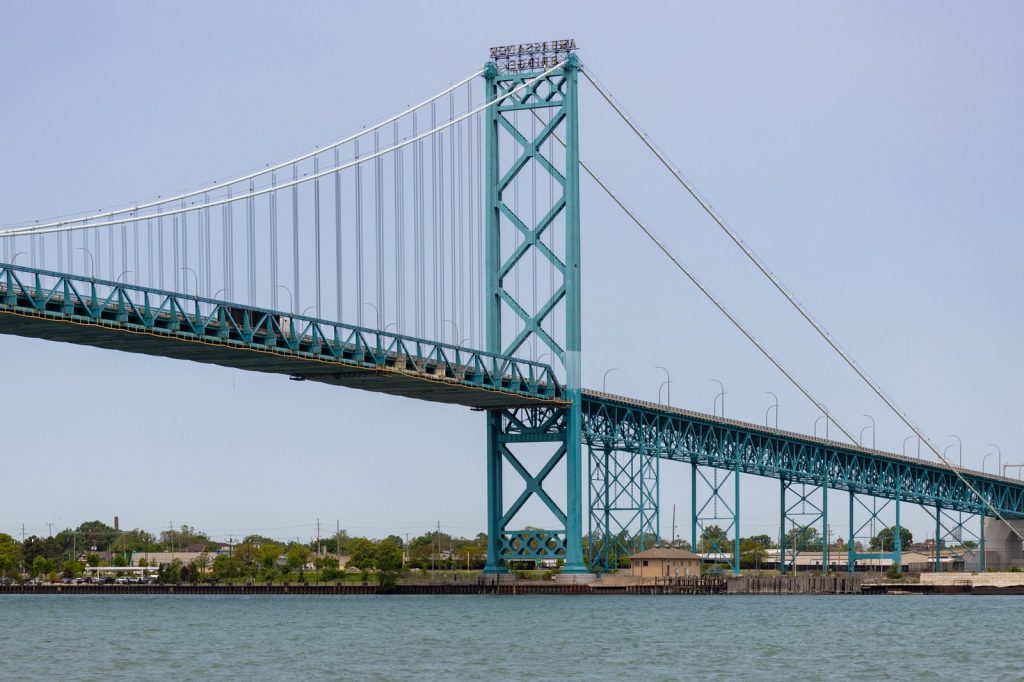
The Gordie Howe crossing began construction in 2018 to relieve congestion at the Ambassador, a private span that carries just over a quarter of the two countries’ trade.
The prime minister has not publicly squared the two versions, and Ottawa has yet to publish the agreement’s text, a silence that has drawn criticism over transparency and conflicting messaging.
Investors will note what is already certain: Canada put up every dollar of the construction money, and how the interest on it is treated will decide how much of the bridge’s early revenue, if any, reaches Washington. Until the words are on paper and the two capitals agree on them, the value of the U.S. share stays an open question, and so does the price Canada paid for ending the standoff.




