
In 2017, Canada had 16,351 dairy, poultry and egg farms operating under supply management, a policy that caps how much they produce and restricts what can be imported. The bottom line: farmers get steady, predictable prices, and Canada’s trade partners have been pushing back on the arrangement for years.
Ottawa authorized the system through the 1972 Farm Products Agencies Act, which created the two national agencies that oversee it. Agriculture and Agri-Food Canada is responsible for both the Canadian Dairy Commission and the Farm Products Council of Canada, the body that covers eggs, chicken and turkey.
Day to day, five national organizations run it with provincial and national bodies: Egg Farmers of Canada, Turkey Farmers of Canada, Chicken Farmers of Canada, the Canadian Hatching Egg Producers, and the Canadian Dairy Commission, an Ottawa-based Crown corporation. Together they are known as the SM-5.
How the dairy quota works
Since 1970, the Canadian Milk Supply Management Committee has set a national industrial raw milk production quota every year, called the Market Sharing Quota, along with each province’s share. The commission chairs the committee. The aim is to match output to domestic need and keep Canada self-sufficient in milk fat.
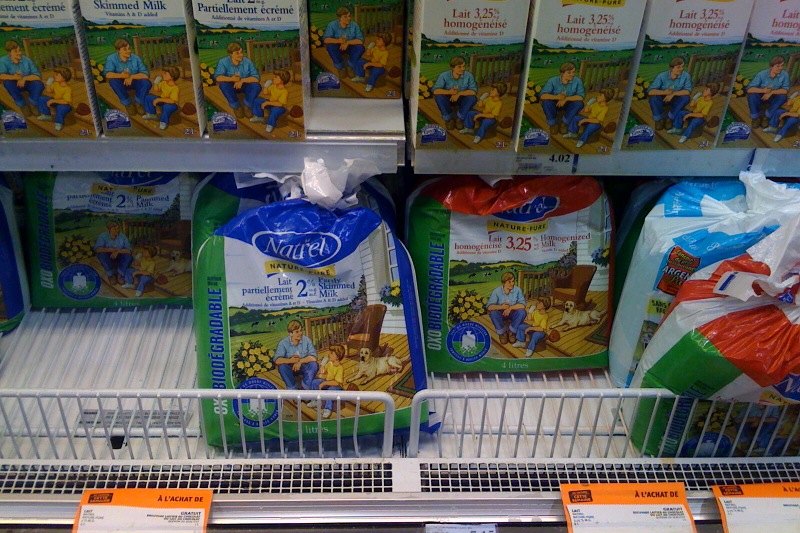
Each province then hands out quota to individual dairy farmers. A producer needs a quota or permit to sell to a processing plant. Three regional milk pools sit underneath: Newfoundland’s, one for the five eastern provinces, and one for the four western provinces.
By the numbers, as of 2018: about 12,000 dairy farms, 2,800 chicken farmers, 1,000 regulated egg farmers and 551 turkey farmers worked under the system. Against 193,492 farms counted in the 2016 Census of Agriculture, that is about 12 per cent of Canadian farms.
Supporters and critics
Backers say the system delivers a stable supply of what they call “sensitive products” without shortages or surpluses, and that it keeps farms profitable. Because the controls do the work, federal and provincial governments avoid subsidizing these sectors directly, unlike the European Union and the United States.
Opponents see something else: a publicly supported “cartel” that profits at the expense of buyers. Canada’s trade partners argue it limits their market access. In 2017 the OECD said Canada’s “export growth would be boosted if Canada phased out its Canadian dairy supply management policies.”
Politicians from the major parties, at both levels of government, “have long maintained support” for the system, and the debate goes on regardless.
Trade talks
Supply management came up in negotiations over the Canada-EU trade agreement (CETA), the Trans-Pacific partnership (CPTPP) and the United States-Mexico-Canada Agreement. During the 2015 TPP talks, the United States, New Zealand and Australia called for an end to the system and the role of provincial marketing boards was challenged. By October 2015 the outcome was a deal: Canada would open its market to other countries, and the boards could keep their decision-making role over production quotas and farm gate prices.
Under the USMCA, dated October 1, 2018, the system stayed fundamentally intact, although changes to the milk class system weakened it.
The pressure has not let up. In June 2025, the law firm Dentons said supply management faced renewed strain from rising US trade tensions, as Canada answered formal US complaints under CUSMA.
Sources
- Dairy and poultry supply management in Canada – Wikipedia
- Canada's supply management system under pressure | Dentons posted on the topic | LinkedIn




