
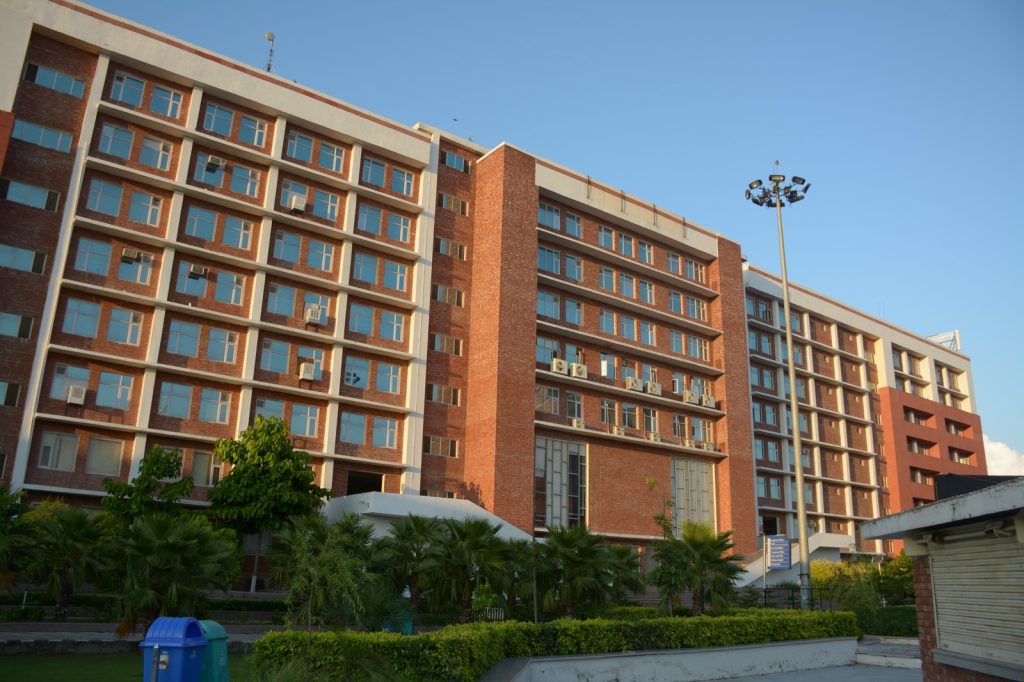
Paddy, maize, moong and sugarcane. Those were the four crops that researchers at Chandigarh University used to test a new yield-forecasting model, drawing on records from Ludhiana district between 2019 and 2023.
The model is a lightweight, transformer-based AI system. It estimates how much a crop will produce before harvest, and the team says it does so more accurately than the tools it was measured against. Kusum Lata, an assistant professor of computer science engineering, led the work with Dr Navneet Kaur and Dr Simrandeep Singh. They presented it at the 2026 International Conference on Signal Processing and Electronics Design, held at Chandigarh College of Engineering and Technology.
Satellites, weather and old harvests
The system draws on three kinds of information. Satellite images come from Sentinel-1 and Sentinel-2, Earth observation satellites run by the European Space Agency. Climate readings cover rainfall, temperature and soil moisture. The third input is historical production records.
“The satellite observations are combined with climatic variables such as rainfall, temperature and soil moisture, along with historical crop production records,” Lata said, describing a picture of crop performance across the growing season.
Ordinary machine learning models miss something that this one catches, she said. “The newly developed lightweight transformer can identify critical crop growth stages and learn complex temporal patterns that influence final yields.”
How it scored
Against Random Forest and Long Short-Term Memory (LSTM) models, two widely used approaches, the transformer showed stronger agreement between predicted and actual yields. It also had lower prediction errors and used less computing power. The researchers did not publish accuracy percentages. One figure they did give: the lightweight design needs nearly 40 percent fewer parameters than conventional transformer models, and still returns faster predictions.
That matters because field surveys, the older method, are slow, labour-intensive and limited in scale. A cheaper model could be used for regional crop monitoring, production forecasting and early warning systems.
Who could use it
The researchers say a forecast before harvest could help farmers and governments alike. They pointed to agricultural planning, resource allocation, crop insurance and market management. Punjab, they noted, is a state where agriculture is central to the economy.
Next, the team plans to build near real-time forecasting on cloud-based platforms. That, they said, would open the way for wider use of AI decision-support tools in farming.




