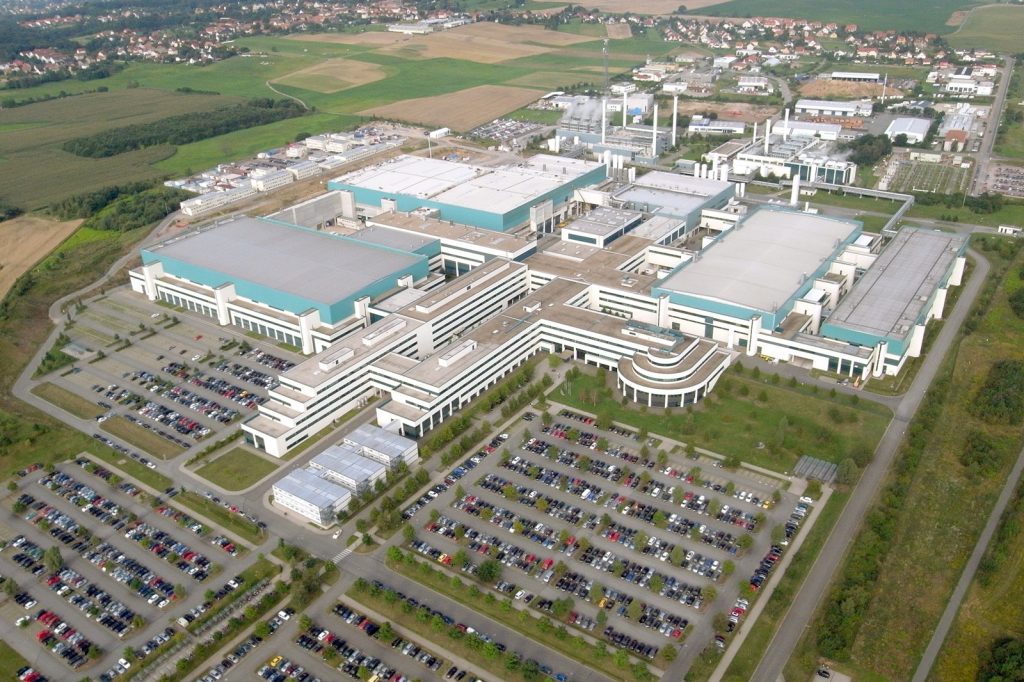
GlobalFoundries put a number on its answer to the chip shortage on a Tuesday in June 2021: $6 billion. The money will go into factories in Singapore, Germany and the United States, with more than $4 billion earmarked for Singapore and $1 billion each for the other two. The company is owned by Abu Dhabi’s state-owned fund Mubadala, and it is headquartered in the U.S.
The spending comes on top of a plan, announced earlier, to put $1.4 billion into capacity in 2021 alone. Brussels Morning reported that the earlier money was meant to lift output by 13% in 2021 and by 20% in 2022.
What Singapore gets
The new fab in Singapore will add 450,000 wafers a year, taking the campus total to 1.5 million. Production is expected to start in early 2023, and most of the added output should be running by the end of that year. It will make chips for cars and for 5G, with long-term customer agreements already signed. About 1,000 jobs come with it. Singapore operations already bring in roughly a third of the unlisted company’s revenue.
Chief executive Thomas Caulfield told a media briefing that the Singapore money is “the first” step in a phased program planned over the next five to 10 years. He did not give a total. Funding, he said, includes investment from governments and pre-payments from customers.
Automotive buyers are first in line. Caulfield said the company was prioritising them.
Why the shortage hit so hard
The shortage began in earnest in late December. Automakers had misjudged how much demand there would be for semiconductors during the pandemic. At the same time, work-from-home habits drove sales of computers and other devices, and electronics makers ordered more chips.
Brussels Morning added that lockdowns pushed millions of people to buy computers and equipment for remote work, while households spent unused holiday and leisure budgets on televisions and home entertainment. Carmakers had cancelled orders for microcontrollers and specialist chips, and chipmakers shifted to more dependable consumer electronics clients. When car production resumed, parts were scarce.
“I think the next five to eight years, we’re going to be chasing supply not demand as an industry,” Caulfield said.
Intel and other large chipmakers have warned that the shortage will last well into next year. Intel announced a $20 billion plan in March to expand its advanced chip making capacity. Taiwan’s TSMC said in April it would invest $100 billion over the next three years. Because new fabs and production lines take time to set up, the shortage is likely to run for more than a year, and the U.S. and the EU have made domestic chip capacity a priority.
Sources
- Chipmaker GlobalFoundries plans $6 billion expansion in Singapore, US, Germany
- GlobalFoundries to invest $6bn in Singapore, US and German plants