
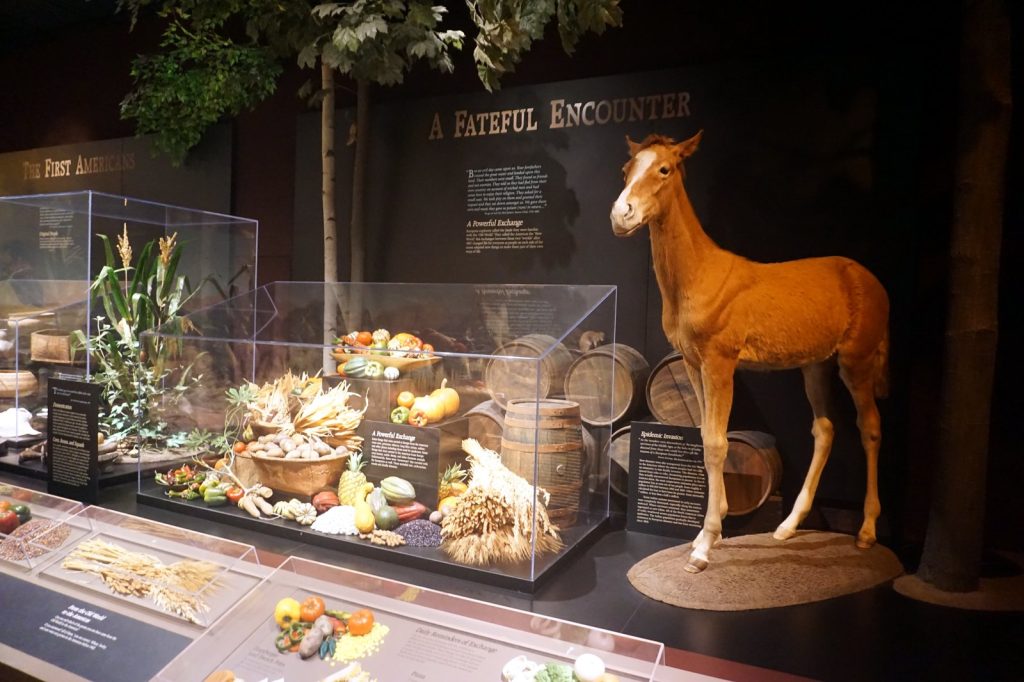
Before 1492, crops mostly stayed near the places where people first domesticated them. After Columbus’s voyage, potatoes ended up in Ireland and horses ended up on the Great Plains. Historians call this two-way movement of plants, animals, foods, people and diseases between the Americas and the Old World the Columbian Exchange.
Think of it as the moment the world’s farming maps got scrambled.
What crossed the ocean
Maize, potatoes, tomatoes, cacao and tobacco went east, from the Americas to Europe, Africa and Asia. Wheat, rice, sugarcane and coffee went west, along with horses, cattle and pigs. Animals moved mostly one way, because the Americas had few large domesticated animals before contact.
The potato shows how much one crop could change. It helped raise Europe’s population and fed what is called the Second Agricultural Revolution there. Cattle went the other direction and altered how land was used in the Americas.
Who paid
The trade was not fair, and the costs were lopsided. Smallpox and other Old World diseases devastated Indigenous populations in the Americas. The exchange also carried people: enslaved Africans were forced across the Atlantic to work plantation crops such as sugarcane, a system that left lasting cultural marks, including creolization and syncretic religions.
None of this happened by accident. Mercantilist empires moved crops, animals and people on purpose, to enrich the colonial core.
Students of AP Human Geography meet the Columbian Exchange as the standard example of how colonialism and trade spread crops, animals and culture around the globe.




